The End of an Era: CERN Disconnects LHC as Particle Physics Pivots to Precision
CERN’s removal of the LHC’s inner triplets is a technical milestone, but it also marks a strategic pivot in particle physics from discovery-driven science to precision measurement. The upgrade prioritizes data volume over groundbreaking finds, raising urgent questions about the future of global science investment and the next frontier for fundamental research.
The First Cut: A Symbolic Milestone
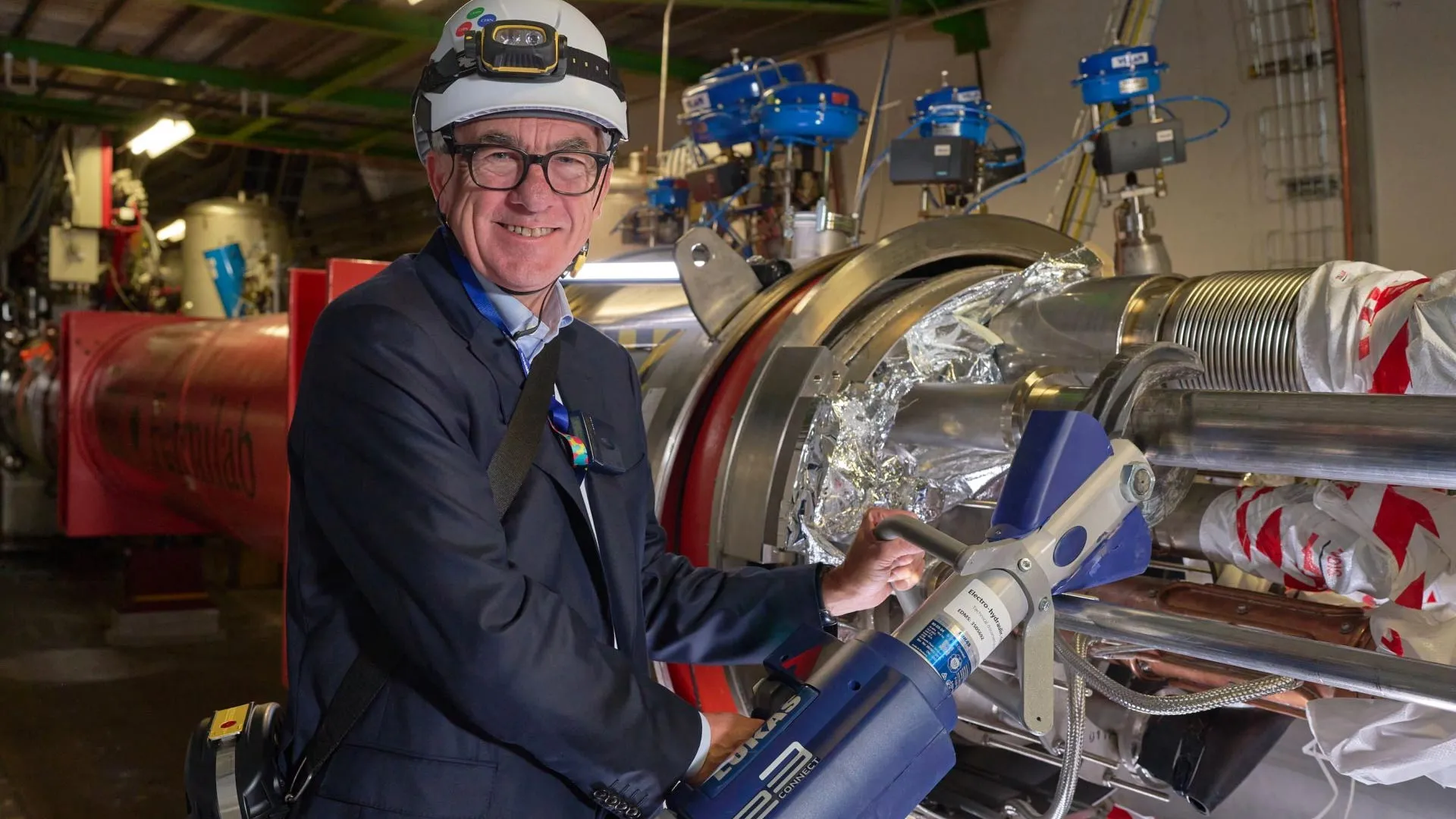
On a September morning at CERN, technicians snipped through a magnet interconnection inside the Large Hadron Collider (LHC). It was a modest act—a physical cut in steel and cable—but it carried the weight of an era closing. Mark Thomson, CERN’s Director‑General, stood by ATLAS at Point 1 to witness the moment. Jean‑Philippe Tock, head of the LS3 Coordination Team, called it “a major milestone.” For the HiLumi LHC project, it is proof that the long‑awaited upgrade has moved from blueprint to reality.
The inner triplets being removed date back to the LHC’s construction phase, installed between 2005 and 2007. After nearly twenty years of delivering groundbreaking data—from the discovery of the Higgs boson to precision tests of the Standard Model—they are now being retired. In their place will come 28 cryo‑assemblies and 16 cryostats, with the first quadrupole of the new triplets arriving in the tunnel at the start of 2029.
This is not just hardware replacement. It is a visible, symbolic handover from one generation of innovation to the next, as Markus Zerlauth, the HiLumi LHC Project Leader, put it. But behind the ceremony lies a deeper shift in the aims of particle physics itself.
From Discovery to Precision: A Strategic Pivot
For the past decade, the LHC has been driven by the search for new particles—evidence of supersymmetry, dark matter, or physics beyond the Standard Model. So far, those searches have come up empty. The Higgs boson remains the only major discovery since 2012, and the energy frontier has yet to yield surprises.
The High‑Luminosity LHC (HiLumi) represents a different strategy. Instead of raising the collision energy—which would require a entirely new machine, like the proposed Future Circular Collider—HiLumi aims to increase the luminosity, i.e., the number of collisions per second. More luminosity means more data, which in turn allows physicists to probe rarer processes with greater precision and to measure known particles, such as the Higgs, with unprecedented accuracy.
This is a pivot from discovery to precision. It is a bet that the next breakthrough may not come from a new particle, but from subtle deviations in existing measurements—or from the absence of such deviations, which would itself be a profound constraint on theoretical models.
Who wins from this shift? Experimentalists who can extract tiny effects from vast datasets; theorists who need precise numbers to guide their work. Who might lose? The public’s appetite for “discovery” headlines; younger physicists seeking a frontier that promises quick, dramatic results. The LHC has always been about both, but now the balance is tilting.
The Technical Leap: Niobium‑Tin vs. Niobium‑Titanium
The new inner triplets are the product of decades of research. They replace the existing niobium‑titanium magnets with niobium‑tin superconducting coils, which can generate magnetic fields of 11.3 tesla—about 40% stronger than the current magnets. That extra strength is what allows the particle beams to be focused more tightly, increasing the collision rate.
The upgrade will be installed around the ATLAS and CMS experiments, where the higher luminosity is most critical. ALICE and LHCb, which study heavy‑ion collisions and beauty‑quark physics respectively, will keep their existing inner triplets. Their physics programs do not require the same increase in instantaneous luminosity, though they will still benefit from the overall rise in collision numbers.
Removing 28 superconducting magnets is a formidable engineering challenge. Since September 7, crews have been dismantling sections on either side of ATLAS and CMS. Each magnet must be carefully extracted, tested, and then replaced with a new assembly cooled to near absolute zero. The work is being done during the third long shutdown (LS3), a multi‑year pause in operations that allows for such major interventions.
The upgrade is a testament to human ingenuity, but it also raises a question: Is this the peak of what the LHC can achieve, or a stepping stone to something larger? The luminosity increase alone cannot probe energy scales far beyond the current reach. If the Standard Model continues to hold, and no new particles appear at higher energies, the LHC may eventually run its course—not because it breaks down, but because it has nothing left to discover.
Who Wins, Who Loses? The Workforce and International Collaboration
Particle physics is a global enterprise. The LHC draws researchers from hundreds of institutions across dozens of countries. Its upgrades depend on sustained funding and collaboration. The HiLumi project is no exception: it requires specialized skills in superconducting magnet design, cryogenics, and high‑performance computing.
For the physicists and engineers involved, the shutdown is an opportunity. Many will spend the next few years designing, building, and installing the new components. Some will see careers built around this specific upgrade; others may find their expertise less applicable once the LHC resumes operation.
There is also a generational dimension. The current inner triplets were installed when today’s senior scientists were young researchers. The new ones will be installed by a different cohort—one that grew up with the Higgs discovery and the expectation of incremental progress. Will this generation maintain the enthusiasm and momentum needed for future projects?
Internationally, the HiLumi upgrade reinforces CERN’s role as a hub of collaboration. But it also highlights a tension: particle physics demands ever‑larger investments, while national budgets face competing priorities. The €1.5 billion HiLumi project is funded by CERN’s member states and additional partners. If the returns are mostly precision measurements rather than spectacular discoveries, can governments justify continued spending?
The Bigger Picture: Where Does Particle Physics Go Next?
The LHC will continue to operate after HiLimu, likely until the 2030s. But the community is already looking ahead. The Future Circular Collider (FCC), a proposed 100‑km ring that would sit in a tunnel beneath Geneva, would offer a dramatic leap in energy and luminosity. Yet its cost—estimated at tens of billions of euros—makes it a political as well as scientific challenge.
Meanwhile, other approaches are gaining traction: table‑top experiments searching for dark matter, neutrino observatories, and gravitational‑wave detectors. These do not require the scale of CERN, but they also cannot replace the LHC’s unique capabilities.
The disconnection of the LHC’s inner triplets is a moment to reflect on what drives fundamental science. Is it the hope of discovery, or the pursuit of deeper understanding? Both are valid, but they imply different strategies and different timelines. HiLumi bets on precision; the FCC would bet on energy. Either path requires sustained commitment from governments and the public.
Conclusion: The Handover We’re Witnessing
Markus Zerlauth described the current inner triplets as giving way to “a new generation of even more powerful magnets.” It is a poignant phrase, but it also carries a quiet unease. This handover is not just about hardware; it is about the direction of the field. The LHC has taught us much, but it has also shown us how hard it is to find new physics. HiLumi will give us more data, more precision, and perhaps more constraints on theory.
Whether that is enough to sustain the passion and investment that built the LHC in the first place remains an open question. The first magnet cut has been made. The real test is what comes after.
CERN’s shift toward precision is a rational response to a challenging landscape. But it also forces us to ask: What kind of science are we willing to fund, and why? The answers will shape not just the future of particle physics, but the character of global scientific ambition for decades to come.