Ceuta Crisis Fractures Spain, Tests EU Migration Unity
The Ceuta migration surge has ignited nationwide protests, exposed a deep trust deficit in Spanish institutions, and forced a reckoning over EU border policy. As domestic politics realign, Brussels faces a stark choice: adapt or watch its southern flank unravel.
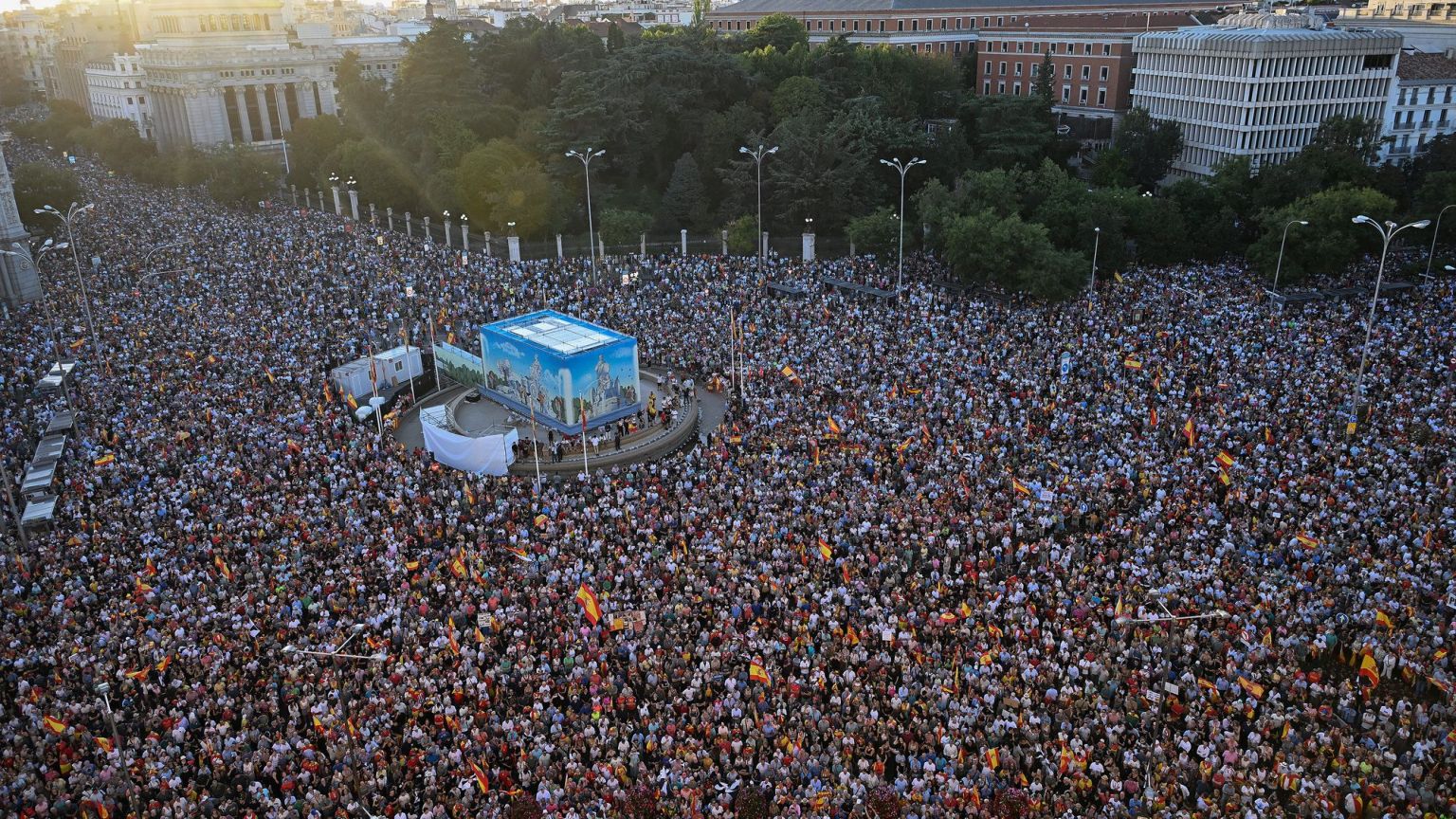
The Square That Became a Fault Line
On a recent Wednesday night, Plaza de Cibeles in Madrid swallowed 50,000 to 150,000 people. They were not there for a festival. They came because a coastal Spanish enclave had become a symbol of state failure. On the stage, when Madrid’s mayor José Luis Martínez‑Almeida used the phrase “irregular migration,” the crowd roared back: “Es una invasión!” (It’s an invasion). The gap between official language and public sentiment was not a minor diplomatic snag—it was a chasm.
The anger was not directed solely at the mayor. When cameras caught a television crew from state broadcaster TVE, protesters chanted “Traitors! Out!” and “Sánchez for prison.” The message was clear: trust in Spain’s institutional pillars—media, police, government—is fraying fast. That erosion matters far beyond Spain’s borders. It is a stress test for the entire European project.
Ceuta: A Microcosm of a Continent’s Dilemma
In July, roughly 70,000 migrants flooded into Ceuta, a Spanish city perched on North Africa’s coast. The numbers alone triggered alarm across Europe. But the real shock was what followed: schools stayed closed into September, playgrounds were taken over, tourism collapsed, and reports of sexual assault surged. For residents, this was not an abstract “migration issue.” It was a daily rupture of social contract.
Prime Minister Pedro Sánchez remained on holiday throughout August. Before the latest protests, he told journalists that “some people think I shouldn’t have a holiday”—a remark that captured a wider disconnect. His government had already granted amnesty to more than 500,000 undocumented immigrants in February. The logic was humanitarian; the political cost has been existential.
What English‑language coverage often misses is that Ceuta is not an isolated Spanish problem. It is the southernmost edge of the Schengen area, a zone where free movement is a cornerstone of European identity. When that border appears porous, the psychological shock reverberates from Lisbon to Helsinki. The crisis has revived debates that EU leaders hoped were settled after the 2015 refugee peak: Can the union maintain open internal borders while controlling its external ones? The answer so far is unclear—and that ambiguity is what makes this moment pivotal.
Who Wins, Who Loses in the Spanish Fracture
The immediate political casualty is Sánchez’s authority. His PSOE coalition now depends on left‑wing partners polling at just 4–5 percent. The party itself appears sustained mainly by pensioners wary of benefit cuts. Meanwhile, Vox—the right‑populist party that has long warned of an “invasion”—is positioned to become the kingmaker in any future government. The public, as one protest‑goer put it, has been “radicalised by reality.”
But the real winners and losers extend beyond Madrid. Within the EU, member states that have borne the brunt of irregular arrivals—Italy, Greece, Spain—now have a louder voice. Countries that have resisted mandatory relocation quotas see their argument strengthened. Brussels faces a choice: double down on its existing migration pact (which includes stricter external borders and faster returns) or risk a deeper crisis of credibility. So far, the EU’s response has been a mixture of emergency funding and diplomatic outreach to African nations—a strategy that has yielded some cooperation but little structural change.
The European Border Paradox
Spain’s crisis exposes a paradox at the heart of European integration. The Schengen system promises freedom of movement for Europeans; it also demands unified border control for outsiders. When one member state’s border looks permeable, the entire system’s legitimacy is questioned. That is why the Ceuta scenes—crowds shouting “invasion,” police using tear gas on demonstrators—will not stay contained.
Already, political parties across the continent are drawing lessons. In France, Germany, and the Netherlands, right‑wing and populist movements are citing Spain as proof that liberal migration policies collapse under pressure. At the same time, progressive governments are grappling with the same reality: how to maintain humanitarian commitments without appearing to surrender sovereignty.
The EU’s own tools are blunt. Frontex, the European Border and Coast Guard Agency, can deploy more officers, but it cannot close a border that is geographically unavoidable. Diplomatic agreements with countries like Morocco, Mauritania, and Senegal have slowed flows temporarily, but they do not address the root causes—economic desperation, climate stress, and conflict. The result is a policy limbo that fuels public frustration on both sides of the Mediterranean.
What Comes Next
Spain will likely hold early elections. The question is whether the result will be a reshuffling of the same elite consensus or a genuine realignment. If Vox enters government—as seems increasingly likely—it will push for stricter border controls, faster deportations, and a renegotiation of EU migration rules. That could fragment the current coalition further or force Brussels to make concessions it has long refused.
For the EU, the danger is twofold. First, a prolonged crisis in Spain could weaken the eurozone’s southern flank, already fragile after years of economic stagnation. Second, if member states pursue unilateral border closures, the Schengen zone—often described as the EU’s most tangible success—could unwind. The bloc’s credibility depends on showing that shared rules can deliver security without sacrificing solidarity.
The protests in Madrid were not just about Ceuta. They were about a society that feels its institutions no longer reflect its lived experience. When citizens see schools closed and playgrounds taken over, while politicians talk of “irregular migration” and take holidays, the gap becomes unbridgeable. That gap is where populist movements grow.
A Test for the Continent
Europe stands at a crossroads. The Ceuta crisis is not an anomaly; it is a preview of the pressures that will define the next decade. Climate change, economic disparity, and geopolitical instability will continue to drive movement across the Sahara and the Mediterranean. The EU’s response will either forge a more coherent border policy or expose the contradictions that have always lurked beneath its dream of open internal borders.
Spain’s political fracture is a symptom of a broader European malaise. The question is whether leaders will treat it as a domestic nuisance or as a warning sign. The people who filled Madrid’s plazas did not ask for pity. They asked for order. How Europe answers that demand will determine whether the union holds together—or begins to split along the very lines it was built to erase.