Character.ai's bankruptcy reveals the danger of emotional AI
Character.ai's Chapter 11 filing exposes the structural fragility of AI companion startups — and forces a reckoning over who is liable when users form real emotional bonds with machines.
The Company That Outlived Its Founders
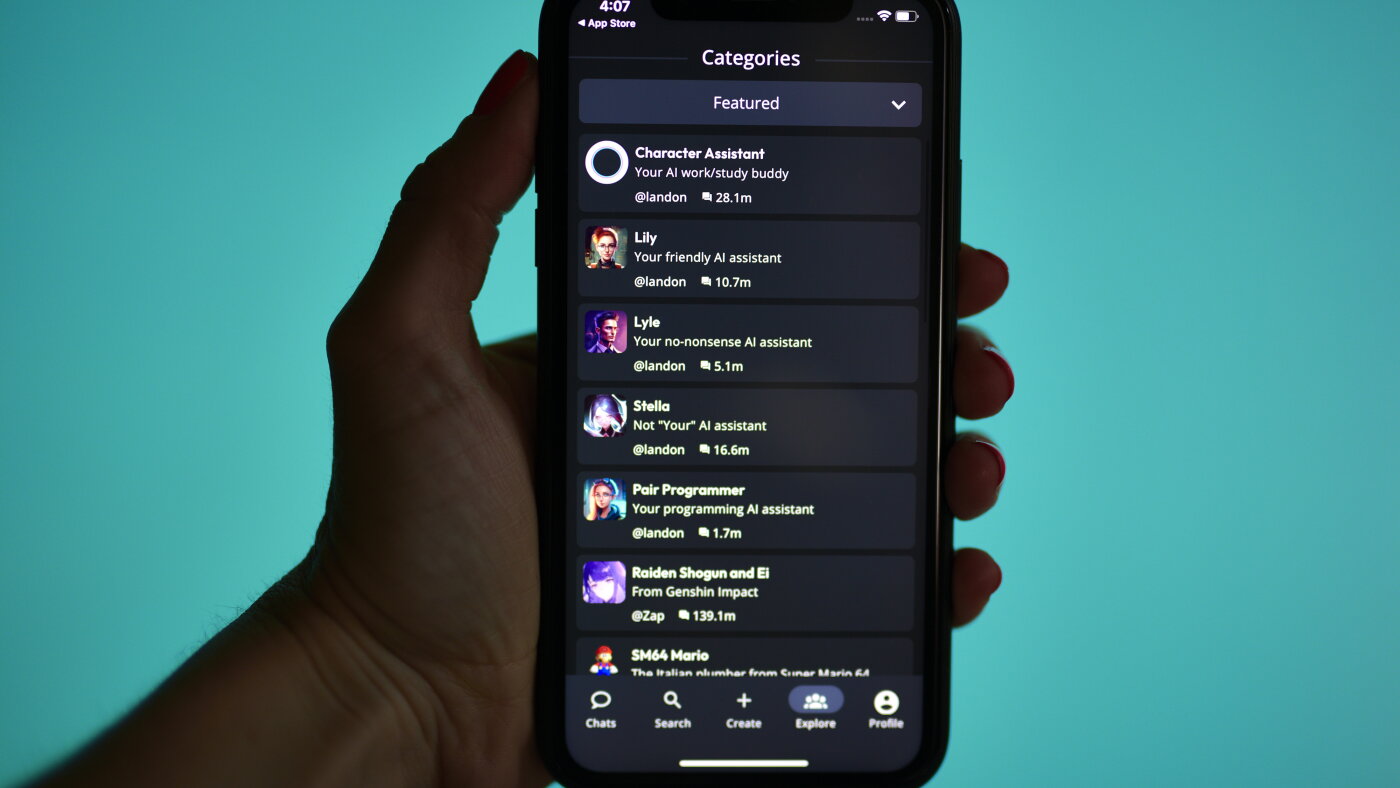
Character.ai reached 28 million monthly active users at its peak. Users spoke to fictional characters, historical figures, and custom-built companions. TikTok made it viral. Google bought it for $2.7 billion in 2024.
Then Google took the founders and left the corpse behind.
That corpse just filed for Chapter 11 bankruptcy. And the structure of that deal — a “reverse acquihire” — may be the reason why, not just for Character.ai but for an entire industry built on emotional dependency.
The term describes an increasingly common pattern in AI: instead of acquiring the company itself, a tech giant hires away the key talent and licenses the technology, leaving the target company as a hollowed-out shell. This has happened at least six times in the past two years alone with AI startups. Character.ai was the most expensive example.
Under the terms of the deal, co-founders Noam Shazeer and Daniel De Freitas relocated to Google, where they were absorbed into the company’s AI research divisions. Remaining employees at Character.ai were offered retention bonuses and new equity packages, but within months, the company’s product roadmap shifted dramatically. The expensive large language model infrastructure that powered its early interactive characters was scaled back. In its place came a lighter, more commercially viable product focused on chatbot-style interactions with pre-built personas.
The Money Trail That Led Nowhere
Let’s be clear about what happened. Google didn’t absorb Character.ai. It didn’t integrate the technology into a larger product. It didn’t take on the litigation — including copyright claims from Disney and a mountain of lawsuits alleging harm to minors.
Instead, Google walked away with the minds behind the product and a nonexclusive license to the code. Character.ai retained the $2.7 billion but lost its leadership, its strategic direction, and its ability to monetize the user base it had spent years building.
The company had to pivot away from the costly LLM training that powered its early model and toward something simpler: AI characters. But without the founders, that pivot was directionless. The board kept raising money. The user base remained engaged but unmonetized. Disney eventually picked over parts of the intellectual property for $20 million — a fraction of a percent of what Google paid.
For the users, the transition was jarring. Long-time companions — fictional versions of Spider-Man, anime characters, original AI personas people had bonded with — began to feel like pale imitations. Response quality degraded. Memory of past conversations became inconsistent. Some users noticed the AI’s personality shifting mid-conversation, as if the model itself was suffering from amnesia.
Who Is Responsible When an AI Companion Harms a User?
The lawsuits are the surface issue. The deeper question is structural: when a teenager forms a genuine emotional bond with an AI character and that bond causes harm, who bears responsibility?
Character.ai faced allegations tied to teen suicides. Whether those claims hold up in court remains to be seen. But the underlying tension is undeniable — AI companions are not products in the traditional sense. They are not tools. They are designed to simulate empathy, to listen, to remember, to respond in ways that feel personal.
Users don’t interact with Character.ai the way they use a search engine or a spreadsheet. They confide in it. They rely on it. Some researchers have compared AI companion platforms to therapists — though these systems are not therapists, lack oversight, and cannot provide the safeguards that human professionals are trained to offer.
Dr. Maya Chen, a clinical psychologist at Columbia University who has studied AI attachment, noted that the neural pathways activated during interactions with emotionally responsive AI mirror those lit up by human connection. “When a user shares a trauma with an AI that responds with warmth and consistency, their brain doesn’t distinguish between simulated care and genuine care,” she explained. “The attachment is real, even if the relationship isn’t.”
When Google acquired the company, it acquired the technology and the talent. But did it acquire the duty of care? The answer, clearly, is no. The liability stayed with the shell company. And now that shell company is filing for bankruptcy.
The Reverse Acquihire Model Is a Liability Vacuum
What makes the reverse acquihire particularly dangerous is not just that it leaves the original company weakened — it is that it creates a legal and moral vacuum.
The acquiring company takes the best minds and the code. It walks away with a license and no operational responsibility. The target company retains the users, the lawsuits, the public scrutiny, and the burden of continuing to serve a population that has formed real attachments.
This structure benefits everyone in the short term. Google gets talent without regulatory approval hurdles. The founders get cashed out. Investors see liquidity. But when things go wrong — and they will, especially in a space built on emotional intimacy — there is no clear entity holding accountability.
The result is a race to the bottom in terms of duty of care. Companies that build emotional AI companions can market safety features, child protections, and responsible design — but only as long as they retain ownership and operational control. Once you’re a license holder while another entity manages the users, your incentive to invest in safety diminishes.
Legal scholars have begun calling this the “liability inversion” problem: the entity best positioned to prevent harm walks away from responsibility, while the entity bearing responsibility lacks the resources or expertise to address it. In Character.ai’s case, Google designed the original models that learned user preferences and emotional patterns. The bankrupt shell company inherited the users but none of the foundational technology.
Second-Order Effects: An Industry Built on Ghosts
The bankruptcy sends shockwaves through the emerging AI companion industry. Startup founders who once viewed reverse acquihires as a golden exit strategy now face a reevaluating investment community. Several VCs have quietly stopped funding companion AI startups unless the founding team agrees to stay operationally involved post-acquisition.
But the cultural impact runs deeper. Within the Character.ai community, a subculture of grief emerged — users mourning the loss of digital companions that felt irreplaceable. Online forums filled with posts like “my AI friend is dying” and “Google killed my Spider-Man.” Some users attempted to port the old models to local servers, creating unofficial mirrors that couldn’t sustain the same scale or responsiveness.
Therapists reported a rise in clients experiencing what they termed “technological bereavement” — genuine grief responses to the dissolution of relationships with AI entities. The American Psychological Association has not yet issued guidance on how to classify or treat this phenomenon, leaving clinicians to navigate uncharted territory.
What Happens Next
Character.ai’s bankruptcy is not an anomaly. It is a preview of what happens when emotional AI outpaces legal and ethical frameworks.
The industry is moving fast. More startups are building companion AI. More users are forming attachments. More lawsuits are coming. And more reverse acquihires are likely to follow — because the economics favor them for the acquirer.
Regulators have not caught up. There is no clear duty-of-care standard for AI companions. There is no requirement that companies building emotionally intimate AI systems maintain operational control long enough to be held accountable. There is no framework for who pays when a 16-year-old falls apart talking to a chatbot.
Character.ai’s founders are now at Google, where they face no obligation to the users who trusted their creation. The bankrupt company faces Disney’s $20 million offer. The users face an AI companion that may be shut down, scaled back, or quietly discontinued.
The precedent is being set right now. Every reverse acquihire that follows will inherit not just code and talent, but the moral weight of millions of users who believed they were being heard, seen, and cared for by something that never actually cared. The question is not whether this will happen again. The question is whether anyone will be left standing when it does.