Why a Yakuza Acquittal in a Corporate Murder Case Matters
The acquittal of a Kudo-kai associate in the 2013 shooting of a Gyoza no Osho president reveals how yakuza networks penetrate mainstream Japanese business—and how the reasonable doubt standard can become organized crime's shield.
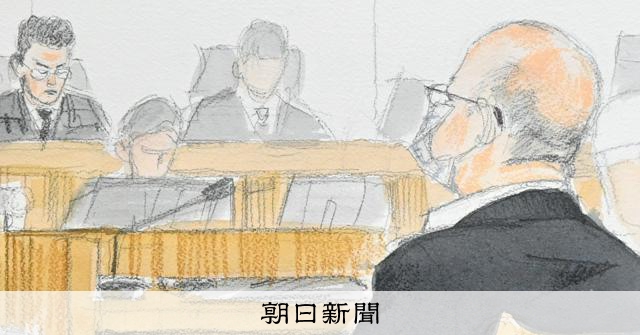
A yakuza walks free. What the Osho murder acquittal reveals about Japan.
The verdict came down at Kyoto District Court on October 16, 2026, and it carried a weight far heavier than one acquittal alone. Tanaka Yukio, 59, a cadre of the Kudo-kai — one of Japan’s most powerful designated yakuza groups — was found not guilty of the December 2013 shooting of O higashi Takayuki, then 72, president of Osho Food Service, the company behind the Gyoza no Osho restaurant chain.
The reason was not innocence. It was reasonable doubt.
Chief Judge Fukakusa Atsushi wrote that while the evidence could support a finding that Tanaka was the shooter, it could not eliminate the possibility that someone else was responsible — or that evidence had been planted. That standard, designed to protect the innocent, now functions as a shield for the organized crime figure who knows exactly how far to push a prosecutor’s case before the doubt becomes insurmountable.
What the evidence actually showed
The prosecution’s case rested on two pillars, both circumstantial, both vulnerable to alternative explanation.
The first was DNA. Two cigarette butts found near the scene shortly after the shooting matched Tanaka’s DNA profile. The prosecution argued he had smoked them while lying in wait for his target. The court accepted that Tanaka likely smoked near the scene — but rejected the inference that he did so immediately before the murder. A third party could have left them there. Or Tanaka could have been casing the location days earlier. The court noted the disturbing possibility that an accomplice could have deliberately staged the evidence to implicate him.
The second pillar was a light car. Prosecutors traced a vehicle matching its description to Tanaka’s childhood friend, who testified that he had loaned the car to Tanaka around the time of the murder. Nearby, investigators recovered a stolen motorcycle and scooter — both taken from Kyoto in October 2013, two months before the shooting. Gunshot residue was found on the motorcycle’s handlebars. Surveillance footage placed the light car near one of the theft scenes. The prosecution argued the car was used to transport the murder weapon and the getaway bikes. The court found a possible connection but held that an unrelated thief could have stolen those vehicles independently.
Neither pillar collapsed entirely. Both simply failed to exclude every other reasonable explanation.
The case that was never really a jury case
This was not tried before a lay judge panel. In Japan, murder cases typically fall under the saiban-in system, where citizen judges sit alongside professional ones. But this one did not. The prevailing view is that Tanaka’s yakuza affiliation led prosecutors and the court to opt for a single-chamber trial instead.
That decision matters. Lay judges bring a different relationship to reasonable doubt — one less insulated from the practical realities of criminal investigation. Professional judges, trained in the formal logic of evidence law, may apply the standard more strictly. Or they may be more willing to accept the state’s narrative when it comes to cases involving organized crime, where witness cooperation is scarce and evidence is thin. The distinction is worth watching in future cases.
There is also the question of how many such cases quietly sidestep the lay judge system each year. The precedent set here — that yakuza affiliation alone can justify a single-chamber trial — could reshape access to public scrutiny in organized crime prosecutions nationwide. If the argument holds that professional judges are better suited to handle the complexities and sensitivities of cases involving designated criminal groups, then a growing corridor of cases may effectively disappear from the kind of civic oversight that lay judges provide.
Who loses when the doubt wins
O higashi’s family has said they will appeal. Their sense of injustice is not abstract. A man was shot dead in the parking lot of his own company headquarters. The motive remains unproven. The Kyoto Police continue their investigation, but two decades after the killing, there is no public accountability for whatever happened that morning.
The broader loss is harder to quantify but more consequential. Japan’s major restaurant chains, logistics firms, construction companies, and real estate businesses have long maintained relationships with yakuza groups — sometimes through intimidation, sometimes through informal protection arrangements, sometimes through layered corporate structures that make the flow of money nearly impossible to trace. The Gyoza no Osho case sits inside that ecosystem. A president of a mid-tier company is murdered. The prime suspect is a yakuza officer. And the state cannot prove it beyond a reasonable doubt.
That outcome signals something about the limits of Japanese law enforcement’s reach into organized crime. It also signals the limits of the law itself: the reasonable doubt standard, a cornerstone of liberal jurisprudence, becomes a tactical advantage for anyone who can disrupt the chain of evidence — or convince a judge that the chain might have been disrupted by a third party.
Second-order effects: trust, business, and the law
The acquittal’s ripple effects extend well beyond the courtroom. For one, it deepens a quiet erosion of public confidence in the justice system’s ability to hold organized crime accountable. When a high-profile murder goes unresolved for over a decade and the primary suspect walks free on evidentiary grounds that feel, to many observers, like technicalities rather than justice, the message is clear: the system’s protections for the accused can double as protections for the guilty.
For the restaurant industry and other sectors where yakuza ties have historically lingered in the shadows, the verdict sends a measurable signal. Companies that have invested in distancing themselves from organized crime — upgrading compliance systems, severing indirect vendor relationships, tightening financial transparency — now face a harder sell to shareholders and regulators. If the state cannot secure convictions through evidence-intensive prosecutions, why should businesses bear disproportionate costs to preemptively cleanse their supply chains? The logical response, already visible in boardroom discussions across Osaka and Tokyo, is a recalibration: less voluntary compliance, more calculated ambiguity.
On the legal side, the verdict may prompt a re-examination of how circumstantial evidence is weighed in organized crime cases. Defense attorneys representing yakuza-linked defendants have long understood that introducing alternative explanations — no matter how speculative — can fracture a prosecutor’s case. The court’s willingness to entertain the possibility of planted evidence and independent vehicle thefts, without requiring the prosecution to definitively disprove them, reinforces a playbook that organized crime groups can study and replicate.
There is also a gendered dimension worth noting. O higashi, a man in his seventies running a traditional family business, was killed in what investigators have described as a targeted hit. Yakuza violence against business owners is not new, but the specific pattern — a corporate president eliminated while the organization retains plausible deniability — reflects a growing strategy of structured impersonality. The more cases like this proceed without resolution, the more the model proves viable: disrupt the evidence, never touch the scene yourself, and let the legal system’s own safeguards do the rest.
The prosecution’s response
Morita Masanori, the deputy chief prosecutor at Kyoto District Public Prosecutors Office, called the verdict regrettable and said the office would review it carefully before deciding on an appeal. That is the standard posture. The question is whether the appeal will reach the Supreme Court and whether a higher bench will apply a different reading of what reasonable doubt requires.
Prosecutors in similar cases have faced an uphill battle in recent years. The 2022 conviction of a Yamaguchi-gumi lieutenant on murder charges was overturned on procedural grounds, and the 2024 acquittal of a Tojo-kai associate in an Osaka armed robbery killing drew public criticism for relying too heavily on coerced testimony. Each outcome narrows the margin within which future prosecutions can succeed. The Osho case will be measured against that trajectory.
What happens next
The Kudo-kai continues to operate. Tanaka remains free pending the appeal process. The motive for O higashi’s murder — whether it was personal, financial, or tied to broader yakuza-corporate entanglements — remains officially unresolved. And Japanese businesses that have long managed their relationships with organized crime groups now face a sharper public question: when the law cannot secure a conviction, how much influence do these networks truly hold?
The answer to that question will shape Japan’s approach to organized crime for years to come. If the appeal fails or is dismissed, the acquittal becomes a reference point — a citation future defense teams will invoke whenever their client’s guilt rests on circumstantial threads. If it succeeds and reverses the verdict, the Supreme Court will have drawn a line, however faint, around how much doubt is too much in cases where the accused belongs to a designated criminal organization.
Either way, O higashi’s death remains unpaid for, his business bears the silence, and the public is left with a system that worked exactly as designed — and produced exactly the result its designers never intended.