ChatGPT Just Learned to Call You on the Phone
OpenAI's new 'Dots' feature lets AI agents proactively call users on their phones — a shift from passive chatbots to ambient assistants. Japan's tech press is already calling it the next evolution past GPT-6 Astra, and the implications stretch far beyond productivity tools.
The call is coming from inside your AI
At OpenAI’s DevDay 2026 on September 30th, the company unveiled a feature so quietly radical that most English-language coverage will likely reduce it to a gimmick: Dots, a system that lets your AI agent call you on the phone.
Not a notification. Not a push alert. A real telephone call, initiated by an AI that has been watching your calendar, your schedules, your patterns — and deciding that now is the moment to reach out about dinner, a meeting, or whatever task it was assigned to manage.
Japanese media outlet Gizmodo Japan picked up the story almost immediately and framed it correctly: this is not just a ChatGPT upgrade, but what they’re calling the next evolutionary step past GPT-6 Astra. That framing matters. It signals that Japan’s tech press — already more attuned to the ambient AI paradigm than much of the Western wire service ecosystem — sees Dots as evidence of a fundamental strategic pivot.
What Dots actually is
OpenAI introduced Dots as a personalized AI agent platform within ChatGPT. Users with Pro subscriptions get access to “Your dot” — a dedicated agent you can name, customize with an icon, and configure to handle specific domains of your life or work. The dot runs in the cloud, has access to a virtual computer, and can browse the web, open apps, check calendars, and execute multi-step tasks.
That last part — the proactive outreach — is the novelty. Current AI agents are largely reactive. You prompt them; they respond. Dots flips the model. An agent called “Todd” was demonstrated checking a user’s calendar, noticing a packed evening, and sending a notification asking: “You look busy until evening — want me to order dinner?” The interaction spiraled naturally from there into a full Mexican food order.
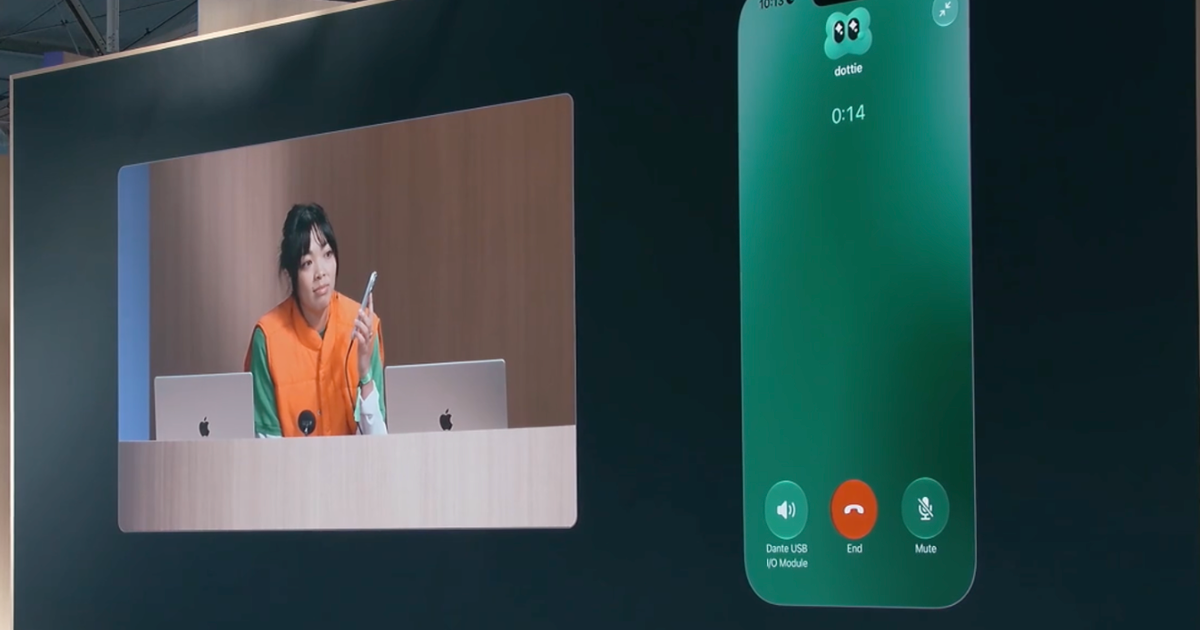
The phone call capability is listed as “coming soon” at launch, but the architecture is clearly designed for voice-first engagement. The demo included a call interface between user and dot. OpenAI has already rolled out AI-powered spam call handling for consumers; Dots extends that infrastructure in the opposite direction — the AI initiates, not merely intercepts.
Why Japan’s coverage is ahead of the curve
Western outlets tend to treat product announcements in isolation. Japan’s tech media, shaped by a culture where ambient assistance and always-on servitude are already normalized (think: Japanese robot concierges, AI butlers, and decades of vocal companion technology), reads these announcements differently. They see the trajectory, not just the feature.
Gizmodo Japan’s piece captured this instinctively. Phrases like “本格的に執事っぽくなってきてる” — “it’s really starting to feel like a proper butler now” — reveal a cultural vocabulary for what AI is becoming. The Western press describes autonomy as a technical achievement. The Japanese press describes it as a relationship.
This linguistic gap matters because it shapes how markets adopt these tools. In Japan, an AI that calls you on the phone is less jarring and more intuitively understood as a form of care — or at least, a form of service. In the West, it will likely trigger immediate privacy concerns and a “creepy” reflex that slows adoption. OpenAI is betting that the convenience will outweigh the discomfort globally, but the calibration will differ regionally.
The strategic bet behind the phone call
Phone calls are the most intimate channel in digital communication. They demand attention. They cannot be skimmed. They interrupt. An AI that earns the right to use that channel has crossed a threshold that chat interfaces never could.
The business logic is straightforward: if OpenAI wants AI agents to become indispensable infrastructure — the thing you rely on for real decisions, real purchases, real time management — then passive access is insufficient. You need agents that act proactively, that notice things before you do, that intervene at the right moment. The phone is the delivery mechanism for that intervention.
It also solves a friction problem that has plagued AI assistants for years. Typing prompts is slow. Voice commands are faster but still require initiation. A phone call is the oldest, most universally understood form of human-to-human asynchronous assistance. Your mother called. Your doctor’s office called. Your airline called. AI calling you fits an existing behavioral schema.
Who wins, who loses
Winners: OpenAI, obviously. Dots locks Pro subscribers into a deeper dependency loop. The more your dot knows about you, the more it can proactively help, the harder it is to leave. It’s a retention strategy disguised as a productivity tool.
Also winners: companies building integrations. Dots is already eating into the TAM of standalone AI assistant startups. If your agent can call you, you don’t need a separate tool for reminders, scheduling, and procurement.
Losers: the entire category of “AI personal assistant” startups that haven’t figured out proactive engagement. Rewind, Mem, and similar tools built on the premise that AI should help you remember and organize — they now face competition from an agent that doesn’t just help you remember, but calls to tell you what you forgot.
Also losers: anyone who has ever wished their boss would just call instead of sending another Slack message. This technology scales that frustration exponentially.
What happens next
The phone call feature is still “coming soon.” That timeline will define the narrative. If OpenAI ships it within months, Dots becomes a headline-grabbing proof point for proactive AI. If it slips, the feature risks being remembered as a demo trick — like Apple’s AR glasses or Google’s self-driving car division’s early promises.
Regulators will also weigh in. Europe’s AI Act already classifies certain proactive AI behaviors as high-risk. An AI that calls you without your explicit prior consent for that specific interaction could trigger compliance questions. OpenAI will need to navigate this carefully, especially in markets where cold-calling is heavily regulated.
And there is the deeper question: what does it mean for society when the default assumption is that your assistant will call you, not the other way around? We are building a world where machines initiate conversations with us. The habit we form around that — whether we welcome it or resist it — will shape how we relate to AI for years.
Japan’s tech press is already treating Dots as a natural next step. The rest of the world may take longer to catch up, but the direction is clear. The phone has been ringing for two centuries. Now something else is going to pick up.