Why Japan's Cutest Character Is Haunting Korean Theaters
Japan's Chiikawa franchise is toppling Korean box office records with its first feature film — but the real story is what this unlikely crossover reveals about Gen Z fandom and East Asia's cultural economy.
The most terrifying thing about Chiikawa isn’t the plot
It’s how efficiently a Japanese mascot franchise has crossed into Korea without asking permission.
As of Tuesday morning, the advance screening rate for The Theatrical Version of Chiikawa: Mermaid Island’s Secret stood at 36.5 percent — more than triple the 12 percent holding rate for Assassins, the domestic thriller that was expected to dominate this weekend’s box office. The film opens Friday. It is not a Korean production. It is not even in Korean, in the sense that the source material was made for Japanese audiences. And yet it is already winning.
This is worth pausing over. A character-based IP born from a webcomic in Japan, known in Korea under the nickname “Monjagwi” — roughly, “something small and cute” — is about to compete with homegrown cinema and potentially win. The distribution deal with CJ ENM signals that Korean studios see a commercial opening where American and European analysts might see a niche curiosity.
What Chiikawa actually is
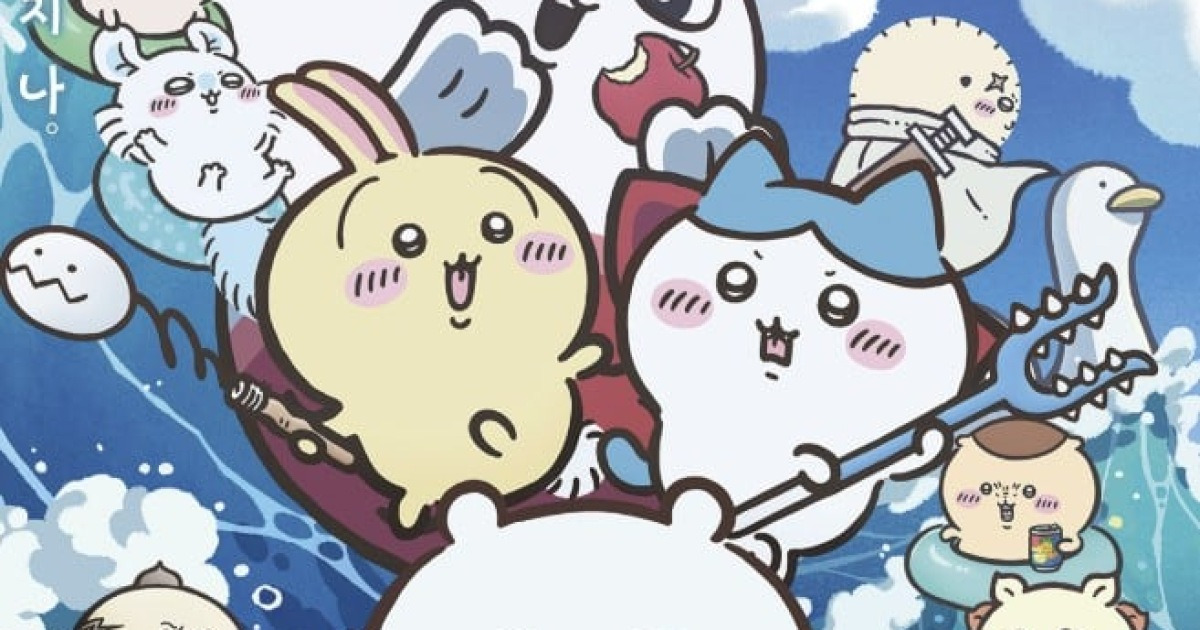
The three protagonists are deceptively simple. Chiikawa, a hamster-like creature who cries frequently. Hachiware, a cat-like friend who worries about Chiikawa’s failures. Usagi, a rabbit who vibrates with unchecked energy and makes chaotic noises. They look like the kind of characters you’d find on a keychain at a convenience store. You probably already have one if you traveled to Japan recently.
But the world they inhabit is punishing. These are not characters who go on adventures for fun. They work. They pull weeds and exterminate monsters for compensation, carrying spears into battles they frequently lose. Chiikawa has failed a weeding certification exam twice and is attempting it a third time. The emotional core of the entire franchise is not cute friendship — it is the quiet dignity of creatures who keep going despite systemic hardship.
That is why the demographic skew is significant. This is not children’s animation. It is content made by and for people who recognize themselves in characters who work hard, fail publicly, and try again anyway. The 239 short episodes available on YouTube total roughly four hours and have become a binge format precisely because the characters feel like people you know.
The film is a horror movie disguised as a comedy
Mermaid Island’s Secret follows the trio after they pick up a flyer promising 100 times the normal compensation for simple monster extermination on a remote island, along with unlimited food. They go. The island has secrets.
A Korean critic describing the tone as comparable to The Wailing or Midsommar is not being decorative. The film explores original sin, cannibalism, greed, revenge, judgment, survival, and loss — all while the protagonists behave in adorably naive ways. The dissonance between visual design and narrative content is the engine of the experience. Characters smile while catastrophic things unfold. The gap between surface and depth produces a kind of dread that mainstream animated features rarely attempt.
There is a hidden message embedded in the theme song that will make you rewatch the credits sequence with different ears. The first syllables of each food name listed in the lyrics — takoyaki, sukiyaki, kebab, teriyaki — spell out “tasukete,” which means “help me” in Japanese. The characters sing it brightly. The implication is that they may become the food. It is grotesque and funny and perfectly calibrated to the franchise’s sensibility.
The ending, revealed only after the full credits roll, commits to a tone most family-friendly IP would avoid entirely. It does not reassure. It confirms.
What this means for the industry
The numbers matter more than the nostalgia. Thirty-six-point-five percent of advance tickets for a foreign-language animated feature in a market that normally favors domestic productions is unusual. It suggests that the audience for this content has been building silently — through merchandise, through YouTube binges, through word of mouth — and is now ready to translate digital affection into theatrical spend.
CJ ENM’s decision to distribute the film reflects a broader shift in how Korean studios evaluate cross-border IP. The old model assumed Japanese animation would compete with Disney and Pixar on merit. The new model recognizes that character ecosystems can cross borders without language barriers when the emotional architecture is sound. Chiikawa works because its central question — how do small, vulnerable beings survive a harsh system? — is universally legible.
For Japanese creators, this is validation of a strategy that has paid off slowly and steadily: build a world that rewards deep engagement, not just casual consumption. The 239-episode YouTube series is not filler content. It is infrastructure. It created an audience that no single film could have reached on its own.
Who wins, who loses
The winners are predictable: CJ ENM, if the film holds through the weekend; Bandai Namco and the Chiikawa IP holders, who now have a confirmed theatrical presence in Korea beyond merchandise revenue. The merchandising angle is substantial — a correspondent who saw the film immediately purchased Chiikawa T-shirts after the screening, a detail that reveals how the emotional response to this content translates directly into commercial action.
The loser, for now, is Assassins, a domestic thriller that entered this weekend as the expected winner and has been pushed to second place by a hamster character. That reversal tells you something about audience priorities this season.
What remains uncertain is sustainability. A single strong opening weekend does not establish a franchise foothold. The question for the next three months is whether Korean audiences will return for future Chiikawa films or treat this as a one-time cultural moment. The YouTube backlog suggests there is enough content to sustain interest, but theatrical conversion rates for animated features tend to drop sharply after the first viewing.
One thing is clear: the boundary between “kids’ content” and “adult-oriented narrative” has dissolved for a generation that grew up watching four-hour YouTube binges of characters who cry while fighting monsters for a living. Chiikawa is not cute because it is simple. It is cute because it is honest about how hard life is, and then asks you to laugh anyway.