China Just Turned Open-Source AI Into a BRICS Weapon
Xi Jinping's proposal for a BRICS open-source AI zone isn't just about code — it's a bid to build a parallel AI ecosystem that sidesteps Western control and locks in geopolitical influence across the Global South.
The Open-Source Gambit
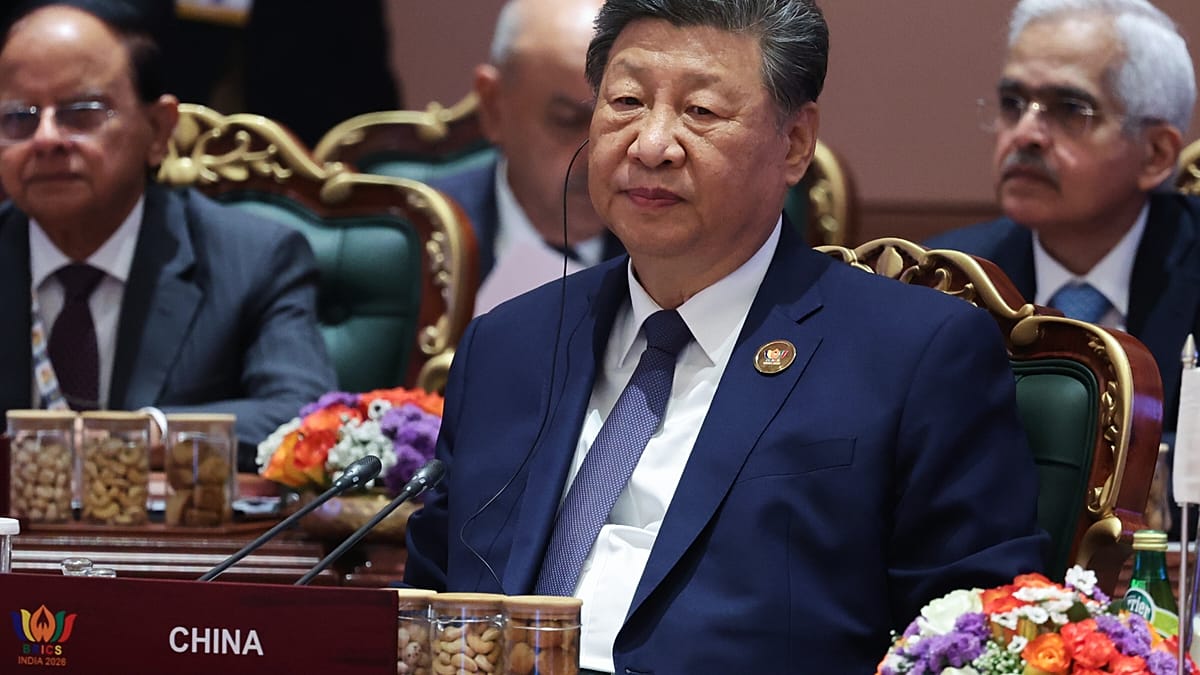
At the BRICS summit in New Delhi on September 13, 2026, Chinese President Xi Jinping made a proposal that looked technical on the surface but carried deep geopolitical weight. China would lead the creation of an “open-source zone for artificial intelligence” for the 11-nation bloc. The reading from state broadcaster CCTV painted it as a cooperation initiative — shared research, shared training, shared large language models. But read between the lines and you see something sharper: a deliberate architecture for building a parallel AI ecosystem, one that drains dependence on American platforms and locks in Chinese influence across the developing world.
The framing matters. Western AI development — led by companies like OpenAI, Google, and Anthropic — has largely moved toward closed models: proprietary, API-gated, and controlled. China, by contrast, has staked a claim as the champion of open-source AI. Companies like Alibaba, Baidu, and the startup founded by former Google engineer Zhang Zhilin have shipped models that compete globally on benchmarks while keeping their weights public. Xi is now formalizing that advantage into institutional infrastructure through BRICS.
What distinguishes this from previous Chinese overtures in technology cooperation is the explicit BRICS channel. Beijing has floated similar ideas before — the Global AI Governance Initiative in 2023, various bilateral partnerships with individual member states — but those efforts lacked a unifying institutional mechanism. The open-source zone proposal is different because it embeds the concept directly into BRICS structures, turning a policy preference into a collective commitment. That institutionalization is what transforms a diplomatic gesture into a strategic project.
Who Wins, Who Loses
The winners are BRICS member states and, more broadly, countries in the Global South that have been priced out of the closed AI economy. An open-source zone means local adaptation without license fees, without data exfiltration back to Silicon Valley, and without the risk of a Washington-imposed restriction cutting off access overnight. It means a Vietnamese university can fine-tune a Chinese language model for agricultural forecasting. It means a Brazilian fintech can build on open weights rather than paying per-token to an American provider.
The losers are the incumbents. The United States and its closest tech allies lose ground not through superior competition but through exclusion — because another viable stack is now being built at scale with the implicit backing of the world’s second-largest economy. And within BRICS itself, India sits in an awkward position. It is both a participant in the group and a strategic competitor to China. New Delhi has its own ambitions in AI, including a domestic large model push, but it also benefits from open-source access to Chinese-built infrastructure. That tension will shape how far the zone actually goes.
There is a secondary effect worth tracking: the potential realignment of non-BRICS Global South nations. Countries that have watched the BRICS expansion with interest — Saudi Arabia, Iran, Egypt, Indonesia — may see the open-source zone as a template for their own positioning. If China demonstrates that this model can deliver tangible results, the invitation extends beyond the bloc. That would dramatically expand Beijing’s reach into regions that currently rely on a mix of American platforms and limited domestic capability.
The Infrastructure Is the Strategy
What makes this proposal more than rhetoric is the commitment to “specialised research and training on AI” for BRICS countries. That language signals a longer play: building human capital and institutional expertise around Chinese-origin models, standards, and tooling. Once a cohort of engineers, policymakers, and researchers in partner countries are trained on Chinese frameworks, the switching cost rises. The ecosystem becomes sticky. That is how tech influence compounds.
It is also how China’s model differs from America’s. The US exports products and platforms. China is exporting an infrastructure stack — one that includes the models themselves, the training data pipelines, the governance norms, and the educational pathways that sustain them. Open-source is the vector, but the goal is not ideological purity about software licensing. The goal is architectural dominance in the next decade’s computing layer.
Consider the precedent set by China’s earlier infrastructure exports. The Belt and Road Initiative built ports, railways, and telecommunications networks across developing nations, creating dependencies that endure decades after construction. The BRICS open-source zone is the digital analogue: instead of concrete and steel, the bonds are formed through shared datasets, common model architectures, and interoperable toolchains. The result is structurally similar — recipient nations become locked into a Chinese-designed stack that is increasingly difficult and costly to replace.
A less visible dimension involves data flows. Open-source models trained on diverse multilingual datasets — particularly those incorporating Arabic, Swahili, Portuguese, and the languages of Central Asia — carry a strategic advantage that pure English-trained systems cannot match. For BRICS nations seeking AI that understands their linguistic and cultural context, Chinese-trained open models offer a genuine utility gap compared to American alternatives. That practical benefit reinforces the geopolitical play.
Governance as Geopolitics
Xi’s call for a “broad, consensus-based global AI governance framework” deserves attention precisely because it arrives alongside the open-source zone proposal. China is positioning itself as the voice of inclusivity in a domain where the West has tended toward restriction — export controls on advanced chips, tightening API regulations, debates over safety versus openness. A consensus-based framework, in practice, would dilute the leverage of any single country or coalition. For Beijing, that is an advantage. It gives China a seat at the table and a megaphone among the majority of nations that do not yet have dominant AI industries of their own.
The messaging strategy here is deliberate. While American officials debate whether to restrict model releases or mandate safety evaluations, China is framing itself as the defender of technological access — a narrative that resonates strongly in countries bearing the brunt of chip export controls. The open-source zone becomes both a practical alternative and a symbolic rebuttal to the idea that AI governance must mean AI restriction.
The timing adds another layer. Xi is expected to visit the United States later this month for talks with President Donald Trump, with AI governance expected on the agenda. That meeting will likely feature American demands for tighter controls and Chinese demands for broader access. The BRICS open-source zone gives Beijing leverage in those talks — it is proof that an alternative path exists and that the rest of the world has options. Every country that joins the zone weakens the argument that the US should be the sole arbiter of AI access rules.
What Comes Next
The open-source zone is still a proposal, not a deployed system. Its success depends on whether BRICS members follow through with funding, whether Chinese companies commit resources beyond rhetoric, and whether participating nations trust a Chinese-led infrastructure enough to build their futures on it. India’s participation will be the most consequential variable. Russia may welcome the anti-Western alignment but brings limited technical capacity. African and Latin American BRICS partners could be the real test — they have the demand and the need, but also the caution about dependency.
If the zone materializes, the next milestones to watch are concrete: the release of a jointly trained multilingual model, the establishment of a BRICS AI research institute, the adoption of Chinese-derived governance standards by member states. Each of these would mark a step from proposal to reality. If they do not appear within 18 to 24 months, the initiative risks becoming another diplomatic declaration — ambitious in language, lightweight in substance.
For English-language readers, the takeaway is simpler than the machinery behind it. China has identified open-source AI as a strategic lever and is now pulling it through the BRICS channel. The question for the next few years is whether the alternative stack becomes a credible second choice — or just another venue for Chinese influence dressed in open weights. The answer will determine not only where the Global South builds its AI future, but whose standards, language, and power structure that future reflects.