China's Fourth Sitting Politburo Member Purged — What It Means
Chen Jining becomes the fourth sitting Politburo member to fall in Xi Jinping's current cycle — a move analysts call unprecedented. The takedown sends shockwaves through Shanghai and abroad.
The Signal That Goes Beyond Corruption
Shanghai’s party chief is gone before he even finished his third year.
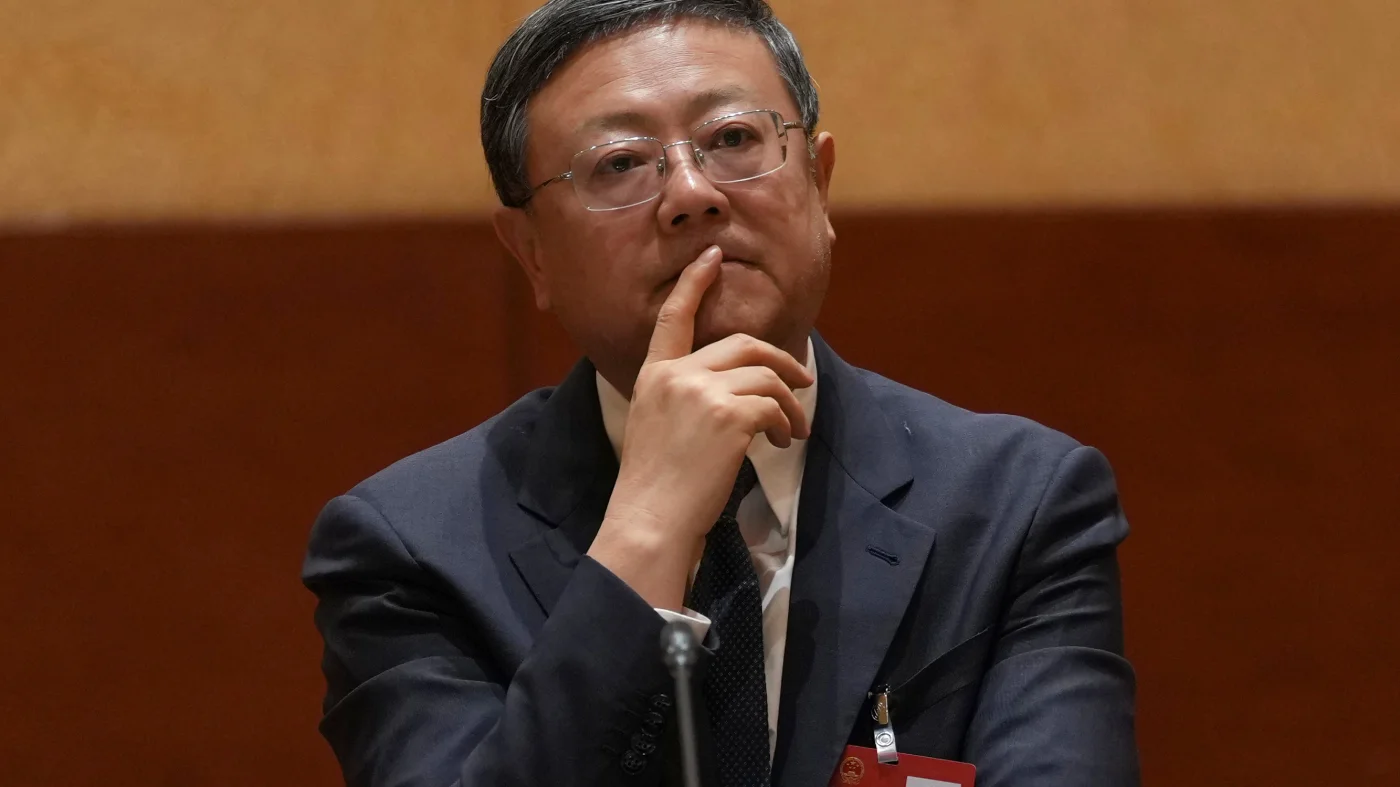
Chen Jining, the Politburo member who has helmed the Communist Party apparatus in China’s financial capital since 2022, was placed under investigation Tuesday by the Central Commission for Discipline Inspection for alleged violations of party discipline. The CCDI announcement was characteristically bare — no specifics, no charges listed. A follow-up statement from Shanghai’s own party standing committee declared firm support for the decision and framed it as proof that “the fight against corruption would continue without pause or retreat.”
That last part is worth noting. When a provincial-level authority is scripting the narrative around its own leader’s downfall, you are watching a performance of unity, not an organic response.
But the real story here is not the procedural theater. It is the arithmetic.
The Arithmetic Is What Makes This New
This is now the fourth sitting Politburo member to fall in Xi Jinping’s current leadership cycle.
The others are telling: General Zhang Youxia and General He Weidong, both senior members of the Central Military Commission, and Ma Xingrui, a provincial party secretary. The common thread is not the nature of the alleged offense — detail remains opaque across all four cases — but the fact that each was still actively serving on the Politburo when investigations began.
No previous administration in the post-Mao era has seen so many sitting members of its top leadership body taken down simultaneously. Mingda Qiu, a senior analyst at Eurasia Group, put it plainly: “The pattern is unprecedented.”
Joseph Torigian, a professor at American University, noted that some of those targeted appeared on paper to be exactly the kind of officials Xi would value. “We could easily come up with hypotheses for why he got rid of them,” Torigian said. That phrase — “we could easily come up with hypotheses” — is academic code for: nobody outside China knows the actual reason, and that uncertainty is itself the point.
The Military Factor Changes Everything
The inclusion of two Central Military Commission members — Zhang and He — alongside civilian officials like Chen and Ma elevates this beyond a routine anti-corruption sweep.
The PLA has historically been one of the most stable institutions in Chinese governance precisely because anti-corruption probes have largely sidestepped senior military leadership until now. Targeting sitting Politburo members with defense portfolios suggests Xi is compressing the space of insulated power centers. The military chain of command, long a potential check on civilian authority, is being drawn tighter within Xi’s direct orbit.
What comes next matters. If subsequent announcements tie specific allegations to defense procurement or strategic deployments, the market and intelligence communities will recalibrate their entire understanding of how far Xi’s consolidation drive extends.
Shanghai’s Leadership Vacuum
The immediate practical consequence lands in Shanghai.
Chen Jining has served as party secretary since 2022. His removal creates a vacancy at the top of a city that accounts for roughly 4 percent of national GDP and serves as the gateway for the vast majority of foreign corporate investment flowing into China. The Standing Committee announced Chen was relieved of his duties effective immediately. Until a replacement is named — and the formal process typically involves a brief interim arrangement followed by a Party Committee plenum vote — policy coordination, licensing approvals, and high-level introductions for multinational firms face an awkward limbo period.
Shanghai’s mayor, while a separate post, operates within a party architecture where the secretary holds ultimate authority. With the seat vacant, the bureaucracy keeps running on inertia, but strategic decisions stall.
Foreign companies with active projects in Shanghai — financial services, pharmaceuticals, advanced manufacturing — should expect delays in regulatory sign-offs that normally move with party-bureaucracy synchronization. That is the concrete cost of political turnover, measurable in weeks if not months.
The Stepping Stone That Is No Longer a Staircase
Historically, the Shanghai party secretary post has functioned as a culminating step toward the Politburo Standing Committee — China’s innermost ruling circle of seven. Former President Jiang Zemin, current Premier Li Qiang, and Xi himself all held the position before ascending.
Chen’s appointment in 2022 had been read by Beijing watchers as a signal that he was on that trajectory. His environmental portfolio at the Ministry of Environmental Protection and his prior work in Beijing municipal government were the conventional qualifications. His fall removes that reading entirely and replaces it with a colder truth: no career path is secure.
The stepping-stone logic once gave officials confidence that demonstrated competence and loyalty would eventually pay off in promotion. Now the calculus shifts. Retaining your position may be harder than earning it.
What Foreign Companies Should Actually Do
The question most international players want answered is whether this signals broader instability. It does not — exactly. What it signals is the opposite of instability. It signals the system working precisely as designed: authority concentrates upward, and no subordinate institution, however powerful, escapes review.
For corporate risk officers, the relevant move is not panic but precision. Map your engagement points in Shanghai against the specific ministries and committees whose mandates intersect your operations. Identify which officials currently hold signing authority during the transition period. Begin drafting contingency communications for regulators, partners, and internal stakeholders that acknowledge leadership change without speculating on outcomes.
Loyalty in Xi’s China is no longer proven only by what you build. It is increasingly defined by what you can survive when the ground beneath you moves without warning.
Chen Jining’s takedown is a milestone in that evolution.