Trump’s Kim Letters Signal Theater, Not Thaw
Trump’s claim that he can restart personal correspondence with Kim Jong Un instantly reveals more about Washington’s internal contradictions than Pyongyang’s posture—and it should alarm Seoul and Tokyo.
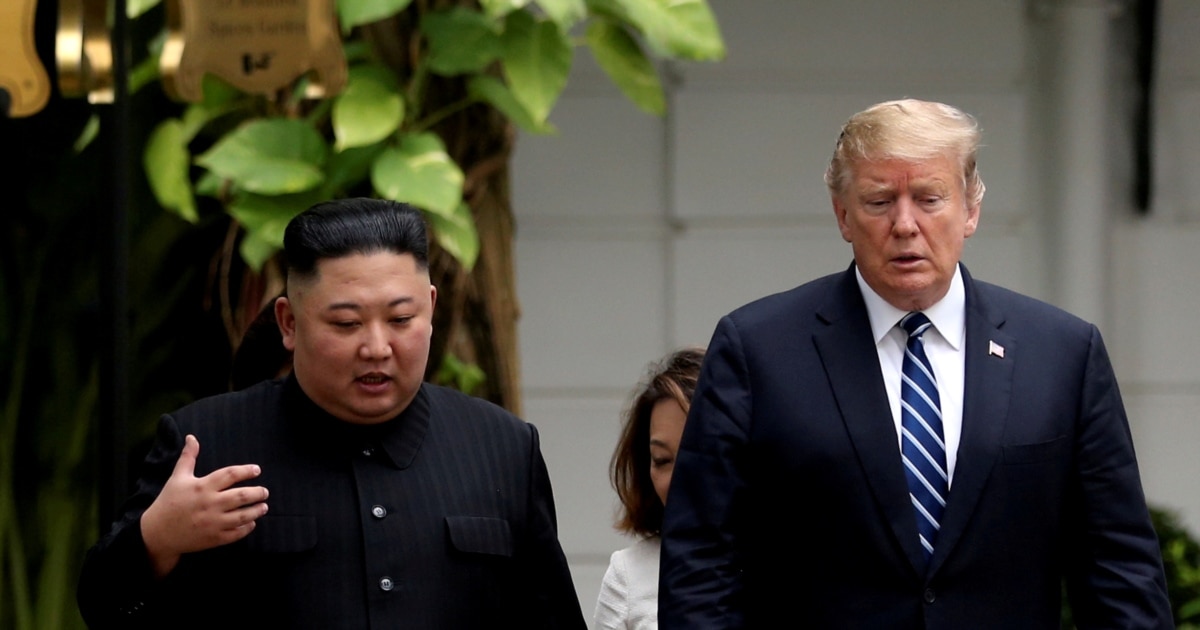
The gap between Trump’s mouth and America’s hands
Donald Trump told the New York Post over the weekend that he could restart sending handwritten personal letters to Kim Jong Un “right away,” adding that any resumed correspondence would center on nuclear issues. He did not say he had sent a new letter recently. When pressed, he said nothing of the kind had happened—his staff was occupied with other matters.
That sentence alone is the story. Trump the actor is performing accessibility; Trump’s own bureaucracy is publicly confirming inactivity.
On November 23, a US official told VOA there had been absolutely no effort by the current White House to arrange a US-North Korea summit during last week’s APEC window in Shenzhen. The ball, the official said flatly, sits in Pyongyang’s court.
Two sentences. No reconciliation offered.
What the letters actually signal
Trump’s first term saw him exchange dozens of warm personal missives with Kim—a style of leadership that delighted cable news cycles and alarmed allied capitals. The letters produced three summits: Singapore in June 2018, Hanoi in February 2019, and the dramatic third meeting at Panmunjom in June 2019, where Trump crossed into North Korea as a sitting US president.
None of those meetings produced verifiable denuclearization steps. What they produced was a temporary cooling of tensions, which the North Korean regime exploited to accelerate its missile and nuclear programs with far less international pressure.
So when Trump now says the letters could resume “any day now,” he is offering two things simultaneously: a personal gesture aimed at domestic audiences who want him to look strong on foreign policy without paying any real cost, and a signal directed at Beijing and Pyongyang that Washington remains distracted enough to flirt with symbolism over substance.
The allies hear exactly what they fear
Seoul should read this as deeply unsettling. President Yoon Suk Yeol has spent his term hardening South Korea’s posture toward the North—expanding joint military exercises with Washington, accelerating indigenous missile capabilities, and positioning Seoul as the anchor of a trilateral security architecture with Japan and the United States. Any unilateral pivot by Trump back toward personal diplomacy with Kim, pursued without coordination with Tokyo or Seoul, would undercut that strategy overnight.
Japan faces the same threat multiplied. Tokyo already worries that a deal struck between Trump and Kim would lock in North Korea’s nuclear status as a fait accompli, stripping Japan of leverage over its kidnapped citizens while preserving the very missiles that can reach Japanese soil. If Trump resumes letter-writing without requiring tangible concessions on abduction cases or missile tests, the price of theatrical warmth is paid entirely by the countries sharing borders with Pyongyang.
China watches and adjusts
Beijing’s calculus deserves equal attention. A distracted United States, one where the president alternates between maximalist threats and intimate correspondence with an authoritarian leader, creates an opening in Northeast Asia that China is well positioned to fill. Chinese state media has already begun framing Trump’s comments as evidence that Washington’s attention is fragmenting across multiple crises, leaving regional security to be managed by local powers.
The fact that no US-North Korea meeting occurred during APEC—an event hosted by China itself—is notable. China chose not to facilitate contact even though it benefits from appearing as a responsible stakeholder. That choice suggests Beijing prefers the status quo of managed tension over a dramatic breakthrough that might legitimize Kim’s regime further or draw the United States deeper into regional affairs.
The administrative disconnect
Here is the structural reality nobody in the White House is reconciling: Trump’s instinct for personal diplomacy runs directly counter to the institutional position of his own national security apparatus. The WSJ reported earlier this month that the administration did attempt to use the APEC trip as cover for summitry, only for Pyongyang to present terms Washington found unacceptable. The White House has not changed its public position on denuclearization prerequisites, yet Trump continues to suggest the door is open on his timetable.
This is not a new pattern. During his first term, senior officials frequently disclosed that behind-the-scenes work on Korea was stalled or abandoned, even as Trump posted glowing messages about his relationship with Kim on social media. The effect was a persistent credibility gap that allies learned to discount and adversaries learned to exploit.
Who wins and who pays
Kim Jong Un wins most. He gets to watch the world’s most powerful leader offer him attention without extracting anything concrete. He gets to maintain his nuclear arsenal while letting Trump absorb the domestic criticism that will come when the inevitable next provocation occurs. And he gets to keep Seoul and Tokyo uncertain about where American commitment actually stands.
Trump wins politically at home. The image of a president personally engaged with a dictator—handwritten letters and all—plays well in precincts that equate contact with strength. It costs almost nothing unless something actually comes of it.
Seoul and Tokyo pay the bill. Their security architectures depend on predictable American commitments. Theater diplomacy introduces precisely the ambiguity that makes alliance management harder, defense planning more expensive, and deterrence less credible.
What happens next
If Trump follows through on resuming correspondence, expect a short burst of optimistic headlines followed by another North Korean test—likely an ICBM flight or a underground nuclear detonation—within weeks. The cycle Trump created in his first term will reiterate itself: warmth on broadcast, provocation in secret, confusion among allies.
The more likely outcome, given the administrative signals, is that nothing changes materially. The letters stay dormant. Trump moves on to the next headline. Pyongyang continues building its arsenal. And Washington’s disarray becomes a permanent feature of Northeast Asian security thinking rather than an aberration.
Either path leads to the same conclusion: personal diplomacy without institutional backing is not diplomacy at all. It is performance—and in geopolitics, performances have real victims.