China Hits Japan's Chip Suppliers With Anti-Dumping Weapon
Beijing's anti-dumping determination targeting Japanese semiconductor-material exporters marks the first time China has weaponized trade law against Tokyo's chip-supply chain. It's a new front in an escalating containment war with consequences that extend far beyond tariffs.
A New Weapon in the Chip War
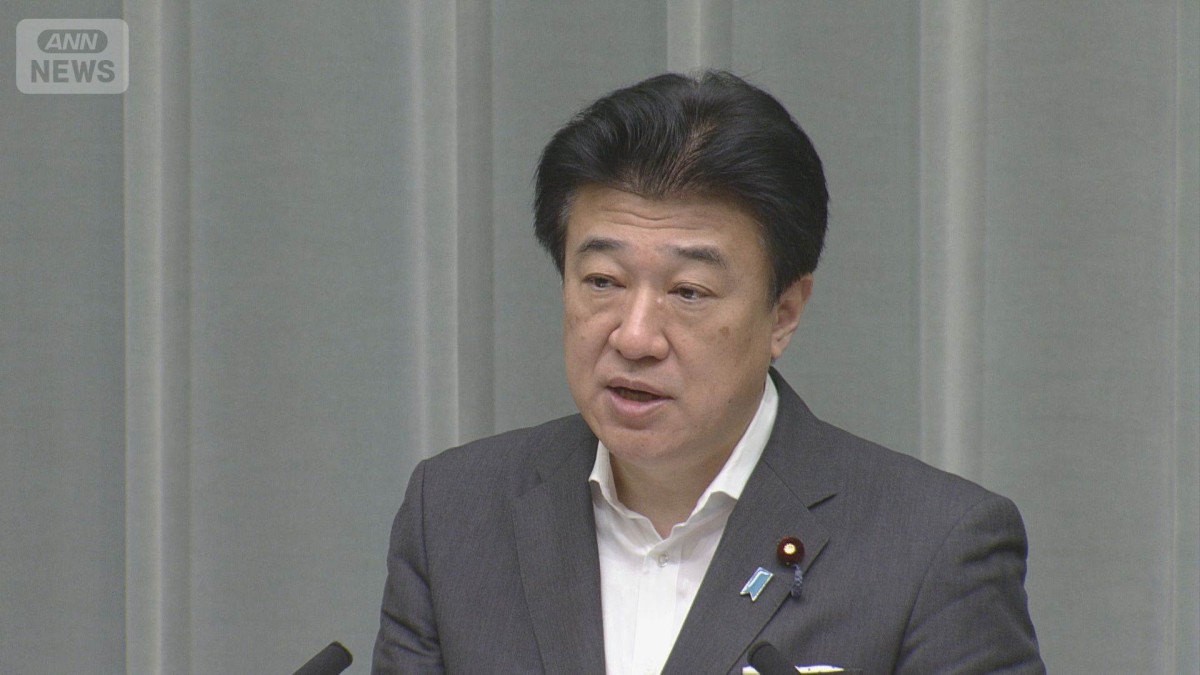
China has formally determined that Japanese semiconductor-material exporters are engaging in dumping — the first time Beijing has used anti-dumping law as a direct strike against Tokyo’s chip-supply chain. The announcement, confirmed by Japanese Chief Cabinet Secretary Kihara, who said the government would “respond so there is no impact,” signals that the semiconductor containment strategy now has a second frontline: not just export controls imposed by the US and allies, but retaliatory trade law wielded by China itself.
This development represents a qualitative shift in how the technology Cold War is being fought. For years, the United States and its partners have relied on export controls — restricting what can be sold to China — as their primary weapon. China’s response has been largely asymmetric: investing heavily in domestic alternatives, cultivating non-Western suppliers, and waiting out the pressure. Now Beijing has adopted the very legal instruments its adversaries have used against it, turning trade remedy law into an offensive tool rather than a defensive shield.
The timing is significant. Japan recently joined the United States in expanding restrictions on semiconductor equipment exports, adding several critical chemical and material categories to the control list. China’s anti-dumping determination is the mirror image of that policy — a legal counterpunch designed to raise the domestic political cost of further Japanese coordination with Washington.
What the Designation Means
An anti-dumping determination allows China’s commerce ministry to impose retroactive duties on imports found to be sold below fair value. For semiconductor materials, the consequences are immediate and asymmetric. Japanese firms do not dominate because they sell cheaply — they dominate because few others can produce certain photoresists, fluorinated polymers, high-purity chemicals, and specialized gases at the required specifications. A dumping finding reframes that dominance as evidence of market distortion, which is a legal maneuver designed to create space for domestic substitution and to raise the cost of Japanese inputs for Chinese buyers.
The retroactive element is particularly sharp. Duties can apply to shipments imported during the investigation period, creating a financial tail risk that makes long-term contracting difficult and forces Japanese exporters to absorb unexpected costs or pass them through to Chinese customers who may simply stop ordering.
Chief Cabinet Secretary Kihara’s public insistence that there will be “no impact” reads less as a reassurance and more as a signal of how much damage the government is trying to preempt. Japanese officials are clearly bracing for tariff impacts, supply-chain rerouting, and potential Chinese retaliation against further Japanese export controls. The contradiction between the government’s confident rhetoric and its mobilization of contingency planning tells you everything about the severity of the situation.
The Players Behind the Targeting
Japan’s semiconductor-material sector is concentrated among a handful of companies whose market shares in specific input categories run dangerously close to monopoly levels. Companies such as Shin-Etsu Chemical, JSR, Tokyo Ohka Kogyo, and Hitachi Chemical have built positions over decades that are difficult to replicate. These are not commodity producers — they are specialists who have invested 30 to 40 years mastering formulations and processes that Chinese competitors are only now beginning to approach. That decades-long head start is precisely what makes the dumping allegation feel like a legal fiction rather than an economic reality.
Shin-Etsu, for example, controls an estimated 50 percent or more of the global market for certain semiconductor-grade silicon wafers and photoresist materials. JSR dominates in advanced photoresists used in EUV lithography. Tokyo Ohka Kogyo holds similarly concentrated positions in lithography-related chemicals. When China designates their exports as dumped, it is not simply targeting corporations — it is targeting supply-chain nodes that the rest of the world depends on.
The narrowness of the targeting is itself a signal. China could have launched a broad-based trade investigation covering dozens of Japanese exports. Instead, it focused precisely on the semiconductor-material companies most entangled with US-led export controls. This was not an accidental overlap; it was a calibrated strike.
Who Wins. Who Loses.
China’s stated objective is clear: protect and nurture its domestic semiconductor-material industry while punishing foreign firms it views as leveraging their positions unfairly. A successful anti-dumping campaign could provide Chinese producers with breathing room to scale up, backed by state support and preferential procurement. The real prize, however, is not the tariff revenue — it is the narrative. By framing Japanese dominance as dumping, China reframes its own technological catch-up as defensive self-defense rather than aggressive competition.
Japanese exporters lose in the short term. Even if duties are moderate, the uncertainty alone is damaging. Chinese buyers — many of whom are state-backed chipmakers — now have a policy lever to pressure Japanese suppliers, delay orders, or shift procurement toward alternative sources. The reputational effect is worse than any single tariff: the designation embeds the narrative that Japanese exports are predatory, which legitimates further restrictions.
The broader semiconductor industry loses flexibility. The supply chain was already stressed by US export controls, Chinese self-sufficiency drives, and geopolitical uncertainty. Adding a Chinese anti-dumping action on top of that creates a two-front compliance problem for multinationals that buy from Japanese firms and sell into the Chinese market. These companies now face contradictory pressures: Washington telling them to restrict access to China, Beijing telling them to punish Japanese suppliers, and their own boards demanding predictability that no longer exists.
Second-order effects are already visible. Alternative suppliers in South Korea and Europe are being courted by Chinese buyers looking to diversify away from Japanese materials, even where those alternatives lack equivalent performance. This accelerates the fragmentation of the supply chain and increases costs for everyone — including Chinese chipmakers, who may find themselves paying more for inferior inputs as they scramble to reduce dependence on Japan.
What Happens Next
Expect Japan to pursue diplomatic channels and possibly WTO dispute mechanisms, though both routes are slow. The WTO dispute system is currently crippled by the blocking of appellate-body appointments, leaving little functional recourse. Tokyo’s more likely near-term response is emergency support for affected firms — subsidies, export-credit guarantees, and diversification incentives to redirect sales toward non-Chinese markets.
China is unlikely to stop at this single determination. Anti-dumping cases are incremental tools, and Beijing can expand the scope to additional material categories or deepen duties in subsequent reviews. The Korean semiconductor-material firms that have also faced US export-control pressure may find themselves targeted next, given the similar structure of their market positions. A pattern is emerging: China is systematically identifying the chokepoints in the Western-aligned supply chain and applying legal pressure at each one.
For global chipmakers — TSMC, Samsung, Intel, SK Hynix — the practical implication is rising complexity and cost. Every node in the supply chain now carries dual regulatory risk: US-aligned restrictions on one side, Chinese trade remedies on the other. The era of frictionless semiconductor sourcing is over. Supply-chain resilience is no longer measured by efficiency but by the ability to navigate an increasingly hostile regulatory environment.
The Structural Problem
Kihara’s calm phrasing masks a genuinely difficult moment. Japan’s government is trying to hold two incompatible positions simultaneously: maintaining tight coordination with Washington on chip restrictions while shielding domestic firms from Beijing’s retaliation. So far, neither goal is fully achievable.
The anti-dumping designation is the visible symptom of a structural problem that is only going to widen. As the United States and Japan tighten export controls, China has every incentive to raise the cost of compliance for Japanese firms. And as Japan and the United States deepen their security partnership around technology containment, China will continue to weaponize every instrument at its disposal — including trade law, investment restrictions, and regulatory harassment. The chip war is no longer fought only at borders and checkpoints. It is fought in customs offices, in trade ministries, and in the quiet corridors of international law. Japan’s semiconductor-material companies are now on the front line, and there is no clear path to safety.