China's Robots Just Broke Usain Bolt's Record. The Real Race Is Just Starting.
A Chinese humanoid robot ran the 100m in 9.39 seconds at the World Humanoid Robot Games in Beijing, surpassing Usain Bolt's world record. But the real story is what this means for the US-China robotics competition.
The Numbers That Should Make Silicon Valley Nervous
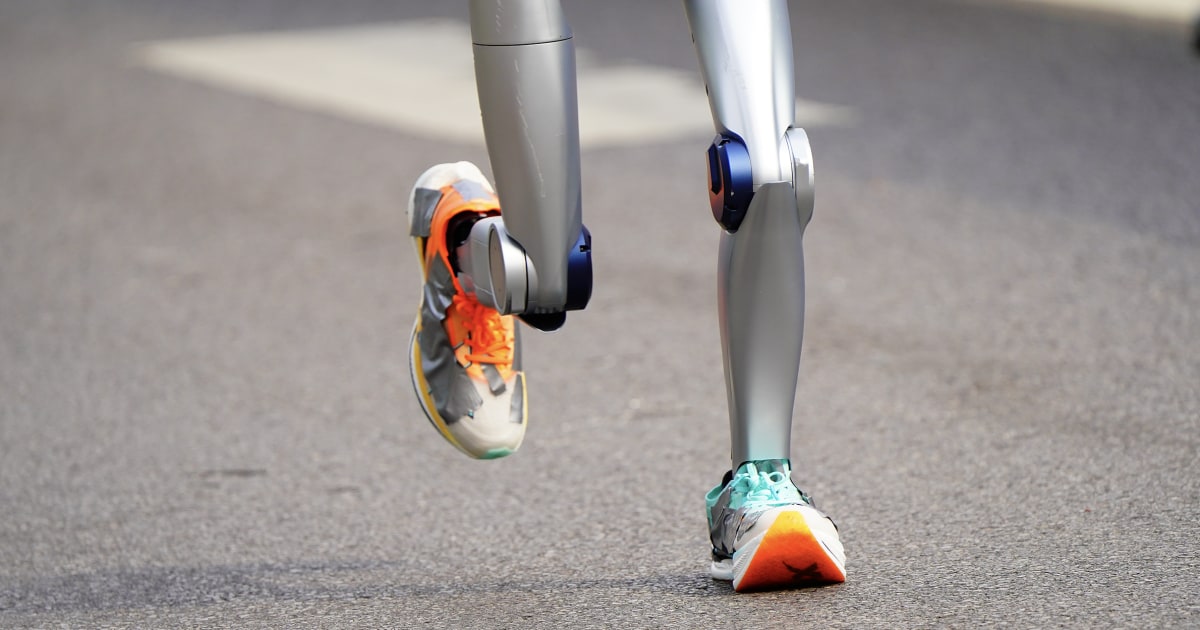
A humanoid robot crossed an imaginary finish line in Beijing in 9.39 seconds last Saturday. That is faster than the fastest human being who ever lived. Usain Bolt’s 100-meter world record, set at the Berlin World Championships in 2009, has stood for over 15 years. It survived drug scandals, generational shifts in sprinting, and the kind of attention every Olympic record receives. A machine built by a Beijing-based robotics firm walked through it on a track surrounded by 2,000 other humanoid robots.
The setting mattered. This was not a controlled lab environment with a robot on a conveyor belt. It was the opening ceremony of the World Humanoid Robot Games, a five-day event organized as a parallel Olympics for humanoid machines. The venue — the National Speed Skating Oval built for Beijing’s 2022 Winter Games — was packed with an audience watching robots march in formation, compete in table tennis, soccer, and weightlifting, and demonstrate coordination at a scale that was previously unheard of.
The timing was no accident either. The games opened the same week as the 2026 World Robot Conference, where roughly 3,000 products were on display. China is not quietly building robots in garages. It is staging them in front of the world.
Who Built What, and How Credible Are These Records
The robot that ran the 9.39-second 100-meter sprint and achieved a standing high jump of 2.88 meters — clearing the human high jump world record of 2.45 meters set by Javier Sotomayor in 1993 — came from X-Humanoid, a Beijing-based company. Honor, the smartphone subsidiary, fielded its own “Lightning” robot, which clocked 9.32 seconds during a trial run at a peak speed of 14.5 meters per second.
Several details here deserve scrutiny. The 100-meter sprint record for a humanoid robot was set during the games themselves, under what organizers described as competitive conditions. But the trial time from Honor was slightly faster — 9.32 versus 9.39 — suggesting either that conditions at the trial were more favorable or that the official result was conservatively reported. Both numbers are faster than Bolt’s 9.58. Neither comes from a sport designed for machines.
The high jump result is more striking. Last year’s first edition of the games saw a best standing high jump of 0.95 meters by a humanoid robot. This year, that number jumped to 2.88 meters — a threefold improvement in a single year. Whether this reflects genuine engineering acceleration or a change in rules and judging criteria between editions remains unclear from the available information.
The US Response: Bans Before Breakthroughs
The robot games occurred against a backdrop of escalating American friction with China over robotics. Last month, the Federal Communications Commission announced a ban on imports of new foreign-made humanoid robots, citing national security concerns. The stated target was China. The Pentagon subsequently added Unitree — one of China’s most prominent humanoid robot manufacturers — to a list of companies with alleged military ties.
Beijing has pushed back against both moves. The broader pattern, however, is telling: the United States is responding to Chinese robotics progress with regulatory action rather than competing head-to-head in the same arena. China is hosting robot Olympics with 16 countries participating and thousands of machines on display. America is filing import bans.
This is not to suggest that the national security concerns are unfounded. The same capabilities that make a humanoid robot useful for logistics, manufacturing, or elder care also make it potentially useful for surveillance, reconnaissance, or combat support. The question is whether banning Chinese robots accelerates American development or merely cedes ground in a market where China already leads in deployment scale.
What the Record Actually Means
Humanoid robots at this level of athletic performance are not yet deployed in factories, hospitals, or homes at scale. Experts at the games acknowledged this publicly. The technology remains closer to demonstration than to mass application. Energy efficiency, durability, and cost remain significant barriers.
But the trajectory is unmistakable. The jump from 0.95 meters to 2.88 meters in high jump in one year is the kind of progress curve that typically precedes — rather than follows — commercial deployment. When a capability improves threefold in twelve months, the people who dismiss it as “just a demo” are usually wrong about the timeline, even if they are right about the current limitations.
Western robotics firms face a compounding problem. They are simultaneously trying to match Chinese performance, navigate a regulatory environment that is increasingly restrictive toward Chinese imports, and compete in a market where China is accelerating faster than expected. The FCC ban may slow the flow of certain Chinese robots into American markets, but it does not slow the flow of engineering insights, talent, and iterative improvements that happen at events like the World Humanoid Robot Games.
Who Wins, Who Loses, and What Happens Next
China wins on visibility and momentum. The games put Chinese robotics on a global stage at a moment when Western attention is fragmented between AI software races and semiconductor restrictions. A robot beating Bolt’s record is the kind of image that travels faster than any policy paper.
Western robotics firms lose relative position if they continue to treat humanoid robots as a secondary priority. The companies that are scaling production, refining locomotion, and building real-world datasets in China are accumulating advantages that will be difficult to reverse through regulation alone.
The next twelve months will determine whether these records are isolated showpieces or early markers of a new industrial capacity. If humanoid robots move from sports stadiums to warehouse floors at anything close to the current pace of improvement, the economic and strategic implications will dwarf the spectacle of a robot crossing a finish line before a human ever could.
The robots are coming. The only question is whether the West is running fast enough to meet them.