China's Orbit Refuel Breakthrough Changes the Space Insurance Game
China's claim of successfully refueling a BeiDou satellite in high orbit isn't just a technical feat — it upends the economics of space infrastructure and gives Beijing a durable edge in navigation resilience that Western insurers haven't priced in yet.
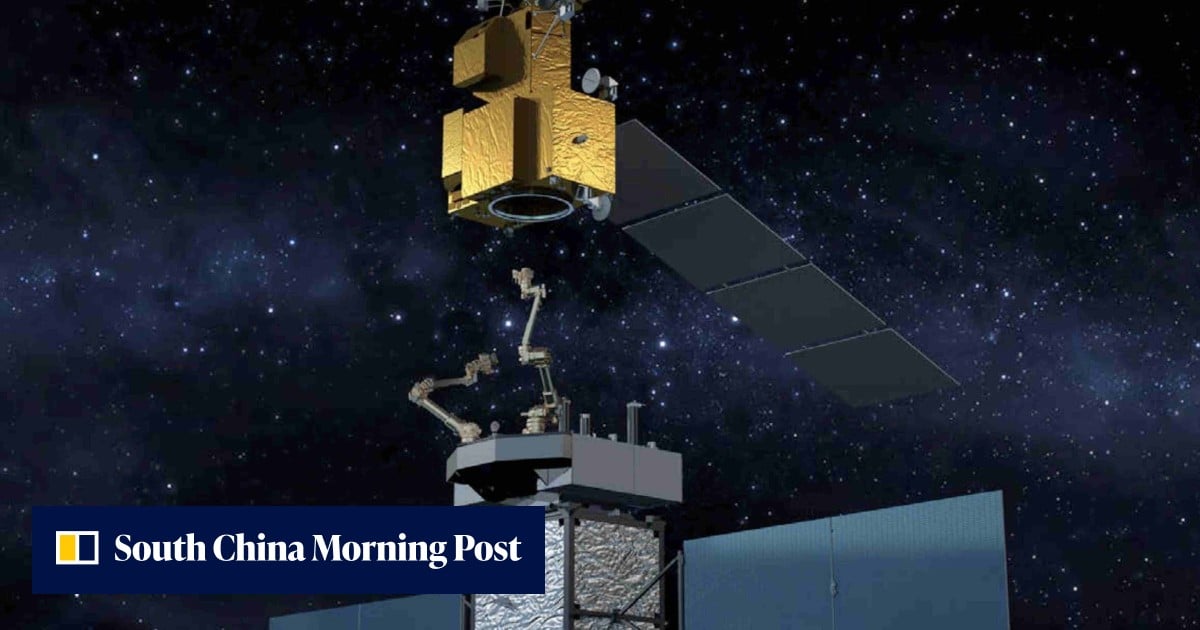
China Just Fixed the Weakest Link in Satellite Design
A paper sitting in peer review at the Journal of Deep Space Exploration carries a claim that sounds technical but carries enormous strategic weight: Chinese researchers say they have performed the first room-temperature propellant refueling of a high-orbit BeiDou navigation satellite.
No operational details followed. The team from the state-funded Deep Space Exploration Laboratory offered only that the operation succeeded and that it produced “valuable experience” — a phrase that in Chinese technical literature usually means something far more significant than it reads in English.
What this means in practice is hard to overstategive.
The Real Bottleneck Was Never Launching Satellites
Building a satellite that reaches orbit is expensive but solvable. The real problem has always been what happens after. Satellites carry a finite supply of propellant for station-keeping and orbit adjustments. When that runs dry — typically after five to fifteen years depending on the orbit — the satellite is dead, no matter how healthy its instruments remain.
Replacing a failed navigation satellite is neither quick nor cheap. A BeiDou-3 constellation satellite costs roughly $200 million to build and launch, and launching a replacement requires booking a heavy-lift vehicle, which has its own queuing problems. The gap between a satellite running out of fuel and a new one reaching its operational orbit can stretch months or even years, during which the constellation operates with reduced redundancy.
In-orbit refueling eliminates that gap. A servicing craft can dock with a fuel-starved satellite, transfer fresh propellant, and extend its operational life by several years. That’s not incremental. That’s a structural change to how navigation networks are designed, insured, and deployed.
Who Loses When the US Can’t Refuel
The United States has no comparable public program. NASA studied orbital refueling for decades and published extensive research but never flew a mission that demonstrated it. The Commercial Resupply Services landscape that emerged in the 2010s focused on cargo delivery to the International Space Station, not satellite servicing in high Earth orbit. Private companies like Northrop Grumman’s Mission Extension Vehicle have demonstrated some rendezvous and capture capabilities in geostationary orbit, but these are angular momentum replacement units — not propellant transfers for navigation satellites in the medium Earth orbit where BeiDou and GPS satellites operate.
That absence matters.
GPS satellites are roughly two decades old on average. The Block III series extends expected lifetimes to fifteen years, but the constellation still faces periodic gaps when older satellites approach their fuel limits. A single-point failure in GPS during a crisis — and navigation is a single point of failure for everything from drone swarms to hypersonic missile guidance to financial timestamping — would expose a vulnerability that China would not hesitate to exploit.
BeiDou, now with over thirty operational satellites, can rotate surviving units through refreshed propellant loads. GPS cannot. That asymmetry is not permanent, but it exists right now.
The Insurance Angle No One Is Pricing In
Space insurance operates on actuar models built around satellite lifetime expectations. Premiums are calculated assuming that a navigation satellite’s useful life ends when its propellant is exhausted. In-orbit refueling breaks that assumption.
Insurers have not adjusted. Reputable satellite operators in the US and European allied networks are still pricing policies on the old model. The moment China demonstrates a second refueling — and the lack of details in this paper strongly suggests the first was not a one-off — insurers will scramble to revise their models. The firms that price this risk correctly will gain a competitive advantage. Those that don’t will absorb losses.
For allied governments, the implication is sharper. If navigation satellite insurance becomes cheaper for operators who can refuel in orbit, and only China can currently do that, the cost differential will push commercial and military customers toward BeiDou-dependant architectures, however reluctantly Western governments prefer to avoid that outcome.
Room Temperature vs. Cryogenic: The Next Step
The researchers explicitly flagged the need to develop technologies for transferring extremely low-temperature propellants. This is not a throwaway line. Room-temperature propellants — typically hypergolic or storable monopropellants — are easier to handle but deliver lower specific impulse than cryogenic fuels like liquid hydrogen or liquid oxygen. For large spacecraft and deep-space missions, that performance gap is decisive.
Successfully demonstrating room-temperature refueling in high orbit is a necessary stepping stone. It validates rendezvous, docking, and fluid transfer mechanics without the additional complexity of cryogenic tank management, which requires active cooling, pressurization control, and boil-off mitigation. Moving to cryogenic transfer is harder, not because the physics is unknown but because the operational envelope is wider and less forgiving.
If China’s next public demonstration involves cryogenic propellant transfer to a navigation-class satellite, the technology gap with the West widens from manageable to structural.
What This Means for Allies’ Infrastructure Strategy
Three consequences follow immediately.
First, the United States and its allies need a credible in-orbit servicing capability for medium Earth orbit navigation satellites within the next half decade, or they accept a permanent asymmetry in navigation resilience. This is not a question of prestige. It is a question of whether GPS can credibly guarantee continuous availability through a crisis that a rival system cannot disrupt.
Second, satellite design standards should shift. Future navigation constellations ought to be built with docking interfaces and refueling ports from the start, not as afterthoughts. The current generation of GPS Block III satellites was designed before orbital servicing became a credible requirement. The next generation must treat refueling as a first-class design constraint.
Third, the commercial space insurance market needs an immediate update to its risk models. Waiting for China to demonstrate a second refueling event before adjusting premiums is a strategy that bets on the first demonstration being a fluke. The research language — “first time” paired with “valuable experience” — makes that bet unwise.
The Silence Speaks
The absence of details in the Chinese paper is itself informative. A fully transparent demonstration would include images of the docking, telemetry traces, propellant quantities transferred, and the orbital adjustments achieved afterward. The Chinese team offered none of that. This is consistent with a pattern: China has a history of releasing technically sophisticated papers on space operations while deliberately withholding operational specifics that could reveal capability gaps or test limits.
The claim stands on its own merit or lacks it — but the strategic signal is clear. China is moving faster than any Western publicly acknowledged program on in-orbit satellite refueling, and the first-mover advantage in this domain carries compound benefits: more resilient navigation, longer satellite lifetimes, and a demonstration of systems engineering depth that extends well beyond the laboratory.
The space race is no longer about who can launch the heaviest payload. It is about who can keep that payload alive the longest. China just changed the terms.