China Just Recalled 4.3 Million Cars — Tesla Led the Way
China announced the largest auto recall in its history, targeting nearly 4.3 million vehicles across nine brands over dangerous emergency door handles. Tesla alone accounts for roughly 3 million of those units. The moves expose a growing fault in EV design and reveal how Beijing is redefining safety standards for the global electric vehicle market.
The Biggest Recall in Chinese Auto History
Nine manufacturers in China are recalling nearly 4.3 million vehicles. Roughly three million of those are Teslas. The reason: door handles that may prove too difficult to operate when a crash leaves a passenger trapped inside a burning car. It marks the single largest automotive recall in the country’s history and signals that Beijing is willing to rewrite the design rules that have shaped the electric vehicle market.
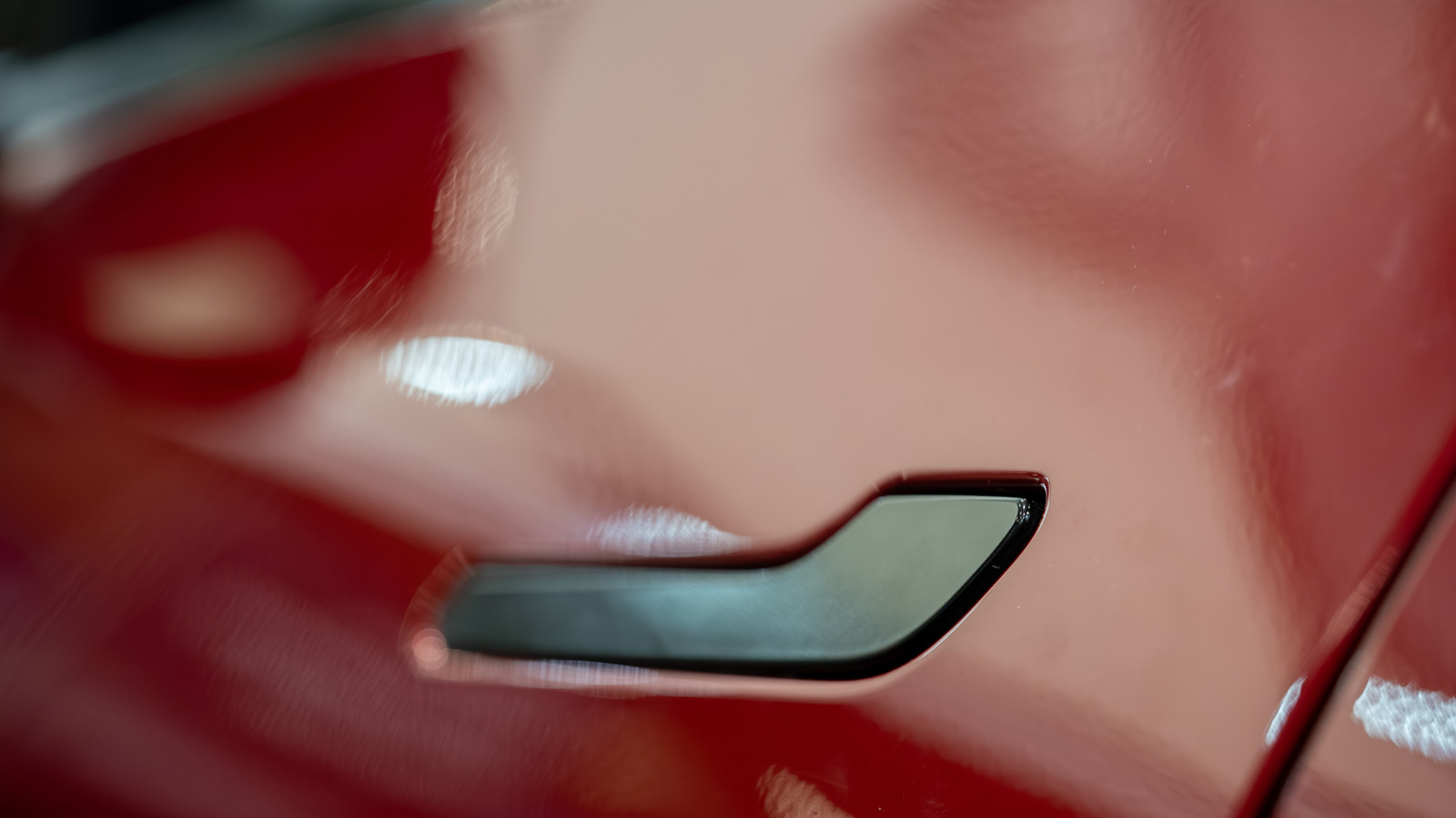
Most of the affected vehicles use flush-mounted, concealed door handles — the kind that look sleek on paper and disappear into a car’s bodywork. Regulators say the emergency mechanical release handles underneath are hard to locate and harder to operate under stress. The standard has become common across the industry because it helps aerodynamics and gives vehicles a futuristic silhouette. Now China is moving to ban the design entirely by 2027.
The scope of the recall spans models produced from 2019 through 2026, meaning both imported and locally manufactured vehicles fall under scrutiny. Tesla’s Giga Shanghai facility, which produces over a million vehicles annually, is at the center of the enforcement action. The company’s Model 3 and Model Y — the two best-selling EVs in China — are included. This is not a voluntary advisory; it is a mandatory safety recall issued by the State Administration for Market Regulation, the same body that oversees product safety across all sectors in China.
The Fatal Cases Behind the Numbers
Regulators did not act in a vacuum. In October of 2025, Chinese state media reported that the driver of a Xiaomi SU7 died after a fiery crash because a passerby could not open the car’s doors quickly enough. The story drew attention to a pattern of similar incidents. Passengers have been trapped inside vehicles after collisions because emergency releases remain hidden behind panels that look smooth but do not reveal their function to someone who sees the car for the first time.
Firefighters across China have flagged the problem internally for years. Shen Zhiyuan, a firefighter in Shenzhen, documented 22 cases in which concealed door handles prevented rescue efforts. In one incident, a passenger remained trapped for eight minutes after a collision before responders managed to extract her. The official record likely undercounts these cases, as many incidents never make it into public reporting.
The Xiaomi SU7 fire became a turning point. Social media footage showed bystanders pressing against the car’s exterior, confused by the absence of traditional handles. The vehicle’s emergency release mechanism exists — a manual pull cable hidden beneath a cover — but it requires knowledge and access that most untrained responders do not have in chaotic situations. Regulators cite this case and several others as direct evidence that the current design standard fails under real-world emergency conditions.
Unlike the United States, where regulatory action on this issue has been slow, China is moving fast. The government has linked these cases to a broader push for stricter safety standards in the electric vehicle market. Tesla was a pioneer in concealed door handles, and other OEMs followed suit. Now the company that designed the space is being asked to change the rules.
What the Recalls Actually Cover
Tesla’s recall begins September 25. The fix includes warning labels and an over-the-air software update that automatically lowers the car’s windows after a crash. Other manufacturers are announcing their largest recalls on record. Xiaomi is recalling 390,000 vehicles. Leapmotor is recalling 371,000. Xpeng is recalling 264,000. Geely is also filing with regulators. The total number of affected units is still being tallied.
Because many of the fixes will be delivered through OTA updates, the process should be relatively quick for owners. Some vehicles will need new interior cameras altogether. The imported Tesla fleet — roughly 50,000 Model 3, Model X and Model S vehicles from 2019 to 2026 — is facing a separate recall over driver monitoring systems that regulators say may be increasing the risk of collision.
The technical requirements behind the new standard are specific. By 2027, all vehicles sold in China must feature door handles that deploy outward automatically when the system detects a crash or when power is lost. Manual mechanical releases must be visibly marked and operable without tools. The standard also requires that emergency exits remain functional even if the vehicle’s battery is damaged or disconnected — a scenario that became a focal point after several high-profile fires.
Manufacturers are given a transition window. Vehicles already on the road can be retrofitted through software updates or physical modifications. But any new model launched after the 2027 deadline must comply with the revised standard from the factory floor. This means every automaker selling in China — including foreign brands like Mercedes-Benz and BMW, which have local production partnerships — will need to redesign door handle systems for the Chinese market.
Who Wins and Who Loses
Tesla wins by staying ahead of a potential safety crisis, but the company loses ground on a design standard it helped popularize. The recall exposes a vulnerability in a design choice that looks good on paper but creates risk under extreme conditions. Other OEMs lose similarly. The companies that adopted the design are now being asked to change the rules.
China wins on multiple fronts. The government demonstrates that it is willing to enforce strict safety standards in the electric vehicle market. The recall also exposes a gap in a design choice that looks good on paper but creates risk under extreme conditions. Beijing is moving to rewrite the rules that have shaped the EV market.
The United States loses by comparison. The government has not acted as aggressively on this issue. American regulators have been slow to respond to the same pattern of incidents. Chinese regulators have moved quickly. The contrast reveals a gap in regulatory oversight on this issue.
Consumer advocacy groups in China have long pushed for this action. Zhao Yan, a legal consultant who has followed automotive safety cases for nearly a decade, noted that the recall represents a shift from reactive punishment to proactive prevention. “For years, we’ve seen accidents, we’ve seen deaths, and nothing changed,” she said. “Now the government is saying: the design itself is the problem, not just individual failures.”
The financial impact on automakers is significant. retrofitting millions of vehicles with new sensors, cameras, and mechanical systems will cost billions across the industry. Tesla has estimated its own recall expenses at over $1 billion globally, though the company has not broken out the China-specific figure. Smaller manufacturers face proportionally heavier burdens. Xiaomi, which entered the auto market with limited manufacturing experience, must balance recall costs against its ambition to compete with Tesla in the premium EV segment.
The Broader Implications for EV Design
The recall reveals a gap in a design standard that looks good on paper but creates risk under extreme conditions. Flush-mounted door handles became common because they help aerodynamics and give vehicles a futuristic silhouette. Now regulators are moving to ban the design entirely by 2027. The standard has become common across the industry. Now China is moving to rewrite the rules.
The recall also reveals a gap in regulatory oversight on this issue. American regulators have been slow to respond to the same pattern of incidents. Chinese regulators have moved quickly. The contrast reveals a gap in regulatory oversight on this issue. Tesla was a pioneer in concealed door handles, and other OEMs followed suit. Now the company that designed the space is being asked to change the rules.
Beyond door handles, the recall signals a broader regulatory philosophy shift. China’s State Administration for Market Regulation has indicated that this is the first of many design-focused safety interventions. Future recalls may target autonomous driving systems, battery safety protocols, and pedestrian protection standards. The underlying principle is clear: aesthetic innovation cannot override structural safety requirements.
Global manufacturers will now face a dual compliance landscape. Vehicles designed for China must meet the new door handle standard, while the same models sold in Europe and North America may continue using concealed handles unless local regulators follow Beijing’s lead. This creates engineering complexity and raises questions about whether China’s standard will become the de facto global norm — as it has with charging connector formats and battery safety testing.
Insurance companies are already adjusting their risk models. Premiums for vehicles with non-compliant door handle designs may rise in China, while manufacturers face higher liability exposure in product defect litigation. Legal experts predict a wave of class-action lawsuits from owners who feel betrayed by design choices that prioritized aesthetics over emergency egress.
What Happens Next
The recall will reshape the design standards for the electric vehicle market. Other countries may follow China’s lead. The United States has not acted as aggressively on this issue. Chinese regulators have moved quickly. The contrast reveals a gap in regulatory oversight on this issue. Tesla’s stock may face pressure from the recall. Other OEMs may face similar pressure. The recall reveals a gap in a design standard that looks good on paper but creates risk under extreme conditions.
The broader implications extend beyond China. The recall reveals a gap in regulatory oversight on this issue. American regulators have been slow to respond to the same pattern of incidents. Chinese regulators have moved quickly. The contrast reveals a gap in regulatory oversight on this issue. The recall will reshape the design standards for the electric vehicle market globally.
The real test will come in 2027, when the ban on conventional concealed handles takes full effect. Automakers who redesigned early will gain a competitive advantage in the Chinese market — the world’s largest EV sales territory. Those who delayed will face production disruptions, regulatory penalties, and reputational damage. The recall has essentially created a new competitive filter: safety compliance is no longer optional, and it is now a market differentiator.
For Tesla, the recall is both a stumble and a vindication. The company’s decision to implement automatic window-lowering software demonstrates responsiveness, but the underlying design flaw — handles that fail to deploy predictably in crashes — remains unresolved without hardware changes. How Tesla addresses this in future models will signal whether it leads the next safety standard or follows it.