Chinas Tesla Recall Is a Signal to Every Foreign Automaker
China ordered Tesla to fix nearly three million cars for safety flaws. The move goes beyond one brand—it is a message about who sets the rules in the world's largest EV market.
A Lesson in Leverage
China ordered Tesla to fix nearly three million cars this week. On its face, it reads as another routine safety recall. Look closer and it functions as something else entirely—a public demonstration of regulatory authority over a company that has long treated China as a manufacturing base and a sales market, but never quite as a jurisdiction that could discipline it.
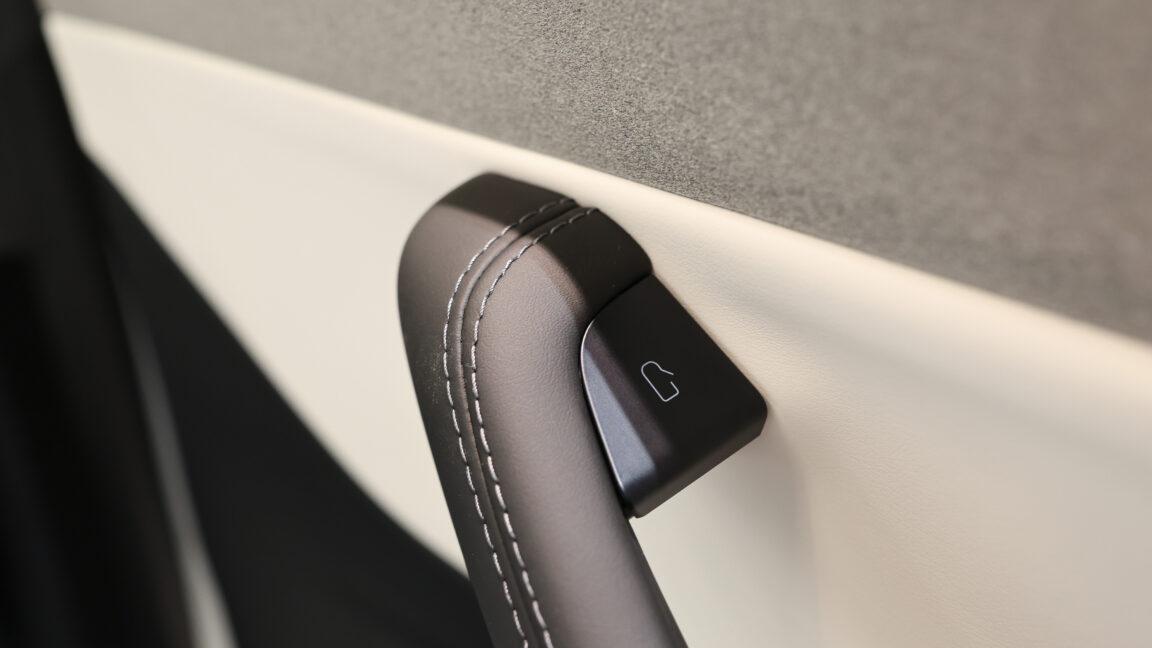
The order arrives as Beijing tightens the screws on a growing category of risk: electronically controlled car doors that fail to open after a collision. In January, regulators signaled that new rules would impose specific handle dimensions starting next year. But they also made clear that the cars already on Chinese roads are not exempt indefinitely. Tesla received the same treatment.
The two recall actions affect 2.98 million Model 3 and Model Y vehicles. One requires warning labels explaining how to open the rear doors during a power loss. The other pushes a software update that automatically lowers windows after a crash. Both demand physical access to vehicles already sold. That is a logistical headache and a symbolic one—Tesla cannotOTA its way out of this.
The second recall targets 2.74 million cars and addresses the driver monitoring system. Tesla’s current setup relies on a torque sensor in the steering wheel to detect whether the driver is holding on. The update adds interior-camera gaze tracking. It is a more aggressive stance than what Tesla offers elsewhere, and it comes with its own irony: Electrek reported that Chinese owners have already defeated the cabin monitoring by mounting a doll’s head in front of the camera. Regulators may be solving one problem while exposing another.
What China Gains
The immediate beneficiary is clear—Chinese drivers in nearly three million cars will get better information about emergency exits and a software patch that lowers windows during crashes. The secondary beneficiary is regulatory credibility. Beijing has spent the past two years building the case that strict oversight belongs alongside industrial policy. This is the proof stage.
The recall also extends to eight other brands. That detail matters less publicly but signals breadth. China is not singling out Tesla because of animus toward one company. It is signaling that the rules now apply to everyone who sells in this market.
For foreign automakers, the message is unambiguous: compliance is no longer a box you check before launch. It is an ongoing obligation that regulators can enforce retroactively. The grandfather clause through 2028 gives some breathing room on new design requirements, but it does not grant immunity on safety defects in existing fleets.
The Door Problem
Electronic door handles have proliferated across the EV segment. They look sleek. They also jam when electronics fail or batteries disconnect during impact. The fatal consequences have been documented repeatedly in Chinese crash reports and investigations. Regulators responded by moving from voluntary guidance to hard specifications.
Tesla’s design is a particular flashpoint. The Model 3 and Model Y use buttons and interior releases alongside external handles. After a severe collision, loss of power can disable both. The recall forces Tesla to compensate with labels—a Band-Aid solution that admits the underlying design flaw without requiring a redesign.
New rules will change that calculus for vehicles approved after January. But cars like Tesla’s, already sitting on Chinese roads, must live with the patch until 2028. That delay creates an awkward gap: new models will comply with stricter handle requirements, while nearly three million older ones rely on stickers and software tricks to meet the same safety outcome.
The Driver Monitoring Paradox
The second recall highlights a different tension. China wants better driver attention monitoring. Tesla is trying to deliver it with cameras. But the market has already found the loophole.
A doll’s head satisfies gaze tracking. A weight on the steering wheel satisfies torque sensing. Both systems measure proxies for attention, not attention itself. The regulatory pressure to upgrade is real. The engineering gap between measuring a proxy and verifying a behavior remains wide.
This matters beyond Tesla. Every automaker selling partial automation in China now faces the same scrutiny. Regulators expect camera-based monitoring. Consumers have demonstrated it is circumventable. The industry will need to prove that its solutions are harder to game, not just more sophisticated on paper.
What Happens Next
Tesla will comply. The company operates factories in Shanghai and has too much to lose from friction with Beijing. The recall costs money and reputation, but defiance is not an option any major automaker pursues in China anymore.
The broader implication belongs to the rest of the foreign auto industry. China has established itself as the market where safety standards evolve fastest and enforcement is most visible. OEMs that assumed they could ship China-spec vehicles that lag behind global platforms should reconsider. The gap is closing, and regulators are watching.
Other foreign brands—Volkswagen, GM, Ford, BMW, Mercedes—will feel the same pressure. The eight brands already named in the recall are only the first wave. Anyone selling EVs in China should expect similar orders if their designs depend on electronic handles without adequate backup mechanisms or if their driver monitoring systems remain vulnerable to simple countermeasures.
Tesla’s China factory produces vehicles for export as well as domestic sales. Some observers will wonder whether the recall affects those markets. It does not directly. But the pattern matters. Beijing is showing that it can shape Tesla’s product even outside the company’s home market, simply by demanding fixes for the Chinese fleet. Manufacturers will watch carefully to see whether this enforcement style spreads to other sectors.
The Real Story
The headline number—nearly three million cars—is impressive. The real story is what it reveals about power. Tesla built its reputation on software updates and minimal intervention. China just proved that in its market, hardware recalls are possible, labels are mandatory, and regulatory deadlines do not bend for foreign champions.
The enforcement comes at a moment when Beijing is trying to cement China’s position as the world’s dominant EV market and standard-setter. Every recall with teeth adds to that narrative. Every foreign brand that complies without complaint reinforces it.
Tesla will get its labels and its software update. Chinese drivers will get safer cars. And every automaker with a China strategy will now know that Beijing can reach back through the product line and demand changes to vehicles already sold. That changes how companies plan, engineer, and negotiate for this market.
The age of voluntary compliance for foreign automakers in China is over.