Beijing's Earthquake Narrative Tightens in Sensitive Tibet
A 7.0-magnitude earthquake struck Tibet, but the real story is how Beijing manages the disaster’s narrative. With 16 dead and 76 injured, the government’s response reveals a familiar pattern of controlled information in a strategically sensitive region.
The numbers are small, but the context is heavy
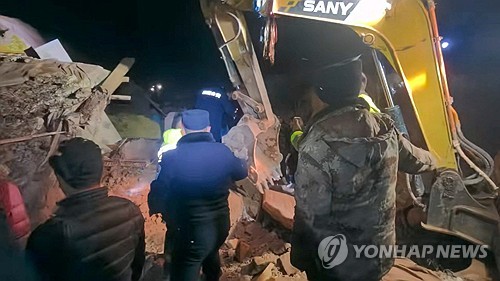
A 7.0-magnitude earthquake hit China’s Tibet Autonomous Region on October 22, killing 16 people and injuring 76. Three hundred thirty-nine homes were destroyed or damaged. Four hundred thirteen aftershocks rattled the area within hours. The official response was swift: authorities deployed more than 5,000 rescue workers, suspended part of the Qinghai-Tibet Railway, and issued statements urging scientific rescue operations to prevent secondary disasters.
The facts are routine for a major earthquake. What matters is where they appear—and where they don’t.
Tibet is not a typical Chinese province. It is a restive, high-altitude region with a distinct culture and a long history of resistance to Beijing’s rule. Disasters there carry an extra weight: they become tests of governance, legitimacy, and narrative control. Beijing does not merely want to save lives; it wants to shape how the world understands the event.
The script is already written
Within hours of the quake, state media released casualty figures, rescue progress, and instructions from President Xi Jinping and Premier Li Qiang. Xi was quoted saying he had ordered “all-out” search-and-rescue efforts and urged close monitoring of weather and aftershocks to prevent further loss of life. Li warned that frequent aftershocks required strict disaster prevention and response measures.
The language is familiar: decisive leadership, scientific management, collective effort. It mirrors Beijing’s playbook after every major disaster, from Wenchuan in 2008 to the Gansu earthquake in 2023.
But the routine itself is the signal. In Tibet, China’s instinct is to control the story as tightly as it controls the rescue zones. Foreign journalists face restricted access. Social media posts about the quake are quickly filtered. Independent damage assessments rarely surface. The goal is not to hide the disaster—its scale is too large—but to frame it as a moment of national unity and state competence.
Who wins, who loses
Beijing wins if the narrative stays clean. A well-managed response reinforces the image of an effective, caring government. It deflects questions about infrastructure quality, ethnic inequality, or political neglect. The rapid deployment of troops and engineers, highlighted in state coverage, serves as proof of the system’s resilience.
Local residents lose if their grievances are drowned out. The quake hit Bacheng County in Naqu City, an area already grappling with high altitude, limited healthcare, and poverty. When official channels dominate, local experiences—whether of slow aid, inadequate shelters, or unresolved complaints about prior reconstruction—have less room to be heard.
International observers lose the chance to verify. China’s habit of restricting access means outside experts cannot independently confirm casualty counts, structural failures, or rescue delays. That vacuum invites speculation, but it also protects the regime from scrutiny.
The railway and the border
One concrete detail stands out: the suspension of sections of the Qinghai-Tibet Railway. This is not just a transportation disruption. The railway is a strategic asset—a steel link between inland China and Tibet, essential for troop movements, resource extraction, and economic integration. Its temporary halt sends a quiet message: even in crisis, infrastructure remains a tool of state power.
The quake’s epicenter was at latitude 32.40°N, longitude 93.79°E, at a shallow depth of 10 kilometers. Shallow quakes cause more surface damage. The region’s remoteness complicates rescue, but Beijing has spent decades building roads, airports, and rail lines into Tibet. Those investments are meant to demonstrate permanence—and to make escape harder for those who would challenge Chinese rule.
The second-order effects
What makes this event particularly telling is not the earthquake itself but what follows in its aftermath. In Tibet, disaster response is never purely humanitarian. It is inherently political. Every rescue worker deployed, every aid package distributed, and every news bulletin released carries dual meaning: relief for the affected, reinforcement of authority for the central government.
The pattern observed in previous Tibetan earthquakes suggests that the information environment tightens as the physical crisis unfolds. During the 2015 Gorkha earthquake in Nepal, which sent tremors into Tibetan communities, Beijing quickly established information checkpoints along the border and monitored cross-border communications. Similar mechanisms were likely activated again after this latest tremor, even at a distance.
There are also economic ripple effects. The railway suspension affects freight and passenger traffic between Qinghai and Lhasa, disrupting supply chains that many Tibetan residents depend on. For traders, farmers, and hospital administrators, delays in rail service compound the trauma of the quake itself. Yet these downstream consequences rarely appear in official reporting, which focuses almost exclusively on rescue heroism and political directives.
What happens next
In the coming days, two tracks will run in parallel. On one, rescue operations continue, shelters are built, and casualty figures may rise. On the other, the narrative solidifies. State media will publish uplifting stories of soldiers rescuing civilians, engineers reinforcing bridges, and volunteers donating blood. Social media accounts will amplify official messages and mute dissent.
If the death toll climbs unexpectedly, Beijing may slow the release of details to avoid appearing unprepared. If foreign media demand access, they will likely be denied or escorted. Any reports of corruption, delayed aid, or ethnic discrimination will be treated as security threats.
History offers a template. After the 2010 Yushu earthquake in Qinghai—near the Tibetan border—authorities restricted journalist access and arrested monks who spoke about the disaster. The official death toll was initially downplayed before rising weeks later. The pattern repeats: control first, adjust later if forced.
The wider implication
This earthquake will not redefine China-Tibet relations. But it will reinforce a familiar dynamic: in Tibet, disaster and governance are inseparable. Beijing uses crises to showcase its capacity to protect and provide. It also uses them to tighten control, under the guise of stability and security.
For the 16 families who lost loved ones, the official narrative offers little comfort. For observers, the quake is a reminder that in China’s sensitive regions, the story behind the statistics matters as much as the statistics themselves.
The next week will tell whether Beijing can keep both rescue operations and information flows under command. Given its record, the odds are high.
What remains unanswered is what happens when the cameras leave and the headlines fade. The people of Bacheng County will rebuild in silence, their losses absorbed into a landscape where every natural disaster is also a political event. Beijing has mastered the art of making earthquakes serve its narrative. The real question is whether that mastery translates into genuine resilience for the communities it claims to protect.