Chinese AI Labs Trained on Banned Nvidia Chips — and Washington Can't
A US research lab says forensic analysis of six Chinese AI models found unmistakable signatures of banned NVIDIA Blackwell GPUs in their training. The findings expose a widening enforcement gap in America's chip containment strategy.
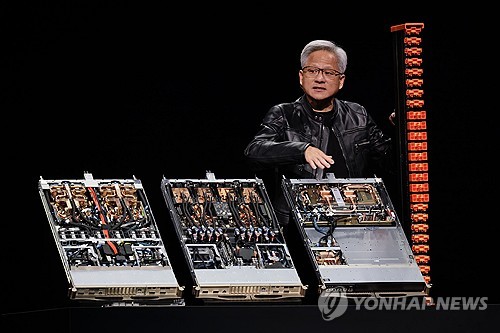
The chips were there. The fingerprints don’t lie.
Six Chinese AI models released since April carried hidden telltale marks left behind during training — numerical signatures and initialization fingerprints so specific to NVIDIA’s Blackwell GPU architecture that they could only have been produced on those chips.
That is the core finding of a report released November 14 by Unemployment Labs, a US nonprofit research group led by Will DePue, an alumnus of OpenAI’s research team. The evidence does not prove a legal violation. It does not trace the physical movement of any single chip across a border. But it closes the most useful gap in America’s semiconductor containment strategy: the ability to claim plausible deniability about what powers Chinese AI development.
The models flagged are DeepSeek’s V4-Flash and V4-Pro, Moonshot AI’s Kimi K3 and K3.1-Pro, MiniMax’s M3, and Ant Group’s Ring-3.1-Flash. Together they represent some of the most visible outputs of China’s domestic AI push. Blackwell is the architecture behind them.
Why this matters now
The United States has drawn a bright line around Blackwell and its successor, Rubin, which entered the market in July. The Trump administration permitted limited exports of the previous-generation Hopper-based H200 chip to China, but explicitly blocked both newer designs. The policy logic was straightforward: cut off the hardware that makes frontier model training feasible inside China, slow the pace of capability growth, and force American competitors to stay ahead.
The Unemployment Labs report suggests that logic has been eroding faster than anyone wanted to admit.
For Western policymakers, the immediate discomfort comes from scale. The researchers estimate roughly 12,000 Blackwell GPUs were employed across Chinese training clusters powering these models. At current market rates, the cost of purchasing and building out that capacity — excluding cooling, networking, and real estate — sits at approximately $500 million in final-stage training alone.
Half a billion dollars is small for NVIDIA. It is not small for a country trying to simulate, at scale, the compute environment that American labs enjoy through domestic cloud infrastructure. And it is enough compute to produce models that compete internationally.
How they got the chips
The report does not map a smuggling route. That is its honest limitation, and also its strength. By sticking to what the hardware left behind rather than speculating about supply chains, the research avoids the usual fog that surrounds sanctions enforcement reports.
But the broader context is impossible to ignore. A scandal involving Alice Huang, who is suspected of acting as a Chinese intelligence asset, has dominated coverage. Reports describe her leveraging a personal relationship with former NVIDIA CEO Jensen Huang to facilitate the illicit transfer of advanced AI chips into China. Whether or not her case represents the primary pipeline, it illustrates the vulnerability of a system where access to cutting-edge silicon depends on trust relationships, executive goodwill, and opaque intermediaries.
Third-party training centers in Southeast Asia, the Middle East, and potentially other jurisdictions offer natural cover. Compute brokers buy Blackwell arrays in regions where export controls do not apply, lease time to clients, and leave no paper trail connecting a specific model to a specific chip shipment. End-users never touch the hardware. They never see a shipping manifest. They only see loss curves converging and benchmarks improving.
That workflow already existed before this report. The report merely made it visible in the weights.
Who wins and who loses
Chinese labs win immediately. They get frontier-class training capacity without publicly breaking rules. Their models reach international markets with performance metrics that signal parity with American offerings. Domestic prestige rises. Investment flows in. Governments in Beijing and elsewhere see the results and feel vindicated in their bets on self-reliance.
NVIDIA wins secondhand. Even if individual units passed through unauthorized channels, the company benefits from the ecosystem lock-in that follows. Chinese developers train on Blackwell because it works. Once their talent pool, tooling, and benchmark strategies are calibrated to the architecture, switching costs rise steeply. The incentive to migrate to AMD or Intel stacks weakens every quarter.
The United States loses in the narrow sense that export controls lose meaning when the goods they restrict keep appearing inside prohibited destinations. But the deeper loss is strategic. Containment policies depend on visibility. If you cannot confirm whether a Chinese model ran on sanctioned silicon, you cannot calibrate your response. You either overreact — alienating allies and creating market openings for non-US suppliers — or underreact, which is exactly what the current posture looks like from Beijing.
What happens next
The first consequence will be tighter end-use monitoring. Expect NVIDIA to face new obligations around verifying the ultimate destination of every high-performance GPU sale, even those routed through allied nations. The company will resist. Its revenue concentration in data-center chips gives it enormous leverage in Washington, and compliance costs fall disproportionately on legitimate customers.
The second consequence will be more aggressive forensic research. Unemployment Labs proved that hardware signatures survive model publication. Other groups will replicate and extend the method. Expect periodic releases flagging additional models, additional architectures, and increasingly precise estimates of Chinese compute capacity. Each release pressures regulators to act and gives Chinese labs a running start at obfuscation techniques.
The third consequence is harder to predict but more consequential. If black-market and brokered Blackwell access remains viable, Chinese labs will keep optimizing their software stacks to extract maximum value per chip. Training efficiency improves. The same model reaches the same performance level using fewer GPUs. The effective enforceability of export controls degrades not because enforcement weakens, but because the hardware becomes more productive per unit.
That dynamic favors the United States in one important respect: if sanctions harden significantly and cut off even third-party pathways, Chinese labs face steeper cliffs than American ones. NVIDIA competes domestically against AMD and Intel. Chinese labs have far fewer alternatives. Restricting access hurts everyone, but it hurts those with fewer options more.
The uncomfortable middle ground is that restricting access also pushes adversaries toward indigenous production. Huawei’s rising computational ecosystem and state-directed chip investment are long-term responses to precisely this kind of pressure. The question is whether sanctions slow that transition enough to matter, or accelerate it by making it existential.
The deeper structural problem
The Unemployment Labs report reveals something wider than a single enforcement gap. It shows that model weights now carry hardware provenance the way a fingerprint carries identity. Every optimization choice, every random seed pattern, every normalization constant leaks information about the machine that produced it.
That fact changes the economics of containment. In the past, sanctions relied on controlling physical shipments. Chips move through ports. Manifests exist. Customs agencies can inspect cargo.
Now the evidence survives inside digital products. Weights are public. Benchmarks are public. Forensic analysis is becoming public too.
This does not mean sanctions are dead. It means the battlefield shifted. The next round of enforcement will happen in code review, in training log analysis, in architectural pattern matching. Regulators who treat this as a logistics problem will fall behind. Researchers and prosecutors who treat it as a data problem will gain advantage.
American policy makers should recognize that the leak is reversible only if Chinese labs change their hardware choices. That requires either genuine supply disruption or credible legal consequences large enough to override the performance premium that Blackwell currently offers. Neither outcome is guaranteed.
What is clear is that the report confirmed what many suspected privately: the chips are getting through, the models are getting stronger, and the architecture leaving traces in the output is a vulnerability neither side can easily close.