CIA Chiefs Don't Sneak to Moscow for Semantics
John Ratcliffe's surprise Moscow visit — the first by a CIA director since 2021 — carries a direct warning to Russia about attacking NATO. What it reveals about Trump's posture and American military strain matters far beyond the Kremlin's response.
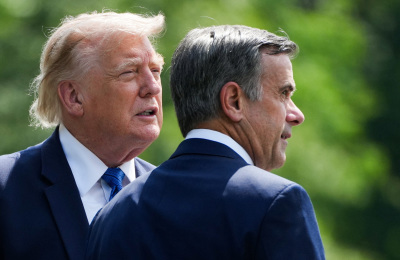
A Chief Doesn’t Fly to Moscow Without a Reason
CIA Directors do not take surprise trips to Moscow to discuss the weather. The last time a sitting CIA chief visited the Russian capital was November 2021, when William Burns went to tell Vladimir Putin that invading Ukraine would carry catastrophic consequences. That visit produced nothing of substance — the invasion came three months later.
Now, in what the Wall Street Journal reports as the first trip by a CIA director to Moscow since that fraught moment, John Ratcliffe has gone to deliver a warning: do not test NATO.
The trip itself is notable. But what Ratcliffe was sent to communicate — and what the timing reveals — matters more.
The Warning Was Specific
According to multiple US officials briefed on the visit, Ratcliffe carried a clear message. US intelligence assessments have concluded that Putin, facing a grinding stalemate on the Ukrainian front and mounting domestic pressure, may attempt limited strikes against NATO members in the coming years to probe the alliance’s resolve. The scenarios range from cyber operations to small-scale territorial moves targeting the Baltic states — Estonia, Latvia, Lithuania — the three former Soviet republics that joined NATO in 2004.
Ratcliffe’s job was to make sure the Russian side understood that Washington sees this calculus coming.
What makes the warning sharper than typical diplomatic language is its subject: it is not about Ukraine. It is about NATO territory. That is a qualitatively different threshold. Article 5 is not a suggestion.
The Meeting That Wasn’t a Meeting
Kremlin spokesperson Dmitry Peskov confirmed that Ratcliffe held talks with Russian intelligence officials during his stay but did not meet Putin directly. Peskov added that the substance of those discussions was reported to the Russian president. That sequence — subordinates talking, the leader being informed afterward — is the standard protocol for a relationship this cold. It also means the warning reached the top, even if Putin did not hear it personally.
There is no indication Russia pushed back publicly. That silence is worth watching.
Why Now?
The timing is the most revealing element. Ratcliffe’s visit follows a string of moves by Trump’s Ukraine peace envoy, Steve Witkoff, whose own chain of trips to Moscow and other capitals has been building toward some kind of diplomatic opening. The CIA chief’s appearance in Moscow adds a parallel track: while negotiators talk about ending the war, the intelligence community is drawing a line in the sand about what happens next.
This is not contradictory. It is complementary. The US can pursue diplomacy on one channel while making explicit threats on another — especially when the threat is directed not at Russia itself but at Russia’s assumptions about NATO.
The Iran Factor Changes Everything
One detail in the reporting deserves more attention than it has received: analysts suggest the fallout from the Iran war may have shifted Putin’s calculations. The United States has been fighting a conflict with Iran this year while simultaneously supplying weapons to Ukraine since 2022. The combined strain has left US missile defense stockpiles significantly depleted.
That is the kind of information a adversary notices. It changes the cost-benefit analysis of testing NATO’s eastern flank. If Washington has fewer interceptors and fewer reserves, the risk of a limited provocation — a cyberattack, a small incursion, a border incident — looks more attractive to Moscow. Ratcliffe’s visit may be an attempt to close that window before Putin decides to walk through it.
Trump’s Language Is the Story
Trump told a conservative radio host that Ratcliffe’s trip was “semi-routine” and that he is working hard to end the Ukraine war, adding that something could come of it. The White House and CIA offered no further comment.
Calling it routine is a performance. CIA directors do not make routine visits to Moscow. But the word choice is deliberate — it signals that Trump does not want this treated as an escalation, even as the substance of the mission was unambiguously confrontational. He wants the option of de-escalation to remain open while sending a sharp message. That is a familiar Trump playbook: raise the temperature, then insist the temperature was never raised.
Who Wins, Who Loses
NATO wins from clarity. The alliance has spent years debating whether Article 5 applies to hybrid warfare, cyberattacks, and small-scale territorial probes. Ratcliffe’s warning removes some of the ambiguity — at least from the US side. It tells European capitals that Washington sees the threat and is prepared to flag it publicly through intelligence channels.
Russia loses from exposure. A公开 warning from the CIA director means Moscow now knows its planning has been read. That complicates future operations, even limited ones, because the element of surprise is gone.
Putin is the only actor who might benefit. If the US is indeed strained by two concurrent conflicts and its deterrence credibility is questionable, then a successful limited probe of NATO — one that does not trigger a full alliance response — would reshape the security architecture of Europe without a major war.
What Happens Next
The immediate question is whether Russia responds in ways that test the warning. A cyberoperation against a Baltic state, a border incident, or coordinated disinformation campaigns targeting NATO capitals would be the first real test of whether Ratcliffe’s message landed.
Domestically, Trump faces pressure from both sides. Hawks will argue that a “semi-routine” visit understates the gravity of a CIA director delivering an Article 5 warning. Those pushing for a Ukraine deal will welcome the same characterization as proof that diplomacy can proceed alongside deterrence.
The longer-term question is whether this marks a new phase in US-Russia relations or simply a particularly pointed chapter in an old one. The Burns visit in 2021 preceded a full-scale invasion. Ratcliffe’s visit in 2026 comes in a war that has already lasted four years and shows no sign of ending. The context is entirely different, but the risk profile is not.
One thing is clear: when the head of American intelligence flies to Moscow unannounced, something is being communicated. The question is whether the recipient chooses to heed it.