Spain's second fatal flood in two years exposes a worsening climate
Four people have died in eastern Spain's latest flooding — just two years after a disaster killed over 220. The pattern is clear and dangerous: Mediterranean storms are intensifying, and Europe is not adapting fast enough.
A second wave, a second tragedy
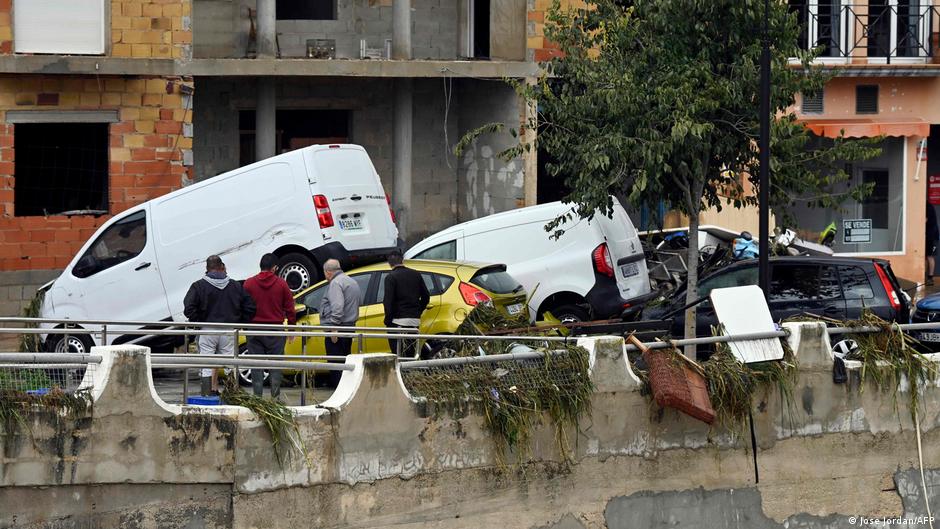
Four people have died after severe flooding swept through eastern Spain. The worst-hit areas sit along the Mediterranean coast in the Valencia and Alicante regions — ground still raw from a catastrophe just two years ago, when more than 220 people perished in the same territory.
In Oliva, rescuers recovered two bodies. One was a 79-year-old woman found inside her home. The other was a man who suffered a fatal heart attack at a campsite. In Sagunto, a man drowned while swimming at the beach. In Catalonia, a woman fell into a swollen stream. More than 450 people required rescue — some airlifted from rooftops and vehicles, others pulled to safety by boat.
The visual record tells its own story: roads submerged, residents bailing water from their homes in Daimuz with nothing but buckets, furniture dumped on muddy streets after the waters receded.
Prime Minister Pedro Sanchez dispatched military emergency teams and promised full government support. Most emergency restrictions have since been lifted. But the broader warning here is not about this single storm. It is about the storm that will follow — and the one after that.
The Mediterranean is heating up — and it is getting worse
The Mediterranean basin is warming roughly twice as fast as the global average. Warmer air holds more moisture. Warmer seas fuel more energetic weather systems. DTR (Drenching Tropical Rainfall) events — intense, short-duration downpours that overwhelm drainage and floodplains — are becoming more frequent and more violent across southern Europe.
Eastern Spain sits in a natural flood corridor. The terrain funnels rainfall from the interior mountains toward the coastal plains. When storms dump a year’s worth of rain in a few hours — as they routinely do in this region — the water has nowhere to go.
The 2024 Valencia flood was not an outlier. It was a preview. And the deaths last week confirm that the preview is now the main event.
Insurance, agriculture, and the quiet crisis no one is pricing in
The economic damage from Spanish flooding is mounting faster than most people realize.
The agricultural sector in the Valencia and Alicante regions — Spain’s citrus and vegetable belt — is repeatedly devastated. Crops are destroyed. Soil is eroded. Orchards are undermined. Recovery is possible but costly, and the insurance framework in Spain still does not adequately cover many of these losses.
Homeowners insurance in flood zones is thin. The Spanish government’s Pons Plan (Plan de Actuanación ante Inundaciones Singulares), established after major floods, provides some coverage for extraordinary events — but the thresholds are high, the process is slow, and the payouts rarely keep pace with reconstruction costs.
The real question is whether European reinsurance markets will begin pricing Mediterranean flood risk accurately. They already are, quietly. Premiums in Valencia and Alicante have risen sharply since 2024. Some properties in high-risk zones are becoming effectively uninsurable. This is not speculation. It is already happening.
Agricultural insurance markets face the same pressure. Citrus growers depend on stable weather. When flood seasons shorten the growing window and destroy harvests, the economic shock ripples through European food supply chains.
Infrastructure that was designed for a different climate
Spain’s coastal infrastructure — drainage systems, sea walls, urban planning — was largely designed for the climate patterns of the twentieth century. Those patterns have changed. The design rainfall intensities embedded in engineering codes across the Valencian Community have not kept pace with the reality of twenty-first-century storms.
The city of Valencia, home to nearly 800,000 people, sits on a plain that was historically prone to river flooding. The Turia river was diverted away from the city center decades ago, but new urban development has filled in floodplains and reduced natural water absorption. Impervious surfaces have multiplied. The soil cannot drain fast enough when the sky opens.
Sagunto, Oliva, Daimuz, and the surrounding municipalities face the same structural problem: infrastructure built for a slower climate, now enduring a faster one.
Drainage capacity in Spanish coastal cities remains inadequate for the volume of water these storms now deliver. Green infrastructure — permeable surfaces, retention basins, restored wetlands — exists in pilot projects but has not been scaled. Urban planning regulations in flood zones are either weak or poorly enforced.
This is not an engineering mystery. It is a political and financial one.
The migration angle — and why it matters beyond Spain
Floods do not cause migration in the same direct way that wars do. But they do create conditions that push people — especially in agricultural communities where livelihoods are destroyed repeatedly and insurance payouts fall short.
Rural-to-urban migration within Spain is already a trend. Flood disasters accelerate it. Younger residents leave damaged communities. Older residents — like the 79-year-old woman in Oliva — tend to stay, often living alone, often in homes that should not be built in flood zones but were built before modern regulations.
Across the broader Mediterranean, the same dynamics are building. Southern Italy. Greece. Tunisia. Lebanon. When agricultural land becomes unreliable and housing in flood-prone areas becomes a death trap, people move. The question is whether Europe has a coherent response to climate-driven displacement within its own borders — or whether it only prepares for crossings from across the sea.
Who wins, who loses, and what happens next
The insurance industry is the clearest winner in this scenario — until it is not. Premiums rise. Risk models tighten. Profits increase in the short term. But repeated catastrophic events strain even well-capitalized reinsurers. The 2024 Valencia flood alone caused damages estimated at several billion euros. Add the latest event on top of that, and the exposure in a single region becomes difficult to absorb without raising systemic concerns.
Government agencies are the primary losers in terms of reputation and fiscal burden. Rescue operations, emergency response, reconstruction — all fall on public budgets. The central government in Madrid promises support. Regional governments in Valencia and Alicante deliver the messy, expensive work on the ground.
Citizens are the ultimate losers. They lose homes. They lose livelihoods. They lose time. And when the water recedes, they face the same risks the next storm season.
What should happen next
The scientific consensus is clear: Mediterranean extreme precipitation events will continue to intensify. The policy response has been dramatically slower.
Three concrete steps should be prioritized:
First, Spain must update its hydraulic and urban planning codes to reflect current and projected rainfall intensities — not historical averages. Engineering standards that assume the past will repeat are engineering standards that guarantee future failure.
Second, natural flood management must be scaled. Restore wetlands. Remove development from floodplains. Invest in green infrastructure rather than simply building higher concrete walls. The Turia diversion proved that large-scale water redirection is possible — but it also showed that redirecting water creates new vulnerabilities downstream.
Third, insurance frameworks need reform. The Pons Plan should be expanded, simplified, and made accessible to more homeowners and farmers. Risk-based premiums should reflect actual exposure, not political reluctance to price climate risk accurately.
The hard truth
Four people died in eastern Spain last week. More than 450 were rescued. Hundreds of homes were flooded. The region remembers the dead from 2024.
This is not an anomaly. It is a pattern. And patterns, unlike storms, can be changed — if the political will matches the scientific evidence.
Europe has spent decades treating Mediterranean climate disasters as exceptional. The data now says otherwise. The question is whether policymakers will respond with the same urgency that emergency crews showed on the ground — pulling people from rooftops, wading through floodwaters, refusing to leave anyone behind.
The storm will come again. The question is whether Spain — and Europe — will be ready.