CIA Chief's Secret Moscow Trip Signals a Fragile Deterrence
John Ratcliffe's clandestine visit to Moscow reveals Washington's anxiety about a two-front escalation. For Seoul, the implications cut deeper than NATO anxieties.
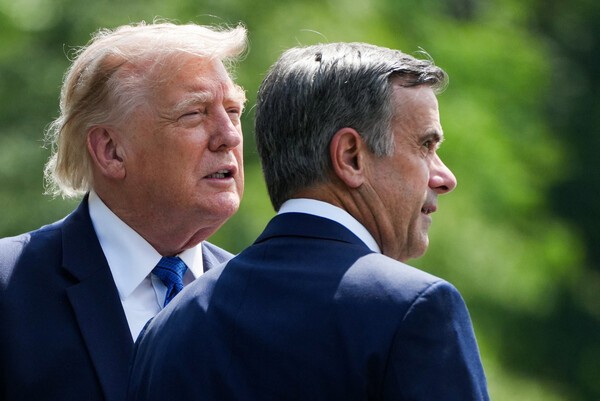
The Backchannel That Speaks Volumes
John Ratcliffe did not go to Moscow to negotiate a peace deal. He went to draw a line. According to Politico, the CIA director travelled incognito on a C-17 transport plane last week, landed at a Russian airfield, and met with Sergei Naryshkin, head of Russia’s SVR foreign intelligence service. Vladimir Putin was not among them. The Kremlin, predictably, called the encounter “unremarkable.” Ratcliffe’s mission, however, was anything but routine.
He carried a warning: stop escalating tensions against NATO members, particularly the Baltic states — Estonia, Latvia, and Lithuania. This is the first time a CIA director has stepped onto Russian soil during Trump’s combined terms in office. That fact alone should unsettle anyone watching the architecture of American deterrence.
A Two-Front Anxiety
The timing matters. Russia and Ukraine have widened their drone and missile exchanges, striking targets dozens — sometimes hundreds — of kilometers behind the front line. The war is no longer confined to Donbas or Kharkiv. It is bleeding into the perception of security across Europe. Washington fears that Russia, emboldened by what it likely sees as a distracted West, might test NATO’s eastern flank while American attention is consumed elsewhere.
But the anxiety runs deeper than Europe. Russia and China are deepening their strategic partnership. Russia supplies weapons to Beijing’s manufacturing base; China supplies dual-use technology to Russia’s military-industrial complex. Together, they challenge US dominance in both the Atlantic and the Pacific. Ratcliffe’s trip to Moscow, however quiet, signals that Washington is trying to manage a two-front strategic challenge without triggering a broader confrontation.
The Baltic states are the canary in this particular coal mine. They sit on NATO’s northeastern edge, directly adjacent to Russia’s exclave of Kaliningrad and the Belarusian border. Any provocation there — cyberattacks, election interference, maritime incidents — could activate Article 5. The United States does not want that trigger pulled. Neither, presumably, does Russia, at least not right now. But the distance between calculation and miscalculation is thin.
What Russia Heard — and What It Missed
Naryshkin confirmed the meeting. His assessment — that “nothing special” had transpired — was a deliberate downplay. Kremlin spokesman Dmitry Peskov went further, dismissing Western concerns about Russian aggression against NATO as “exaggerated” and “completely unrelated to reality.” He also criticized the West’s use of frozen Russian sovereign assets to fund Ukraine, calling it illegal.
These are standard responses. But the very act of confirming the meeting — instead of denying it outright — suggests Moscow wants to maintain a channel, even while denying its importance. That is a sign of fragility, not strength. Russia does not want to shut the door on Washington; it wants to control what comes through it.
The Korean Implication
Here is where the story shifts from European alarm to East Asian consequence. Seoul should be watching this closely. Russia has not merely observed the war in Ukraine — it has reoriented its entire strategic posture around it. Moscow now depends on Chinese economic lifelines and Iranian drone technology. Both relationships alter the calculus for Korea.
Russia has consistently refused to condemn North Korea’s deployment of troops to support Putin’s war effort. It has welcomed Pyongyang’s military cooperation as a sign of a multipolar order. The Kremlin sees value in a distrubing Washington on two fronts — Europe and East Asia — simultaneously. Ratcliffe’s secret trip, then, is not just about preventing a NATO crisis. It is about ensuring that one crisis does not bleed into another.
For Korea, the stakes are specific. The United States maintains a forward-deployed military presence of roughly 28,500 troops on the peninsula. That force exists because of a security guarantee that assumes Washington can manage multiple theaters without overextension. If Russia is emboldened enough to test NATO while China advances its claims in the South China Sea and the East China Sea, the guarantee becomes harder to keep. Not impossible — but harder.
The visit also raises a quieter question: how much of US strategy is now conducted through backchannels rather than alliances? Ratcliffe met with Russian intelligence officials, not diplomats. This is the Trump model — personal, informal, unilateral. Allies are often informed after the fact, not consulted beforehand. For European NATO members, especially the Baltics, that is a source of genuine anxiety. For Seoul, it is a reminder that the US-ROK alliance, while still the cornerstone of Korean defense, exists in a world where Washington’s oldest partners may no longer be its first call.
The Unanswered Question
What exactly was promised in that meeting? Ratcliffe warned Russia against escalation. Did he receive a reciprocal assurance? The Kremlin says no agreement was reached. But the absence of public disagreement is itself a kind of agreement — one that allows both sides to claim victory while avoiding the kind of transparency that would reassure allies.
This is the real cost of backchannel diplomacy. It keeps crises managed in the short term. But it erodes the trust that alliances are built on. When a CIA director visits Moscow in secret, the message to Tallinn, Riga, and Vilnius is not that the United States is strong — it is that the United States is improvising. Improvisation works until it does not. And when it fails, the allies who were not consulted will be the first to face the consequences.
Seoul understands that lesson better than most. The question now is whether Washington remembers it.