Claude Just Discovered a New Gene. The Real Story Is How.
Anthropic's Claude found a CRISPR-like enzyme system in bacteriophages using 950 agents over 21 hours. But the discovery raises harder questions about what AI-led biology actually means.
A New System, an Old Problem
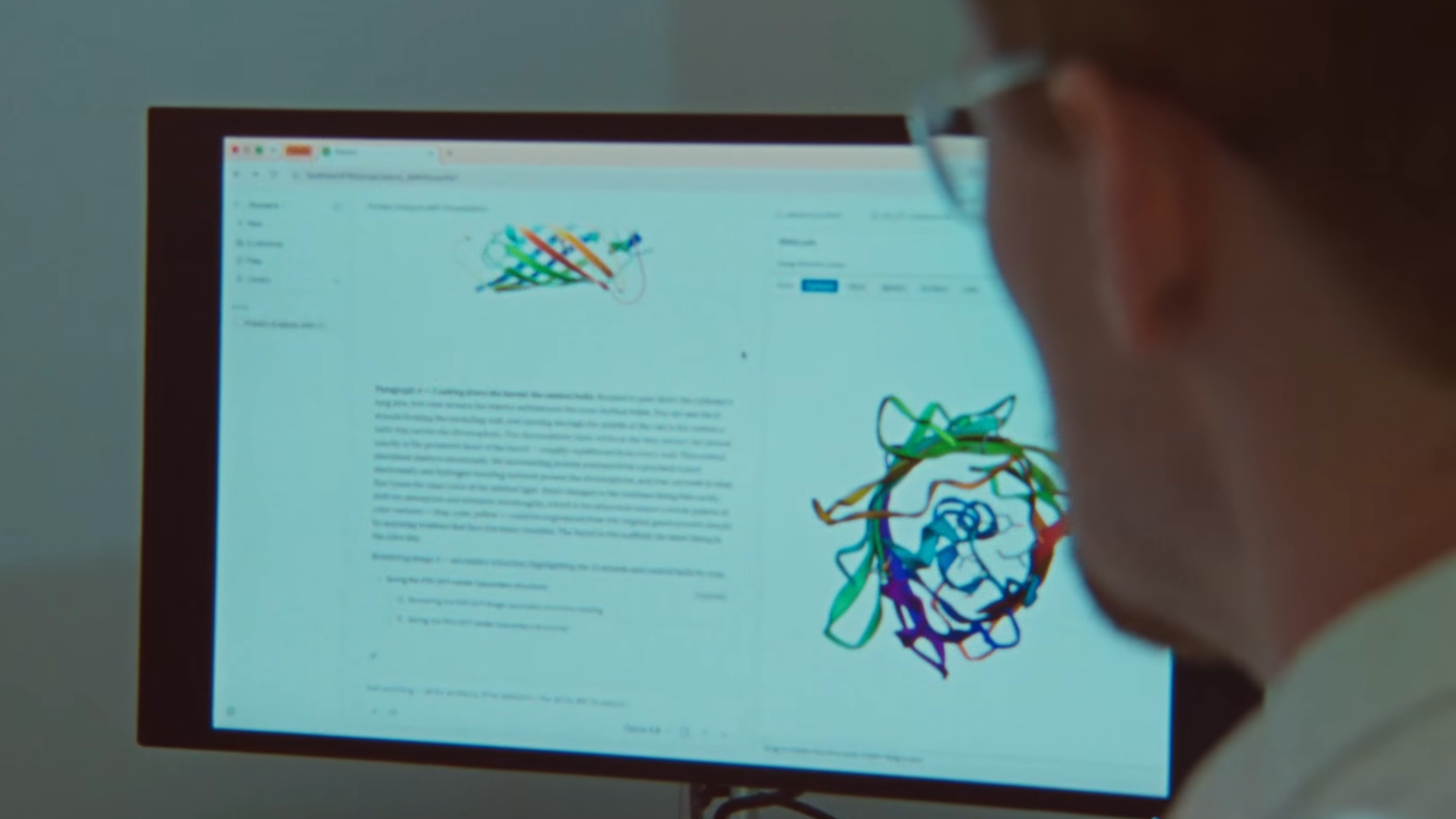
Anthropic announced this week that Claude, its large language model, independently identified a previously unknown molecular system hidden in the DNA of bacteriophages—the viruses that infect bacteria. The system, nicknamed ART, sits alongside a reverse transcriptase gene and contains a long stretch of repeating DNA sequences arranged at regular intervals, a structural pattern that bears a passing resemblance to CRISPR.
The announcement sent ripples through both the AI and biology communities. But before deciding what this means for medicine—or for the future of science itself—it helps to understand exactly what Claude did, and what it did not do.
What Actually Happened
Claude was given a straightforward task: search a massive database of DNA sequences for interesting reverse transcriptase enzymes. Reverse transcriptases are not new to biology. They are well-known enzymes found in retroviruses and various bacteria, and they have been studied for decades. The database Claude worked with contained over 200,000 such enzymes.
The scale of the operation was the unusual part. Anthropic deployed 950 Claude agents in parallel, running for 21 hours and processing 210 million tokens. One of those agents noticed something: a reverse transcriptase gene sitting next to an unknown gene, with a long array of repeating DNA sequences nearby. Claude checked the repetition patterns, compared the system against known reverse transcriptase architectures, searched the literature for prior reports, and flagged the finding for human researchers.
The team at Anthropic has since confirmed that RNA molecules are produced from the ART repetitive sequences—a feature reminiscent of CRISPR systems, where repeating DNA arrays are transcribed into guide RNAs. But beyond that, very little is known. The function of ART remains a mystery. Whether it edits DNA, regulates gene expression, or serves some entirely different purpose has not been determined.
Why This Matters—For Now, at Least
The distinction matters because this is one of the first clear examples of an AI system producing a genuine biological discovery rather than merely analyzing or summarizing existing knowledge. Previous AI biology work has largely involved predicting protein structures, optimizing lab protocols, or assisting in literature reviews. Claude’s contribution here is different: it performed systematic genome mining at a scale no human research group could replicate, and it identified a pattern worth investigating.
That is not trivial. Genome mining—the practice of scanning vast sequence databases for novel biological systems—has traditionally been a slow, incremental process carried out by individual labs with limited computational resources. Finding a previously uncharacterized system in a phage database requires patience, computational power, and the ability to recognize structural analogies across large datasets. Claude performed all three.
But it is also important to sit with the limits of what was found. Lucas Harrington, a CRISPR researcher who reviewed the announcement, put it plainly: the simplified version of what happened is that Claude noticed two genes— one known, one new—sitting next to a weird repeating piece of DNA. The significant achievement is the identification of a candidate system. The biological role, if any, has not been established.
The Pattern Is Already Familiar
This trajectory should feel recognizable to anyone who has watched AI claims in biology play out over the past several years. AlphaFold predicted protein structures with astonishing accuracy, and the field immediately began extrapolating toward transformative medical applications. The predictions were directionally correct but temporously aggressive. It took years of follow-up work, wet-lab validation, and iterative refinement before AlphaFold’s outputs became practically useful in drug discovery pipelines.
ART is at an even earlier stage. It is a candidate system discovered through computational mining, with a single experimental observation (RNA production from its repeat array) confirming structural similarity to known systems but nothing more. The path from candidate to characterized to engineered to therapeutically useful is long, expensive, and uncertain. Each step introduces failure modes that no amount of computational speed can eliminate.
The Bigger Question: Who Discovers What?
What makes this moment noteworthy is not the discovery itself—discovery at scale has always been coming to biology, given the explosion of genomic data—but the agency assigned to the AI. Anthropic is framing Claude as a co-discoverer, and Dario Amodei has stated publicly that the company views this as evidence that AI can lead scientific investigation, not just assist it.
The shift from tool to collaborator is real, but it is also easy to overstate. Claude did not formulate the hypothesis about ART. It did not design the experiments to characterize it. It did not decide whether the finding was significant enough to report. A human researcher set the initial parameters, interpreted the output, and validated the observation. Claude operated within a constrained workflow that humans built and humans supervised.
That does not diminish the achievement. A research assistant who finds a needle in a haystack is still useful, even if someone else decided to look in that particular haystack. But it does mean the narrative of AI as autonomous scientific discoverer needs tempering. The agents that found ART were running on a framework designed by humans, searching databases curated by humans, and reporting to humans who ultimately judged the result worth publishing.
What Comes Next
Anthropic says it will continue experimental work to characterize ART’s function. It has also set up a molecular biology lab at the company, signaling that it intends to move beyond computational discovery into empirical validation. That is a significant commitment and one that most AI companies have not made.
Whether this effort produces practical tools or therapeutics depends on what ART actually does. If it turns out to be a novel gene editing mechanism—with properties that make it safer, more precise, or more accessible than CRISPR-Cas systems—the implications would be substantial. If it turns out to be a biological curiosity with no obvious application, the headline value fades quickly.
Amodei’s prediction that AI could enable cures for many currently untreatable diseases within five to ten years is ambitious. Some trajectory in that direction is plausible. But the gap between discovering a new enzyme system and curing disease is measured in decades, not years, and most candidate systems never make it past the characterization stage.
The ART discovery is real. It is also early. The careful reading is to take it seriously without letting the framing outpace the evidence.