NASA Is Trapped: Why Starliner's Failure Could Reshape US Space Access
NASA is pumping $359 million into a broken Boeing program while SpaceX prepares to abandon Crew Dragon. The collision of these two failures could leave the US with no reliable way to get astronauts to orbit.
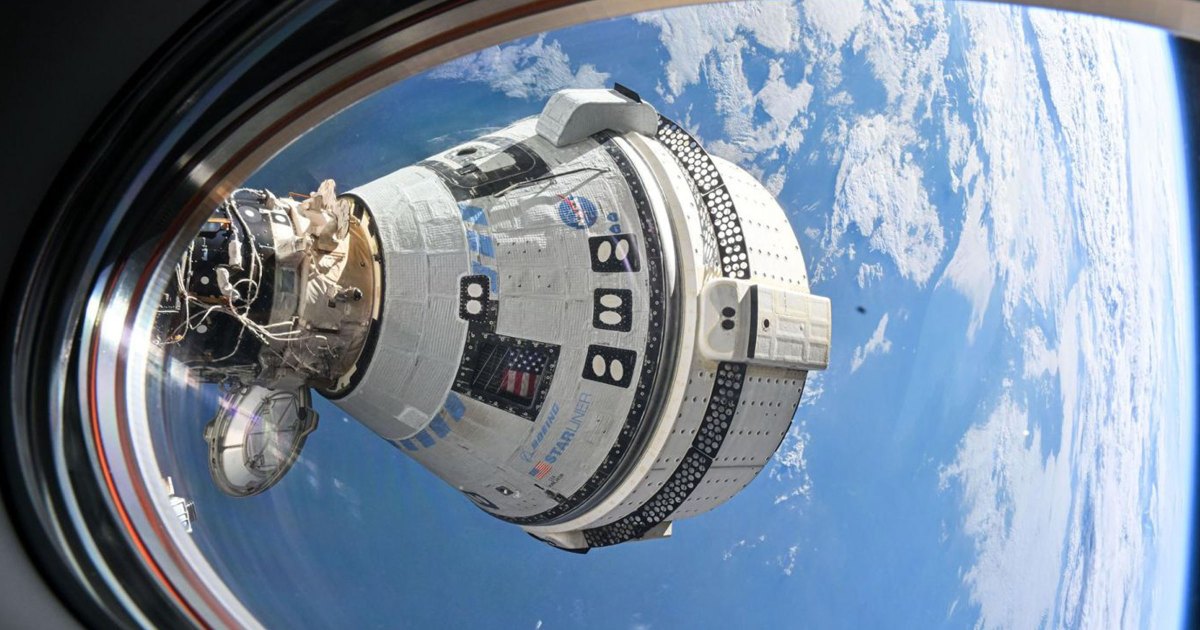
The Double Trap
NASA is now trapped between two failing programs — one its own, one belonging to a partner it can’t afford to lose.
On one side sits Boeing’s Starliner, a spacecraft that has consumed billions and delivered almost nothing: a botched uncrewed test flight, a mission aborted after it reached orbit, and two astronauts stranded on the International Space Station for nine months. On the other is SpaceX’s Crew Dragon, which has been the only reliable thread keeping American astronauts in orbit since 2020 — and which NASA’s own administrator, Jared Isaacman, confirmed this week is likely to be retired as SpaceX pivots to Starship.
Starship, for the record, does not yet exist as a flight-proven vehicle. It has not carried cargo. It has not carried a person. It has not even completed a full orbital test and landing.
So NASA’s calculus is brutally simple: keep spending money on Boeing, or have no ride to orbit by the end of the decade.
The $359 Million Lifeline
NASA announced this week it will commit $359 million to help Boeing rebuild the reaction control system thrusters that caused Starliner’s last mission to abort. That’s not a minor repair. The thruster problem has been a recurring, systemic issue dating back to the spacecraft’s development — and NASA’s decision to write another check signals how far it is willing to go to keep a single failing option alive.
The agency also confirmed it is weighing purchases of two additional Starliner launch slots. Three crewed missions are already under contract. The target: an uncrewed test flight (Starliner-1) no earlier than December this year, followed by a crewed return (Starliner-2) by 2028.
That timeline is generous if you’re optimistic. It is a death spiral if you’re not.
SpaceX Won’t Wait Forever
While NASA doubles down on Boeing, SpaceX is quietly planning its exit. Crew Dragon has been the backbone of US human spaceflight for six years. It has flown over a dozen crewed missions with a safety record that makes Starliner’s history look amateurish. But Isaacman said Monday that SpaceX intends to sunset both Falcon 9 and Dragon as it concentrates resources on Starship — a vehicle still years from operational status.
SpaceX has every incentive to do this. Starship is the company’s long-term bet. It’s designed for Mars. It’s designed to carry 100+ people. It’s also, at this point, arguably SpaceX’s biggest risk: the same company that achieved something unprecedented with reusable rockets is now asking the world to believe in a vehicle that hasn’t yet proven it can land itself intact after orbiting Earth.
If Starship fails to materialize on schedule — and nothing guarantees it will — the US loses both its incumbent and its future in the same window.
The Vacuum Will Be Filled — By Whom?
This is where the strategic consequence becomes clear. The ISS is slated for retirement by the end of this decade. NASA has no confirmed successor. Multiple private companies — Axiom Space, Blue Origin, others — are circling the resulting gap, each hoping to build commercial space stations funded by government contracts.
But getting to those stations requires getting to orbit first. And right now, the US has one proven launch system (SpaceX Crew Dragon) that is about to be retired, and one unreliable one (Boeing Starliner) that has failed repeatedly despite a decade of development and billions in spending.
That is a single point of failure at the national level.
The European Space Agency has no problem with this because it doesn’t rely on a single provider — it flies on SpaceX, Roscosmos (when political conditions allowed), and is building its own commercial infrastructure. China has multiple launch vehicles and a permanent space station of its own. Russia has the Soyuz, which still works even as its relationship with the West deteriorates.
The US, by contrast, built its post-Shuttle strategy on the assumption that a single commercial partner would be sufficient. That assumption is no longer defensible.
The Vulcan Question
There is one more variable NASA must manage. The United Launch Alliance’s Vulcan rocket is scheduled to replace the Atlas V, but it still needs crew certification — a process that has faced its own delays. If Vulcan isn’t ready before Starliner is, and Crew Dragon retires before either of those systems can carry humans, the US could face a period with zero domestic capability to launch astronauts.
That possibility would be unprecedented since the Apollo era. It would force NASA back onto Russian Soyuz seats at a time when geopolitical relations make that arrangement politically toxic, or worse, impossible.
What Happens Next
The next twelve months will be decisive. Starliner-1’s uncrewed test flight in December will either validate the corrections Boeing has made or expose new failures that push the crewed timeline further out. If Starliner fails again, NASA faces a binary choice: spend more on a proven loser, or accelerate SpaceX’s transition to Starship and hope it works before Crew Dragon retires.
Both paths carry enormous risk. The first wastes resources on a program that has already demonstrated an inability to execute on time and budget. The second bets the entire US human spaceflight program on a vehicle that hasn’t been tested at scale.
NASA’s dilemma is not technical — it is strategic. The agency spent a decade assuming that reliance on a single commercial partner was a feature, not a vulnerability. Boeing’s failures and SpaceX’s pivot have exposed that assumption as dangerously naive. The question now is whether NASA can course-correct fast enough, or whether the next major US space story will be defined not by achievement but by absence.