The Co-Pilot Attack That Exposes a Fractured Narrative
When a Flydubai co-pilot plunged a passenger jet toward the ground, Israel called it terror. Trump called it possibly madness. The gap between those labels tells us everything about where global security discourse is heading.
A 5,000-Meter Plunge
The numbers are what stay with you. One minute. 14,000 meters down to 5,200 meters. An aircraft shedding half its altitude in a single sweep while a knife-wielding co-pilot overpowered the captain in the cockpit.
This is what happened aboard Flydubai flight FZ1073 on the morning of the 30th — a routine route from Dubai to Tel Aviv that nearly became a mass burial. The captain, Smit Machhar, took a blade to the body before cracking open the reinforced cockpit door. Passengers wrestled the co-pilot down. A reserve pilot climbing aboard brought the plane back to level flight. The emergency landing at Prince Sultan Bin Abdulaziz International Airport in Tabuk, Saudi Arabia, was the end of a scenario most of the 174 people on board will never shake loose from their nervous systems.
The co-pilot is Omani. Israel has identified him as such. And almost immediately, the political machinery began turning.
Who Owns the Story
Within hours of landing, Israeli ministers were calling it terrorism. Itamar Ben-Gvir, the nationalist security minister, said the co-pilot had tried to kill 180 Israelis aboard. The defense minister used the word “jihadist.” The framing was fast, unified, and politically convenient.
Netanyahu is heading into an election on the 27th — fewer than two weeks away. The night before, he posted a video warning that enemies would strike before the vote. The co-pilot incident arrived like a gift wrapped in blood.
But here is where the story fractures in a way the Israeli government does not want it to.
Donald Trump, who spoke with Netanyahu about the incident, offered a different read: the co-pilot may have been a terrorist, or he may have been “a crazy person.” He did not close the door on either possibility. Israeli channel 12 reported that Saudi and Israeli authorities are actively investigating the suicide-attempt theory.
This is not mere disagreement. It is a contest over who gets to define the event — and therefore who controls the consequences.
The Omani Angle Nobody Is Picking Up
The co-pilot holds Omani nationality. Oman occupies a strange diplomatic position in the region: a Gulf state that maintains relations with Iran while quietly hosting American infrastructure, a country that has brokered backchannel talks between Washington and Tehran. Oman is not Gaza. It is not Hezbollah. The Israeli government’s instinct to classify this as jihadist terrorism collapses slightly when the man who nearly killed 174 people answers to a state that has no ideological alignment with the groups Israel is describing.
Korean press has covered the incident with particular attention to Trump’s remarks and the competing narratives around motive. Hani’s coverage raises the question that Western outlets have been slower to put on the record: if the co-pilot acted alone, driven by personal collapse rather than organizational direction, then the entire Israeli calculus shifts. Terrorism justifies extraordinary responses. Mental health crises demand something else entirely — screening protocols, background review, institutional responsibility. The difference matters.
What Gets Lost When You Pick a Side
The terrorism frame is clean. It fits into existing security architectures. It justifies expanded surveillance, heightened alerts, political capital ahead of an election. It does not ask Israel to examine whether its ally, the UAE-based Flydubai, has adequate mental health screening for pilots drawn from a region-wide hiring pool.
The suicide-attempt frame is messier. It implicates the airline’s hiring practices. It raises questions about psychological evaluation standards across low-cost carriers operating in the Gulf. It forces a conversation about a co-pilot who passed every check, boarded a plane, and chose to take everyone with him — or tried to. And it raises an uncomfortable possibility: that the next incident like this may not come from a trained extremist but from someone the system failed to catch.
Trump’s casual inclusion of both theories — even if offered in characteristic off-the-cuff fashion — forced that second frame into public view. That is likely why the Israeli response has been so uniformly hard.
The Passenger Who Lived
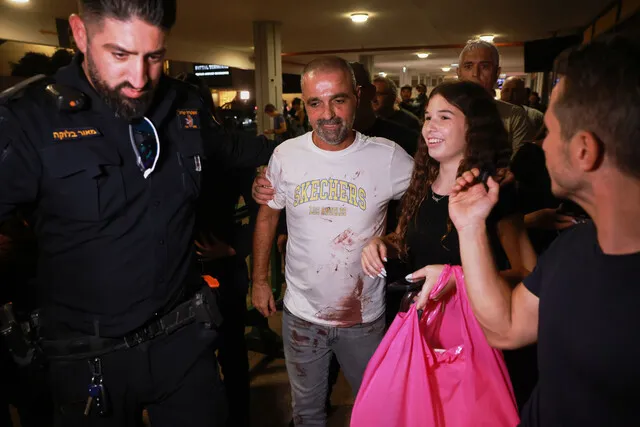
Among the 174 on board, 166 were Israeli. They arrived in Tel Aviv on replacement flights and stepped onto the tarmac to cheers from supporters of the far-right Noam party — a detail that is either deeply ironic or deeply exposing, depending on your politics. The Israeli government turned a near-tragedy into a campaign moment.
One passenger, Miriam Sirah Ohayon, told reporters the plane was truly on the verge of impact. Her words carried no political framing. Just testimony from someone who sat in seat 12A and felt the floor drop out from under them.
The co-pilot is in Saudi custody. The captain is receiving treatment. The investigation continues.
What Comes Next
If the evidence leans toward terrorism, expect sharper rhetoric from Israel toward the Gulf, renewed questions about Omani vetting, and likely tighter cockpit security standards baked into the Abraham Accords framework. If it leans toward personal crisis, the pressure lands on Flydubai and the UAE’s civil aviation authority — and on every low-cost carrier that hires pilots across multiple nationalities with varying psychiatric screening requirements.
Either outcome creates a precedent. The question is whether the precedent serves political needs or passenger safety.
The Korean media lens on this story is distinctive precisely because it refuses to accept the terrorism label at face value. It tracks Trump’s hedging, notes the Omani nationality, and asks the harder questions about how we screen the people entrusted with our lives at 35,000 feet. That skepticism may look naive to an Israeli government racing toward election day. It may also be the only framework honest enough to prevent the next incident.
The co-pilot is still talking. What he says next will determine whether this becomes a chapter in the war on terror or a wake-up call about the cracks in commercial aviation’s human safeguard.