How a plumber, dentist and stabbed pilot stopped a suicide hijack mid-air
The flydubai attack over Saudi Arabia lays bare the new dangers of Middle East air routes — and shows how ordinary passengers, not security protocols, became the last line of defense.
The cockpit door didn’t save them. A plumber did.
When a flydubai Boeing 737 plunged nearly 14,000 feet in under 30 seconds over northwestern Saudi Arabia on Tuesday, the standard assumptions about aviation security simply stopped working. Reinforced cockpit doors, armed pilots, protocol — none of it mattered once an Omani national boarded the flight from Dubai and stabbed his fellow pilot in the head.
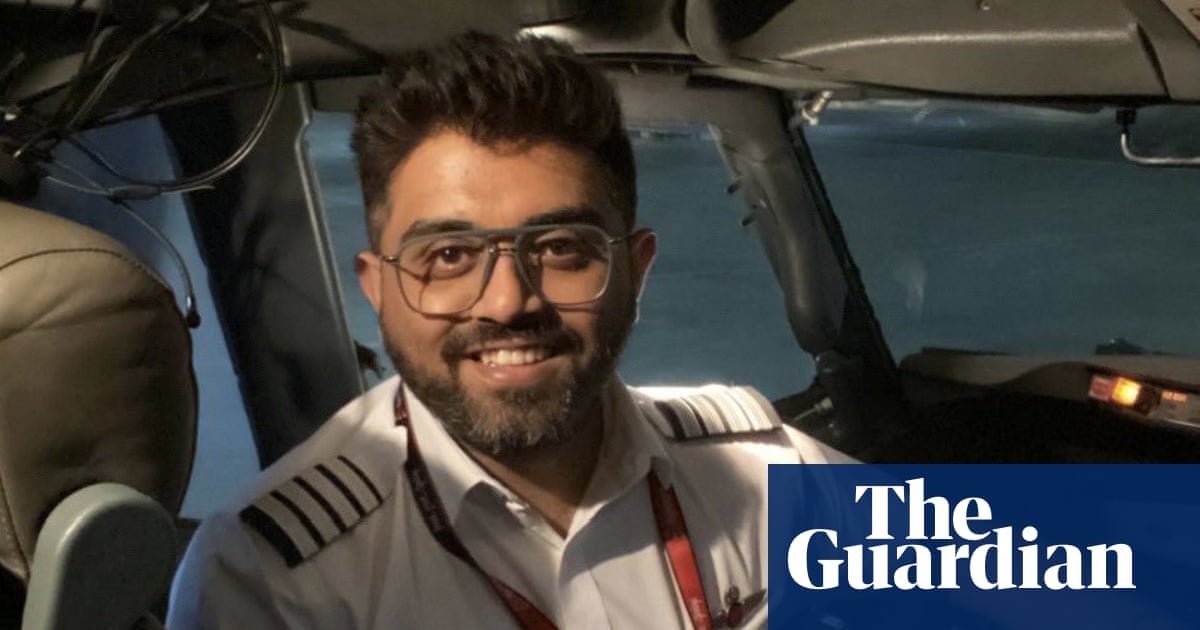
What mattered was Smit Machchhar, bleeding on the deck, reaching across the aircraft to click the door release. What mattered was Yaniv Hayoun, an Israeli plumber on vacation, who grabbed the yoke because he’d seen it done on television. What mattered was Dr Shota Musaev, a dentist, tying up an attacker with headphone cords and plastic zipties while Machchhar’s blood pressure flatlined.
Seventeen-fourteen souls survived because three strangers refused to accept that a plane full of people was about to become a missile.
The incident rewrites the narrative around Middle East air travel. For months, airlines and governments have treated the war in Gaza as a political problem with economic consequences for regional carriers. This was something else entirely — a weaponization of the airspace itself, targeting a civilian flight on a route that has become a regular artery between the Gulf and Israel.
Who these people are tells you everything
Machchhar is Indian, from Mumbai. He trained in New Zealand. He was flying a Emirates-owned flydubai slot — a low-cost carrier that has become one of the few scheduled operators between Dubai and Tel Aviv since the war began. His co-pilot, an Omani national, chose him as the first victim.
Hayoun is Israeli. He was returning from what appears to have been a work trip, an ordinary man in ordinary clothes sitting in economy. When the cockpit door opened, he didn’t hesitate. He told Netanyahu directly: “I jumped back, grabbed the controls, and started pulling back the handles.”
Musaev is apparently of Central Asian origin — his name suggests Kazakh or Uzbek roots. He treated Machchhar’s wounds mid-flight, telling CNN that if they had waited even a few more moments, they would have lost him. His blood pressure had plummeted. He had lost consciousness. Blood was everywhere.
The off-duty relief pilots — variously reported as British, South African, or New Zealander — stabilized the aircraft and brought it down in Tabuk. Their nationality doesn’t matter as much as the fact that they were on the plane at all, ready to step in.
This is not a story about institutional heroism. It is a story about individuals who happened to be on a plane, each equipped with unrelated skills — piloting, plumbing, dentistry — converging at the exact moment those skills became survivable.
The geometry of the descent
Aviation experts are still processing the physical mechanics of what happened. The aircraft descended nearly 14,000 feet in less than 30 seconds. Most of the rudder was ripped off the tail. Steve Arroyo, a former United Airlines pilot, called it “amazing” the plane didn’t come apart.
Guzzetti, another expert, said recovery may have been impossible below 10,000 feet. Machchhar unlocked the door at some altitude that allowed passengers to enter. Hayoun pulled back on the controls. The descent arrested. The plane leveled out. It landed safely in Saudi Arabia.
The margins were terrifyingly thin. A few seconds longer on the descent, a few hundred feet less altitude, and the physics simply wouldn’t have allowed recovery. The plane wouldn’t have crashed because of poor piloting — it would have crashed because there was no time left for anyone to react.
Philip Kean, who trained Machchhar in New Zealand, called him “above average.” The distinction matters. This wasn’t a movie-hero moment. It was a competent professional doing what he was trained to do under conditions no training manual covers.
The route that became a target
Flydubai has been operating the Dubai-Tel Aviv route since before the war, but service became politically charged after October 7. Israel called it a lifeline. Critics called it complicity. Either way, the route stayed open — and in staying open, it became visible.
An Omani national choosing a flydubai flight to Tel Aviv is significant. Oman maintains diplomatic relations with Israel under the Abraham Accords framework, but its citizens face domestic pressure for doing so. The attacker’s choice of target — a commercial flight, not a military transport — suggests someone who understood exactly what kind of plane to board and where it was going.
Saudi Arabia’s involvement is equally notable. The plane landed in Tabuk, not Dubai or Tel Aviv. Riyadh has neither signed the Abraham Accords nor established formal relations with Israel, yet it allowed an Israeli-bound flight to land on its soil and provided emergency response. That is a signal in itself — a quiet acknowledgment that the threat to regional aviation transcends the usual geopolitical fault lines.
What comes next
Indian Prime Minister Narendra Modi called Machchhar a hero. Israeli Prime Minister Benjamin Netanyahu did the same. Both are making political points — about courage, about shared values, about the fragility of normalcy. But the deeper story is structural.
Reinforced cockpit doors were supposed to be the answer after 9/11. They are a necessary barrier, not a sufficient one. When the threat comes from inside the cockpit — from someone who already has access, who has trained with you, who knows the protocols — a locked door becomes a delay tactic, not a solution.
The passengers on that flight proved what counter-terrorism experts have long argued but governments have been slow to act on: the last line of defense is often the people sitting three rows behind the cockpit, and they are only effective if they know the door can be opened from the inside.
Machchhar is recovering in a Tabuk hospital. His wife and two children live in Dubai. Hayoun and Musaev have returned to their professions — one to plumbing, one to dentistry. The relief pilots are back at their bases. The attacker is in custody.
The flight from Dubai to Tel Aviv will resume. It always does. The question is whether the next attack comes on a schedule that anyone can predict, or whether this was simply the first move in a strategy that now knows commercial aviation is fair game.
The heroes of flight FZ950 didn’t have training for this. They had training for their actual jobs. That’s the point. In a region where the boundaries between war and commerce blur daily, the people who survive are the ones who can transfer whatever skill they have to whatever moment demands it.