Congo's Record Ebola Outbreak Exposes Global Health System Failures
Congo's Ebola outbreak has killed over 3,000 people — more cases in months than previous outbreaks took years. The Bundibugyo strain's speed threatens global biosecurity and reveals deep failures in pandemic preparedness.
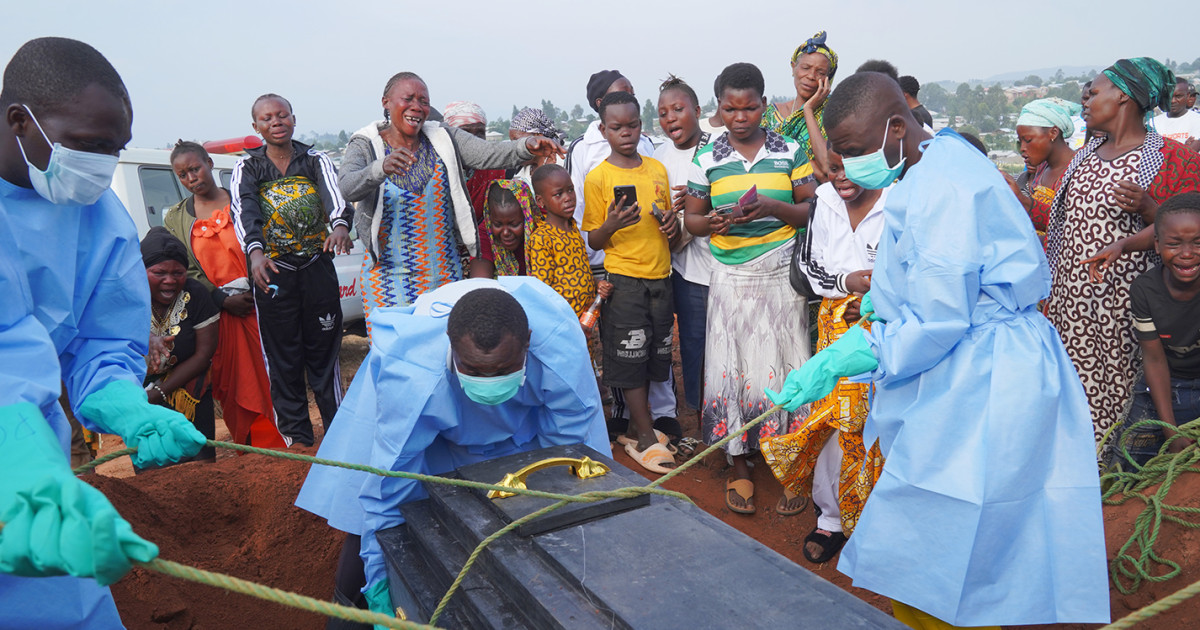
The Fastest Ebola Outbreak in History Is Only Accelerating
The numbers are staggering. Congo’s Ebola outbreak has surpassed 6,186 confirmed cases and 3,007 deaths since becoming a global health emergency in mid-May. That is more confirmed cases in roughly two months than many previous outbreaks accumulated over years. The fatality rate — hovering near 49 percent — makes this outbreak even deadlier in raw terms than the 2014-2016 West Africa epidemic, which killed 11,000 people after sprawling across three countries over two years.
But the real alarm is not the death toll. It is the velocity. This is the fastest-growing Ebola outbreak ever recorded, and it is fueled by a virus strain most of the world has never had to contend with: Bundibugyo, one of four Ebola species that causes disease in humans. There is no approved vaccine for it. There is no approved treatment specific to it. The Ervebo vaccine distributed last week to frontline workers in Kisangani targets a different Ebola species entirely — the one responsible for the devastating West Africa outbreak. It may offer some cross-protection, but nobody knows for sure how much.
A Virus in Enemy Territory
The outbreak is concentrated in eastern Congo, a region already saturated with violence. Eleven armed groups operate across North Kivu and Ituri provinces. Health workers have been attacked. Clinics have been burned. Ambulances cannot navigate roads controlled by militias. In these conditions, contact tracing — the single most important tool for containing Ebola — becomes nearly impossible. You cannot track who infected whom when people are fleeing fighting, mining operations, or displaced villages daily.
The recent addition of two new health zones in North Kivu, where the case fatality rate dramatically exceeds that of surrounding provinces, suggests the virus has found new routes of transmission. Miners moving between sites act as unwitting vectors. Schools reopening in the middle of an active outbreak risk creating dense clusters of children who may show up with fever and cough, indistinguishable from many common illnesses in a region where surveillance is already weak.
That weakness is itself a consequence of chronic underfunding. The Africa Center for Disease Control and Prevention estimates the outbreak could be three times larger than the number of recorded cases. Three times. If that estimate holds, Congo is looking at nearly 19,000 infections. Even with a 50 percent case fatality rate — which would be extraordinarily high — that translates to roughly 9,000 deaths. Comparable to the entire 2014-2016 West Africa epidemic, compressed into a fraction of the time.
Who Pays When a World Health Emergency Stalls
The workers on the front lines of this outbreak are striking. They have walked out multiple times demanding pay they are still owed. There is a moral arithmetic here that the international community too often ignores: the people risking their lives to contain this outbreak are among the least compensated. Health workers in eastern Congo earn a fraction of what counterparts in other crisis zones receive. International responders arrive with packages; local nurses and lab technicians are left behind.
This is not a new pattern. It played out in West Africa. It played out in Guinea, Sierra Leone, Liberia. It is playing out now in Congo. Each time, the world rallies, then turns away when the cameras move on. The funding gap between what global health authorities request and what they actually receive has become structural. Countries in the Global South carry the burden of containing pathogens that mutate at their borders while the wealthy nations that benefit most from travel and trade with them invest minimally in preparedness.
The Bundibugyo Blind Spot
Perhaps the most troubling detail is the one that received the least attention. The virus driving this outbreak is Bundibugyo Ebola, named after the district in Uganda where it was first identified in 2007. That earlier outbreak killed 179 people out of 224 cases. It has appeared twice since, each time in remote areas, each time controlled before it gained momentum. Nobody expected it to become a primary threat.
No vaccine has been approved specifically for Bundibugyo. No approved antiviral treatment exists for it. Research and development pipelines have prioritized the more familiar Zaire ebolavirus, which causes the deadliest form of the disease and was the focus of devastating outbreaks in 2014 and 2018. Funding followed the headlines. When the next crisis arrived, the tools were already built. For Bundibugyo, they are not.
This is the cruel logic of pandemic preparedness: we build defenses against yesterday’s enemy. By the time a new variant or strain demands action, the infrastructure to respond is incomplete. The World Health Organization declared Congo’s outbreak a global health emergency in May — the same category it applied to West Africa in 2014 and to the 2018 North Kivu outbreak. Yet each declaration has been followed by the same cycle: urgency, mobilization, then steady starvation of resources.
What Happens Next
The Congo government has begun distributing the Ervebo vaccine to healthcare workers in Tshopo province. Ring vaccination — immunizing contacts and contacts of contacts — is a proven strategy against Ebola. But ring vaccination depends on rapid case detection and immediate tracing. In eastern Congo, neither comes easily. Violence displaces communities. Infrastructure gaps slow lab results. Misinformation fuels resistance.
If this outbreak continues to grow at its current pace, it will surpass the 2014-2016 West Africa epidemic in speed if not necessarily in absolute death toll. It will become Congo’s deadliest Ebola outbreak, a title it already claims. The question is whether the world will treat it with the urgency its velocity deserves — or whether it will follow the familiar script of initial alarm, delayed response, and eventual containment achieved through sacrifice by people who had no choice.
Ebola has not gone away. It is simply waiting for the next vulnerable population, the next weak health system, the next moment when the world looks elsewhere. Congo’s outbreak should not be a story about Africa’s fragility. It should be a story about the rest of the world’s negligence.