China’s CXMT Just Changed the DRAM Game
China’s CXMT announced 4F² DDR5 server memory, a technical leap that sidesteps US export controls and closes in on Samsung and SK Hynix. The implications for global chip supply and Korean stocks are already showing.
China found a backdoor through US export controls. And it starts with a DRAM chip.
Chinese memory maker CXMT told the market on Tuesday it would ship DDR5 server memory built around a so-called 4F² structure by year-end. The technology isn’t just another incremental step—it is a deliberate绕开 strategy, a way to push memory density higher without relying on the EUV lithography tools the United States has blocked China from buying since the Trump administration.
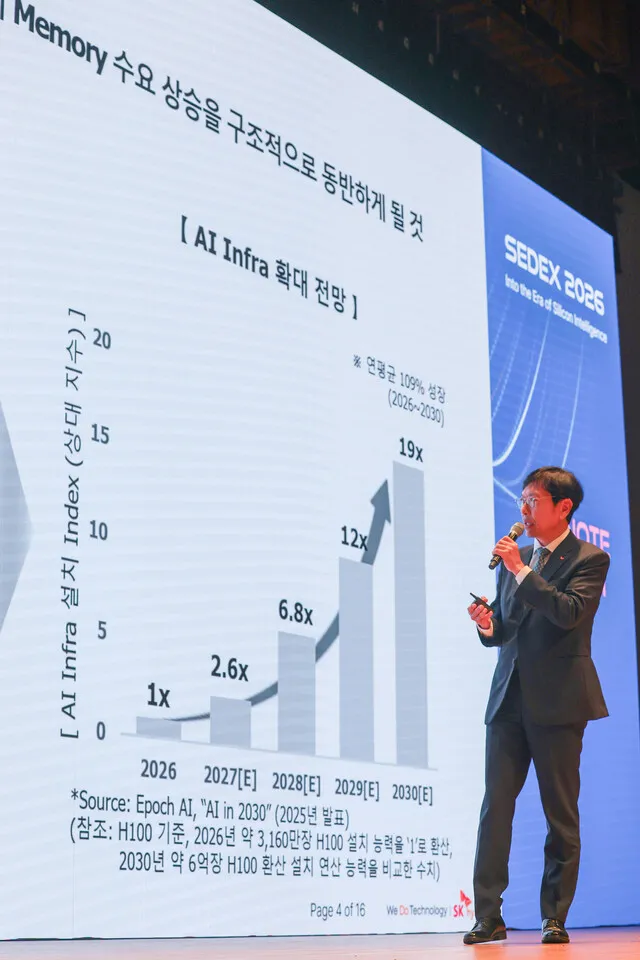
The reaction was immediate. Samsung Electronics and SK Hynix shares fell sharply the next day, and Samsung’s CTO Song Jae-hyuk was cornered at SEDEX 2026 in Seoul when asked whether Samsung was also pursuing 4F².
The question wasn’t small talk. It was a signal that the market takes China’s memory challenge seriously now.
What 4F² actually means
The “F” in 4F² refers to the minimum feature size a fab can print on a silicon wafer. In standard DRAM, the cell layout uses a 6F² geometry. That means each memory cell occupies six times the square of the minimum line width. Move to 4F² and you shrink the cell area by roughly a third. Same silicon real estate. Roughly one-third more storage density.
That matters enormously for server memory. Data centers don’t care about the price per chip as much as they care about how many chips they can pack into a rack. More density means fewer sockets, less power, higher throughput. The economics of a 4F² DDR5 part are compelling for buyers who aren’t locked into Samsung or SK Hynix supply agreements.
The hard part is that 4F² on DUV equipment—the older, multi-patterning tools China can still buy—is not straightforward. You can’t just shrink the features cleanly. You have to etch and stack layers in ways that normally degrade yield. As Sungkyunkwan University professor Woo Woo-geun put it, the structure is technically achievable, but the yield will likely suffer. The catch: China has a huge domestic demand base that can absorb lower yields longer than a Korean exporter could.
It is the same playbook China used in electric vehicles—accept a cost and quality penalty initially, scale through domestic volume, then tighten the product until it competes globally.
The numbers behind the noise
Let’s look at what’s actually driving CXMT’s ascent, because the statistics tell a story that’s easy to miss in the headline-driven panic.
China’s semiconductor exports in September hit $44.95 billion, up 136 percent year over year. Memory chips accounted for roughly 10 percent of total Chinese exports—up from 5.8 percent a year earlier. A large chunk of that volume is still Samsung and SK Hynix producing inside Chinese fabs under joint-venture arrangements. But CXMT’s own numbers are striking on their own.
According to TrendForce, CXMT captured 9.5 percent of global DRAM revenue in the second quarter. That’s up from 4.1 percent a year earlier—more than doubling in a single year. Samsung held 39.4 percent, SK Hynix 24.9 percent, and Micron 23.3 percent. CXMT is the only player in the top five moving fast.
Its operating profit margin for the first half of 2026 reached 77.9 percent. That figure is extraordinary for a memory maker in a cyclical business. It reflects the current supply crunch in general-purpose DRAM, which has tightened as Samsung and SK Hynix shifted their most profitable capacity toward HBM—high-bandwidth memory designed for AI accelerators. When the big Korean players chase the AI premium, someone has to fill the server-memory gap. CXMT is doing exactly that.
The company also raised roughly 14 trillion won when it listed on the Shanghai Stock Exchange in July. It now has dry powder to invest in capacity and R&D without waiting for external financing.
Why Samsung and SK Hynix are vulnerable here
The Korean giants have a structural blind spot. They are all-in on HBM. That is smart—HBM margins are far richer than commodity DRAM, and the AI boom guarantees demand for the near term. But it leaves a gap in standard server DRAM that CXMT is stepping into with increasing aggression.
Samsung’s own 4F² timeline is rumored to target volume production around 2028. That is two years behind CXMT’s year-end ship date. Even if Samsung gets the architecture right, CXMT’s customers—Chinese cloud providers, domestic server makers, state-backed procurement programs—will already be running on 4F² DDR5 by then. Lock-in effects matter. Once a design team qualifies a memory part, they don’t switch lightly.
SK Hynix faces the same dynamic. Its HBM leadership is unassailable for now, but the company’s server DRAM share is shrinking precisely because it is redirecting fab capacity toward the AI play. CXMT is consolidating ground the Koreans are ceding.
What happens next
The immediate risk to Korean chip stocks is real but likely exaggerated. Analysts at Sangmyung University’s system semiconductor program noted that demonstrating the 4F² structure is different from shipping it at volume with acceptable yield. Mass production is where memory chips are won or lost—not in the lab announcement.
Still, the psychological shift is permanent. Chinese memory capability was once seen as a niche, a domestic-market-only proposition. CXMT’s DDR5 announcement reframes it as a genuine competitive threat with a path to global scale.
For the rest of the supply chain, the implications are broader. CXMT’s success means China builds a self-sufficient memory ecosystem faster than Washington hoped. It also means global DRAM pricing could stay elevated longer—not just for HBM but for the commodity chips that run everything from PCs to data centers. Suppliers of DUV equipment, chemical feedstocks, and packaging services in Taiwan and Japan will feel the demand uplift.
The Korean response will have to be two-pronged: accelerate 4F² development internally and find a way to hold server DRAM share without sacrificing the HBM engine. If Samsung and SK Hynix can’t do both, CXMT won’t just take China’s market—it will start taking the rest of Asia’s too.