CXMT's 7x Surge Is Rewriting Global Memory Chips
China's CXMT is on pace for 7x revenue growth this quarter, seizing DRAM market share from Samsung and SK Hynix as AI demand collides with US sanctions. The implications for Korea are stark.
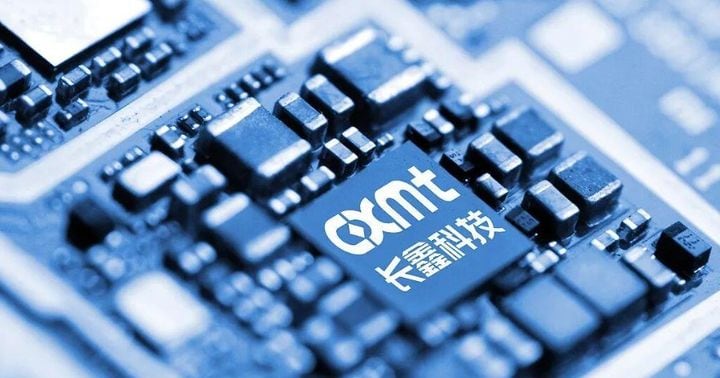
A number that should worry Seoul
CXMT, China’s fastest-rising memory-chip maker, is forecasting third-quarter revenue of roughly 115 billion yuan — about 589 to 619 percent higher than the same period last year. Full-year-to-date revenue is expected to land between 265 and 270 billion yuan, a sevenfold increase from a year ago.
Net income for the same stretch, 131 to 132.5 billion yuan, marks a stunning reversal from a 5.3 billion yuan loss last year.
The math is simple and uncomfortable for Korea: while Samsung Electronics and SK Hynix navigate what analysts are calling a cyclical plateau, a Chinese company backed by state policy and a home market of 1.4 billion people is accelerating at an extraordinary pace.
This is not yet a close race. Samsung still commands roughly 38 percent of global DRAM revenue, SK Hynix 25 percent, and Micron 24 percent. CXMT sits at about 10 percent, fourth globally, up from 4 percent a year earlier. But the direction of travel matters more than the current ranking, and it is moving fast.
What is driving the surge
CXMT pointed to two structural forces in its earnings preview: AI-driven demand and expanding production capacity.
The AI boom has created a DRAM shortage that suppliers outside China struggled to fill quickly enough. Data-center GPUs require massive memory bandwidth, and hyperscalers have been bidding aggressively for every available chip. Prices rose sharply from the second half of last year through 2025, and CXMT captured a portion of that upside.
But price alone does not explain a sevenfold revenue jump. CXMT also disclosed that its wafer-level output per process node and overall equipment utilization rates have improved meaningfully. The company is producing more chips at better yields, and that scale effect is compounding the price tailwind.
There is a third factor that warrants attention but rarely makes it into earnings calls: export controls.
US sanctions have restricted China’s access to advanced semiconductor equipment, particularly tools needed for cutting-edge memory nodes. CXMT has been operating primarily in the mid-range DRAM segment, which is precisely where sanctions have been less restrictive and where Chinese data centers have the most urgent need. By focusing on that space, CXMT is building a moat that is both technological and geopolitical.
Who wins, who loses
For CXMT, the immediate beneficiary is clear. The company also announced a proposed share buyback of up to 2 billion to 4 billion yuan through its own funds, a strikingly large commitment for a STAR Exchange-listed firm where typical buybacks run 200 million to 800 million yuan. The board must still approve the plan, but the signal is deliberate: management sees the current valuation as an opportunity to strengthen shareholder value at a moment when fundamentals are improving rapidly.
The IPO itself, completed in July, raised approximately 66.6 billion yuan — a massive sum for a Chinese tech listing. On its first trading day, CXMT became the largest company by market capitalization on China’s domestic exchanges. As of October 16, its market cap stood at roughly 3.06 trillion yuan, about 610 trillion Korean won.
For Samsung and SK Hynix, the news is mixed. Their DRAM businesses remain profitable and dominant in absolute terms. But CXMT’s share gains are occurring in the volume segment that powers server and AI workloads — the very market both Korean firms identified as their strategic priority. If CXMT continues to close the gap in yield and scale, Samsung and SK Hynix could face sustained margin pressure even as overall DRAM demand grows.
For Micron, the dynamic is different but not benign. The US company already faces exclusion from the Chinese market due to export-control restrictions, and CXMT’s growth partially reflects the vacuum left by American suppliers.
For Beijing, this is a textbook industrial-policy success. China has long sought self-sufficiency in memory chips, a sector critical to everything from data centers to electric vehicles. CXMT’s trajectory suggests that despite sanctions, the strategy is working — at least in the segments that matter most for domestic demand.
The Korea question
Korean semiconductor stocks have underperformed relative to global peers in recent quarters. The reasons are multifaceted: valuation concerns, cyclical timing, and broader market sentiment. But one factor is increasingly hard to ignore — the rise of a well-funded, state-supported competitor that is capturing market share in a category Korea depends on.
Samsung and SK Hynix are not facing an existential threat today. Their technology lead in high-bandwidth memory and advanced DRAM nodes remains significant. SK Hynix, in particular, maintains a strong position in the HBM segment that powers AI training and inference.
But CXMT’s 7x revenue growth is not a one-time anomaly. It reflects a structural shift: China is no longer just a consumer of foreign memory chips. It is becoming a producer, and it is doing so at scale. The next two to three years will determine whether CXMT can leapfrog into more advanced nodes or whether it plateaus in the mid-range. Either outcome changes the calculus for Korean manufacturers.
What happens next
Three things to watch.
First, CXMT’s yield trajectory. The company claims improving wafer output, but the real test is whether it can sustain that improvement as it moves toward denser process nodes. Sanctions will make equipment acquisitions harder over time.
Second, the buyback execution. If the board approves and CXMT actually repurchases shares at scale, it signals confidence that the current revenue acceleration is durable, not cyclical.
Third, Washington’s response. US export controls have shaped CXMT’s current advantage by limiting competition in China. Any tightening of those restrictions — or any relaxation that allows more Chinese access to advanced tools — would directly affect CXMT’s growth path and, by extension, the Korean competitive position.
The global memory-chip hierarchy is being rewritten. CXMT’s numbers this quarter are the opening chapter, not the conclusion.