How CXMT's Wafer Leap Is Reshaping the Memory Chip Wars
Chinese memory maker CXMT claims it can now produce 50% more chips per wafer without EUV equipment — a quiet breakthrough that narrows the gap with Samsung and SK Hynix and shifts the memory market's center of gravity.
The 50 Percent Number That Matters
The headline number coming out of China’s memory sector is seductive: CXMT says it can now extract 50 percent more chips from a single 12-inch wafer than before. But the real story isn’t that percentage. It’s what made it possible — and what it means for the two companies that have owned the memory business for decades.
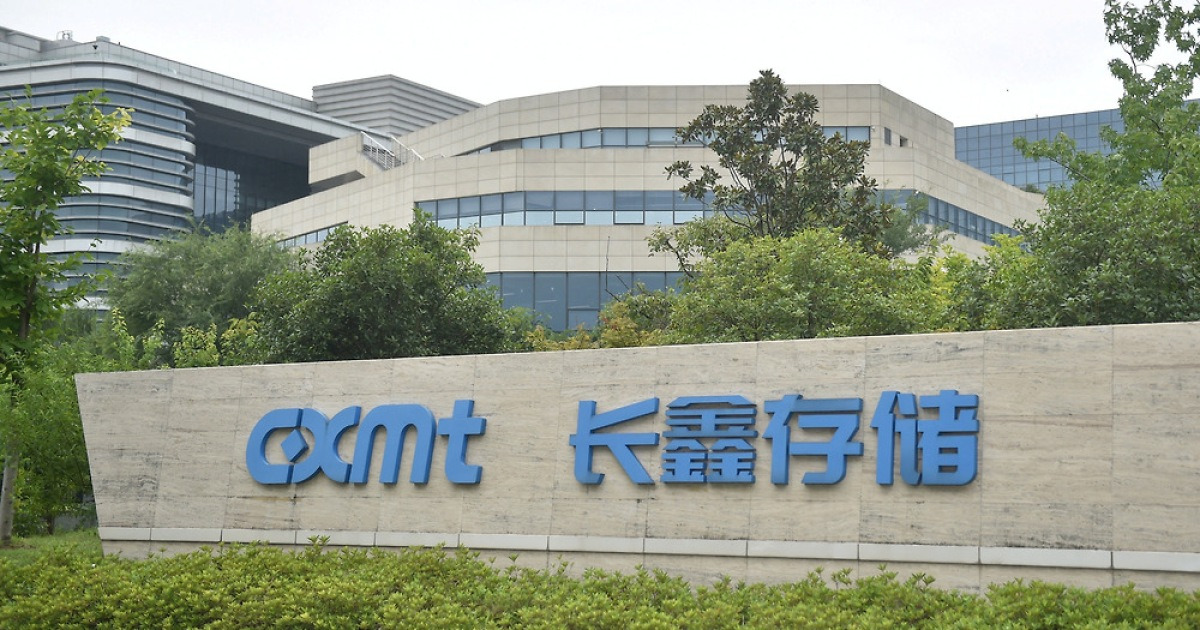
CXMT, officially ChangXin Memory Technologies, announced at the 2026 World Manufacturing Conference in Hefei that it has entered mass production of its fifth-generation DRAM process, with a cell structure pitch shrunk to 11.95 nanometers. On paper, that puts them in the same technological neighborhood Samsung and SK Hynix occupied in the late 2010s. More importantly for investors, it proves that China’s most advanced memory maker can keep moving forward without the most advanced tools on the planet.
The United States has spent years trying to lock China out of extreme ultraviolet lithography equipment. CXMT is simply not using EUV. Instead, it is layering multiple patterning passes — exposing and etching the same wafer surface several times to achieve finer feature density — to reach node dimensions that would normally require a tool ASML no longer sells to Chinese buyers.
The yield math is where the nuance lives. CXMT’s 50 percent figure measures total chips per wafer before defect testing. It is not the same as a 50 percent jump in usable product. Defect density matters enormously when you are stacking billions of capacitors on a silicon slab. But even accounting for that gap, the direction is unambiguous: CXMT is producing more transistors per wafer than it was a generation ago, and it is doing so under equipment constraints that would ground most competitors.
The Market Position That Changed
Here is what the Korean press is treating as the more urgent signal: CXMT’s DRAM market share hit double digits for the first time in the second quarter, reaching 10 percent according to Counterpoint Research. That number crossed a psychological threshold. For years, Chinese memory ambitions were discussed in terms of pilot lines and research papers. Now a Chinese company is claiming a meaningful slice of a market dominated by Samsung, SK Hynix, and Micron.
The scale of the expansion behind that share is staggering. CXMT’s estimated 12-inch DRAM production capacity sits at roughly 300,000 wafers per month. Industry forecasts place that at 600,000 wafers monthly by 2028. Doubling capacity in two years while simultaneously advancing process nodes is not normal industrial pacing. It is the pace of a state-backed push.
That state backing is not speculation. CXMT is headquartered in Hefei, Anhui province — a city that has staked its economic future on semiconductors and poured tens of billions of yuan into the sector. The local government has effectively treated CXMT as a strategic asset rather than a commercial one, which explains both the pace of capital expenditure and the willingness to absorb lower short-term margins.
The Pricing Pressure No One Is Naming Yet
Memory is a cyclical commodity business. Prices swing wildly with supply and demand, and the current cycle has been painful for Korean makers. DRAM prices fell sharply in 2023 and early 2024 before recovering somewhat. In that environment, every additional wafer that a competitor can produce at lower cost is a direct margin threat.
CXMT does not face the same capital cost structure as Samsung or SK Hynix. It is not carrying the weight of legacy fabs built under different economic assumptions. Its newer lines, even when using multi-patterning instead of EUV, are still designed for higher throughput per square meter of floor space. And the 50 percent chips-per-wafer improvement, even at pre-yield levels, translates into real unit-cost downward pressure when production scales.
Korean analysts have been blunt about this. The Daum article framing this story positions CXMT’s advancement as a追赶 — a chase — that is accelerating. The word choice matters. It is not casual optimism from Beijing. It is a competitive assessment from Seoul’s financial press, which tends toward alarm when Korean industrial dominance is at risk.
The NAND Move That Expands the Threat
CXMT is not stopping at DRAM. Reports indicate the company is building NAND flash research and production lines at a new Beijing facility and holding supply discussions with Chinese AI storage manufacturers. This is significant because the AI hardware boom is driving demand for both high-bandwidth memory and large-capacity storage. If CXMT can supply either category to domestic AI firms at competitive prices, it gains a foothold in the fastest-growing segment of the memory market.
Chinese AI companies have been actively seeking to reduce dependence on Samsung and SK Hynix for memory components, particularly as export controls have made supply chain planning more uncertain. CXMT is positioned to fill that gap. Whether it can match the performance and reliability benchmarks that hyperscalers demand is an open question. But the attempt itself changes the calculus.
What Samsung and SK Hynix Face
The Korean duopoly has enjoyed memory market dominance for two reasons: technology leadership and scale. CXMT is challenging both. The technology gap is narrowing faster than most Western coverage has acknowledged, because multi-patterning works if you have the patience and the capital. The scale challenge is coming from a competitor willing to operate at margins that would force a purely commercial firm to pause.
Samsung and SK Hynix are not standing still. Both are pushing into more advanced DRAM nodes and investing heavily in HBM — high-bandwidth memory — for AI applications, where CXMT currently has no presence. But HBM is a narrow moat. If CXMT can sustain its current trajectory in commodity DRAM while expanding into NAND, the Korean firms face a squeeze on their core revenue business at the very moment they need that revenue to fund next-generation R&D.
The timeline is the critical variable. CXMT’s 11.95-nanometer process is roughly equivalent to late-2010s Samsung and SK Hynix nodes. That means the company is competing on technology that is proven, not cutting-edge. The question is how quickly it can leapfrog to the next generation under continued equipment restrictions. Multi-patterning is costly in terms of time and defects. Each additional lithography pass adds expense and complexity. If CXMT can manage that cost curve better than its Korean rivals can manage the pressure on margins, the market share trajectory could accelerate further.
The Bigger Picture
What CXMT’s announcement reveals is a Chinese semiconductor strategy that has shifted from imitation to competition in a sector previously considered impregnable. The US export controls have not stopped progress. They have redirected it. Multi-patterning is a harder, slower path than EUV — but it is a path that works, and it is being walked right now.
For global readers, the implication is straightforward: the memory chip supply chain is no longer anchored solely in South Korea and Taiwan. China is becoming a third pole, and it is growing faster than the usual narratives suggest. The next memory cycle will not play out the same way the last one did.