Datacenters vs. Residents: The Political Blowback AI Can't Compute
Even inside Silicon Valley, residents are forcing a reckoning on datacenter booms. San Jose's community meeting and a coordinated wave of protests across 42 US states signal a shift that could slow AI infrastructure investment.
Even in Silicon Valley, the power gets cut off
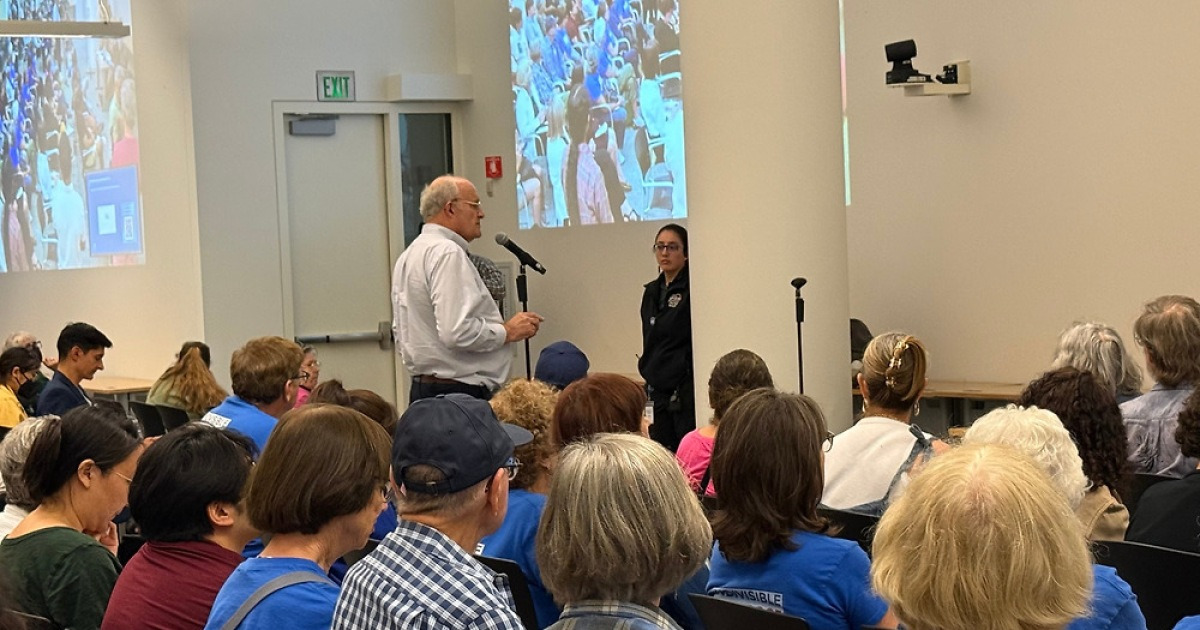
Two hundred residents packed into a San Jose city council chamber on a Tuesday evening — not to celebrate a tech milestone, but to demand a halt. The crowd was angry at something that rarely triggers municipal outrage: datacenters. This time, the anger came from people who work in those very industries.
The message was blunt. A high school student asked where cooling water would come from during a drought. A resident with a grandmother suffering from respiratory illness demanded a moratorium until strict standards were in place. Another held a sign that cut through the policy jargon: “The only ‘datacenter’ we need is a public library.”
San Jose sits at the geographic and cultural center of the AI boom. Google, Oracle, and Nvidia have campuses nearby. The city expects each new datacenter to generate $3 million to $7 million annually in property and utility tax revenue. The math should be irresistible. But the math stopped mattering once residents started measuring the costs their own way.
The number that changed the argument
Nineteen days ago, 142 protests erupted simultaneously across 42 US states. It was coordinated, which suggests this is not a spontaneous burst of NIMBYism — it is an organized movement. In Oshkosh, Wisconsin, 500 residents gathered against a proposed datacenter. Gallup found that 71 percent of Americans oppose datacenter construction in their area.
That last figure is striking because opposition to local development usually hovers around 30 to 40 percent. Seven in ten is a supermajority, and it gives politicians across the aisle something rare to agree on before November’s midterms.
What makes the coordination especially notable is the speed. Within 48 hours of the first flash mobilization on social media — seeded by a coalition of rural energy advocates, urban housing groups, and former tech workers turned activists — hundreds of local chapters had formed. Facebook events, Discord servers, and WhatsApp groups linked organizers from rural Ohio to suburban Georgia. This was not a grassroots accident. It was a strategic escalation by groups like the Data Center Accountability Network, which has been lobbying for community benefits agreements since 2022 and recognized that the issue had finally reached a political inflection point.
Politicians are already flipping
Pennsylvania Governor Josh Shapiro, who once welcomed Amazon’s massive datacenter investment, signed an executive order on August 18 requiring developers to pay for new generation, transmission, and distribution infrastructure and meet environmental standards. He did not do this because his understanding of economics changed. He did it because his district changed.
New York became the first state to impose a one-year moratorium on large new datacenters. The timing is not coincidental. The midterms are roughly three months away. Datacenter opposition is no longer a fringe environmental concern — it is election insurance.
The flips are spreading. Michigan’s governor called for a statewide review of datacenter permitting. Texas, long the default destination for compute expansion, saw its Public Utility Commission begin receiving formal complaints from ratepayers about unexpected surcharges tied to grid upgrades. Even Florida, a state with deep ties to tech investment, introduced legislation that would require datacenter operators to disclose water usage and connect to municipal sewer rather than relying on independent systems.
What unites these moves is a shared calculation: the political risk of opposing datacenters is lower than the risk of ignoring them. Even pro-business governors are recalibrating.
What San Jose reveals about the real bottleneck
The energy question is the sharpest one, and it is the one the tech industry has struggled to frame honestly. Datacenters do not just consume electricity — they consume it continuously, at peak capacity, and they demand water for cooling that competes with residential supply in drought-prone regions. Emergency backup generators burn diesel, adding to local air pollution that already burdens communities near industrial zones.
The fiscal benefit to cities is real but one-sided. Property tax revenue flows to municipalities, but the infrastructure strain — grid upgrades, water system expansion, road wear from construction — falls on local governments. The trade-off is visible: a datacenter brings millions in annual revenue while shifting long-term costs onto ratepayers and taxpayers who did not vote for it.
There is also a secondary consequence that the industry has barely acknowledged. Datacenter demand is reshaping local real estate markets. Land values near proposed sites spike, pricing out small businesses and pushing long-term residents toward the margins. In some counties, residential property taxes are climbing as assessment values adjust to reflect the new commercial pressure, even before a single server rack is installed. Homeowners who supported the local economy now find themselves squeezed by the very growth they hoped would sustain their communities.
The ripple effects beyond the permit process
The fallout is not confined to zoning hearings. Insurance markets are already adjusting. Several regional carriers have begun flagging datacenter proximity as a risk factor in commercial property policies, citing grid instability and fire risk from backup generators. Reinsurance firms are quietly raising premiums for assets in high-growth datacenter corridors.
The water market is another quiet disruption. In the Southwest, utilities have started exploring whether datacenter water contracts should be subject to the same drought restrictions placed on residential users. Legal scholars are debating whether water used for cooling qualifies as “domestic” use under existing statutes. If it does not, developers could face mandatory reduction mandates during dry years — a scenario that would directly threaten operations.
Even the labor market is feeling the pressure. Construction workers who once benefited from datacenter projects are now divided. Some support the industry for the wages it provides; others, particularly those living in communities where rent has doubled since the first cranes appeared, are aligning with the opposition. The narrative that datacenters are purely job creators is fracturing under the weight of lived experience.
The global signal
This story is being reported from Silicon Valley, but the pressure is spreading. South Korea’s state-owned power company recently raised concerns about datacenter demand competing with household supply. The UK has faced similar debates. Europe’s energy-intensive industries are watching.
The implication for AI investors is concrete. If 71 percent of Americans oppose datacenter construction in their area, and state governments are responding with moratoria and cost-shifting mandates, then the timeline for building new AI infrastructure is no longer defined by chip availability or capital raised. It is defined by local political will.
Companies that assumed the path of least resistance would run from construction permit to grid connection now face a map dotted with hostile jurisdictions. The projects that proceed will do so in states or countries where local governments can extract upfront payments for grid upgrades and where community benefits agreements are enforceable. That raises the effective cost per megawatt of new capacity and concentrates development in fewer locations.
Who wins, who loses
The winners are communities that previously had no leverage over multibillion-dollar developments. They now have a coordinating network, a polling justification, and politicians who need their votes. The losers are datacenter developers who assumed permit timelines would stay under two years. They are also household electricity consumers, who will face higher rates as grid upgrades are socialized even as datacenter customers negotiate favorable contracts.
For the AI industry, the signal is a constraint it cannot engineer its way out of. Compute can be stacked denser. Chips can be made more efficient. But you cannot efficiency-improve a zoning hearing in San Jose or a state legislature in New York.
The midterms will determine whether the moratoria and mandates are temporary political tactics or the beginning of a structural shift in where AI infrastructure can be built — and at what cost. What is certain is that the window for unconstrained expansion is closing, and the alternatives are being decided not in boardrooms but in city councils, statehouses, and protest lines stretching across 42 states.