DeepSeek's $0.60 Shock Could Rewire Global AI Economics
DeepSeek released a model beating US giants in four benchmarks at 40x cheaper pricing and open-sourced it under MIT. The move forces a reckoning on GPU economics, enterprise adoption, and where the next round of AI investment actually flows.
The numbers that should keep every CTO up at night
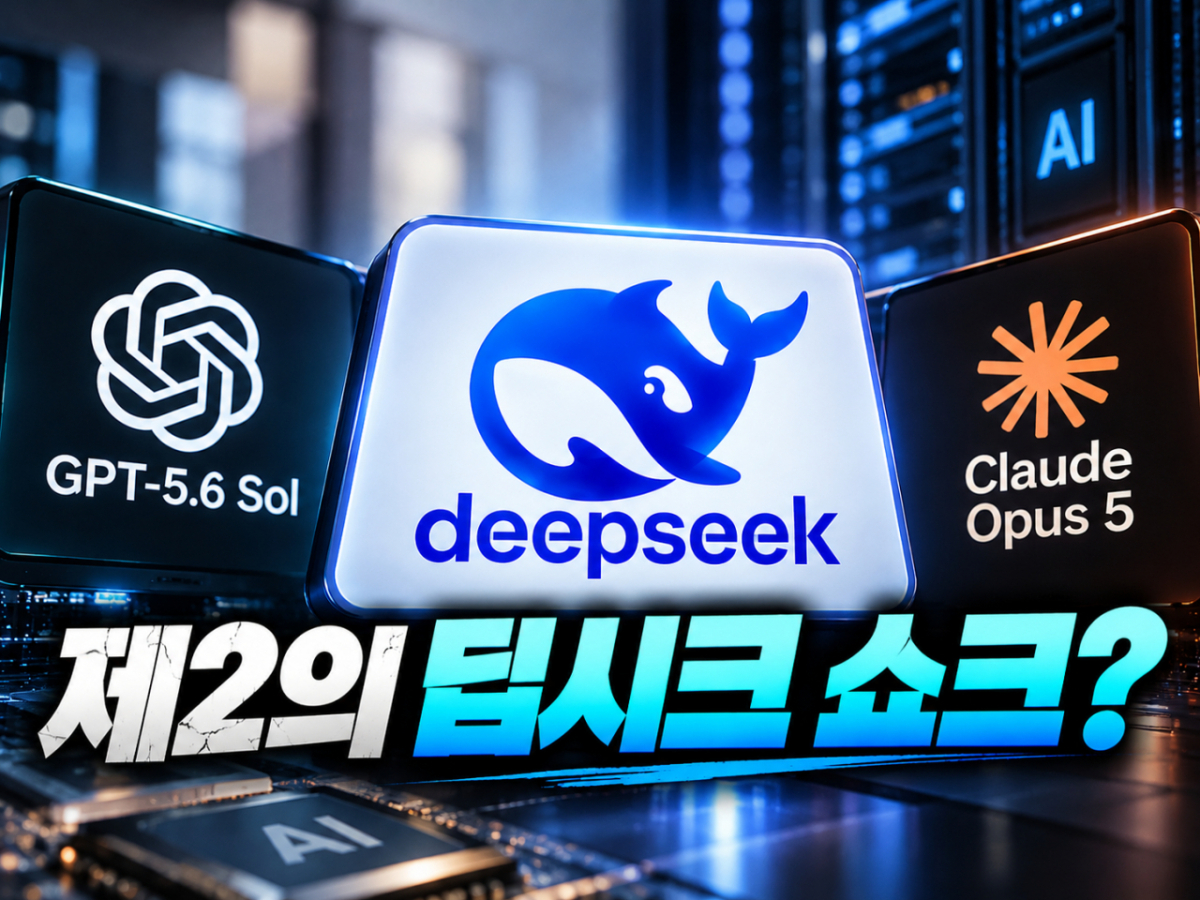
DeepSeek dropped its V4.1-Flash-1017 model on a Sunday, and quietly unraveled one of the central justifications for the spending binge powering Silicon Valley. Four out of eleven benchmark tests showed it ahead of OpenAI’s GPT-5.6 Sol and Anthropic’s Claude Opus 5. Coding scored 77.0 on DeepSWE v1.1. The most striking figure, though, was not a score but a price tag: $0.60 per million output tokens. The same volume runs $20 at OpenAI, $25 at Anthropic. Roughly forty times cheaper.
Then it did something no major US lab has done with a frontier-grade model: it open-sourced the weights under an MIT license. Search and web-scraping APIs opened too. This was not a subtle nudge. It was a signal that DeepSeek is playing a different game entirely, one where distribution beats moat and ecosystem beats lock-in.
Who loses first
The direct casualties are obvious. Any enterprise that signed a year-long API contract with OpenAI or Anthropic at 2025 rates just found itself overpaying by a factor that no CFO can defend. Migration costs exist — retraining agents, adjusting prompt chains, QA cycles — but those are one-time expenses. The running cost differential is structural.
Hyperscalers face a harder question. The prevailing thesis behind NVIDIA’s valuation has been that AI demand is inexorable and compute scarcity justifies premium margins. DeepSeek’s pricing undermines the scarcity story without necessarily breaking the demand story. If models like this become credible for production workloads, the total compute budget shifts from “how many H100s do we buy?” to “how many cheap推理 instances do we lease?” The margin structure flips. The customer who previously needed a fleet of front-end GPUs may now run inference on commodity hardware or even edge devices.
The second-round losers are less visible but possibly deeper. Foundational model labs that invest billions in training runs and then charge per token are operating on a rent-seeking model. DeepSeek’s MIT release proves you can build competitive performance and give the weights away while still capturing value through API access, enterprise support contracts, or vertical applications. That is the platform play, not the licensing play.
The Jevons paradox everyone is already predicting
Lower prices do not automatically destroy the GPU supply chain. They change what the supply chain is for. If inference becomes cheap enough, total token volume will expand. More applications, more agents, more integrations. Jevons’ paradox is not theoretical here — it has already shown up in cloud usage patterns for any commodity that drops in price. The demand curve bends outward faster than the per-unit revenue falls.
But the shape of that demand matters. Jevons applies most cleanly when the cheaper input is the binding constraint. If the bottleneck shifts from inference compute to training compute — because new architectures keep emerging, because agents need continual fine-tuning, because the race to frontier capability has not ended — then the upside goes to a narrower set of players: the ones controlling access to cutting-edge training clusters and high-bandwidth memory. That is why Samsung and SK Hynix are already being watched despite the pricing shock. The HBM cycle does not die just because inference gets cheaper. It migrates.
The signal DeepSeek is sending about open source
The MIT license choice is deliberate. It is the most permissive license available for a model release of this magnitude. There is no requirement to share derivatives. No obligation to contribute back. DeepSeek keeps commercial flexibility while letting anyone — a startup in Jakarta, a research lab in Berlin, an internal team at a bank in Singapore — embed the model into products without asking permission.
This is not the first time a Chinese AI company has opened weights. But it is the first time the performance gap has closed enough for the move to threaten the business models of the companies that built those gaps. The effect is similar to what happened when Linux moved from academic curiosity to infrastructure staple: the moment a free alternative becomes production-ready, the pricing power of paid alternatives collapses.
Thomas Wolf, co-founder and CSO of Hugging Face, noted on X that DeepSeek’s “minor update” pushed TerminalBench from 31.2 to 42.3 and asked whether those numbers hold outside controlled evaluations. That is a fair skepticism. Benchmarks are not reality. But the direction of travel is already established. Even if DeepSeek’s claims are trimmed by independent audit, the market only needs one credible replication to shift pricing expectations.
What changes next
Enterprises will start pressure-testing DeepSeek against their own workloads. Coding agents are the low-hanging fruit — the DeepSWE score already suggests a meaningful improvement in automated development workflows. If a model can draft, test, and iterate code at a fraction of the cost, the deployment timeline shrinks and the margin expansion is immediate.
OpenAI and Anthropic will not remain silent. Expect targeted responses: tighter bundling, new performance tiers, increased emphasis on reliability and compliance guarantees that commoditized APIs cannot easily replicate. The race will shift from raw benchmark points to production trust — uptime, auditability, liability coverage, data-residency certifications. These are real differentiators, but they raise the floor rather than the ceiling, and they cost money to maintain.
The United States government will notice. DeepSeek’s model is now in the hands of anyone with an internet connection and a GitHub account. Export controls and chip restrictions cannot reverse open-source diffusion. The policy question is no longer whether China can catch up; it is whether America can justify continued subsidies for domestic training capacity when inference cost structures have been undercut by open weights.
South Korea faces a different version of the same tension. The government’s Frontier AI program aims to match China’s top models, but each year of development narrows the gap that DeepSeek just erased overnight.追赶 becomes a moving target. The strategic imperative is not merely catching up — it is building a cost structure and an application ecosystem that can compete when the baseline moves this fast.
The broader implication
DeepSeek’s release is not a one-off pricing disruption. It is proof that the open-weight pathway is commercially viable at the frontier. That means the next generation of model launches will face a different calculus: competitors will assume weights will be open, which compresses licensing revenue and forces labs to compete on performance, reliability, or distribution. The industry moves from a walled-garden equilibrium toward a platform equilibrium, where the value is in the integrations, the data loops, and the enterprise relationships — not in the model weights themselves.
Hyperscalers that relied on compute scarcity as a durable moat will need to reinvest in efficiency, not just scale. Labs that relied on API monopolies will need to justify their premiums with outcomes, not capability gaps. And every organization evaluating AI procurement now has a credible third option that destabilizes the duopoly pricing structure.
The shock is not that DeepSeek exists. It is that it arrived faster, cheaper, and more openly than anyone betting on the current spending trajectory anticipated.