The DMZ Landmine Delay Is Less Cover-Up Than Coalition Math
South Korea's military is defending a deliberate investigation pace after a DMZ landmine explosion, rejecting opposition claims of stalling as election-year theatrics. But the delay exposes a quiet crisis in ROK-US coordination.
The Explosion That Changed Nothing — and Everything
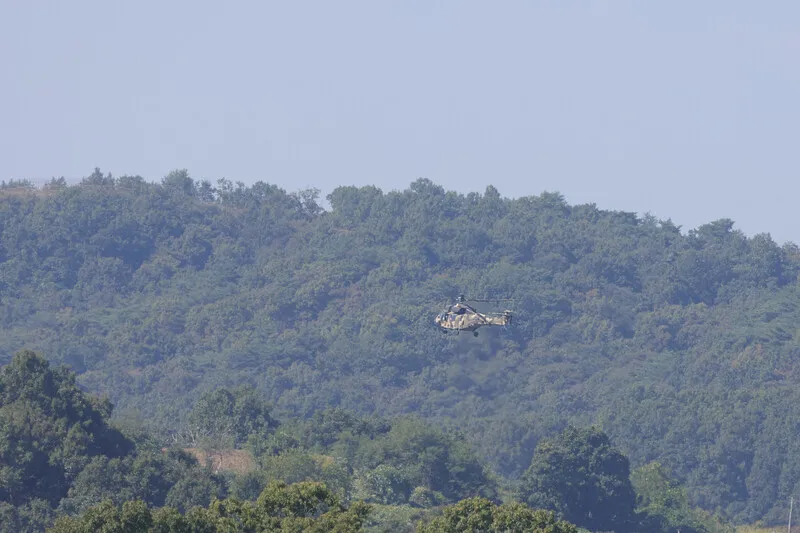
On October 22, a landmine detonated near the Military Demarcation Line in South Korea’s western DMZ sector. Four soldiers were wounded. No one knows yet whether Pyongyang placed it or whether it was a remnant from the Korean War. What matters more right now is not the blast itself but what happened after it: a four-day gap between the explosion and the South Korean military’s first public statement, followed by a deliberate, methodical pacing of the investigation that has drawn accusations of obstruction from the opposition.
The Joint Chiefs of Staff called those accusations distorted. They are partly right, and partly wrong. The military is being careful — possibly too careful, and possibly exactly as careful as the situation demands. The real story here is not a cover-up. It is the awkward friction between two allies who disagree on how fast to move when a live explosive sits in contested soil.
Who Actually Controls the DMZ
To understand the delay, you need to understand the map. The 2015 North Korean landmine incident — which the opposition keeps citing as precedent — happened in a different zone entirely. That explosion occurred inside the southern part of the DMZ, an area South Korean forces patrol regularly and that historically carried lower risk. This week’s blast hit closer to the MDL, the razor-wire boundary that divides the peninsula and sits within a zone where no South Korean soldier has systematically walked with mine-detection equipment before.
That distinction matters because the armistice agreement that ended active fighting in 1953 never formally closed. The Korean War is technically still suspended, not resolved. And the entity that oversees the armistice framework — however diminished its role has become in practice — is the United Nations Command Military Armistice Commission, headquartered in Panmunjeom. Any investigation near the MDL requires UNC notification, coordination, and eventually, formally, consent. The US does not share South Korea’s urgency. Washington has long preferred ambiguity around the DMZ’s legal status because clarity would force a conversation about the armistice that neither side wants to have.
The Alliance Friction
This is where the story diverges from the opposition’s framing. The JCS announcement on October 24 made clear that a task force is operating under Vice Chairman Cho Youn-hyun, coordinating with the UNC MAC, theROK army, and relevant agencies. The process involves phased safety assessments, route reconnaissance, communication checks, and psychological evaluation of the soldiers who were on scene. A preliminary forensic report from the National Forensic Service — examining shrapnel, clothing, and gunpowder residue from the wounded — is expected next week.
None of this is instantaneous. And none of it is clandestine. The JCS published its own statement. It named names, timelines, and processes. What it did not do is announce a rapid response akin to 2015, when South Korean troops entered the site the same day. That difference is structural, not conspiratorial.
But structural differences look like obfuscation when you are a politician running ads before an election. Zhang Dong-hyuk of the ruling People Power Party went further than most, calling any intentional delay an act of treason. That is political rhetoric in a country where the opposition has been demanding answers about military readiness and transparency since before the blast. The timing — with the September Chuseok holiday approaching — added fuel. Critics argued the military was using the holiday as a cover to stall. The JCS denied this, saying the timeline was driven by operational necessity, not calendar convenience.
Who Wins, Who Loses
The opposition wins attention. Every day without a conclusive answer strengthens their narrative that the government is either incompetent or complicit. The military wins time — but loses credibility with a public that expects swift action after casualties on its doorstep.
The United States wins what it usually wins: patience preserved. A slow investigation keeps the MDL quiet. A fast one risks escalation, especially if the blast is confirmed as North Korean. Pyongyang will respond to any investigation with its own propaganda machinery, and a rushed probe could produce errors that compound the crisis. Washington has calculated, implicitly, that measured caution is the safer path.
South Korean soldiers win nothing here. They were the ones who triggered the explosion. They are now part of an investigation that treats their trauma as a scheduling variable. The JCS acknowledged this openly, saying the psychological readiness of the responding personnel would be considered before they re-enter the zone. That is humane, but it is also a stark reminder that these are the people standing closest to a line neither side has ever agreed to close.
What Comes Next
The forensic results next week will be the first concrete data point. If they confirm North Korean ordnance — a possibility the military has not ruled out — the political pressure will intensify dramatically. If they cannot determine origin, the ambiguity will deepen, and the opposition will have even less to anchor its criticism on, which will make its rhetoric more abstract and more dangerous.
The UNC’s role will remain background noise unless something escalates. That is by design. Washington and Seoul have managed this tension for decades: Seoul wants visibility, Washington wants stability, and the DMZ gets both in equal measure and neither in full.
The real question is whether the South Korean public will accept that trade-off this time. The 2015 incident produced outrage that reshaped military command structures. This incident may produce the same outcome — not because the facts are worse, but because the political temperature around the military is higher than it has been in years. Commander Maum Park’s recent departure from the defense portfolio has left a leadership vacuum at a moment when a clear narrative from the JCS would matter most. Instead, the military is speaking in process updates, not strategy.
The blast was not the story. The silence after it was.