The Dollar as a Weapon: Why Iran Sanctions Are a Stress Test for Asian Banks
The US has launched its largest-ever financial offensive against Iran, threatening to expel any institution from the dollar system that continues Tehran-linked dealings. For Korean and Chinese firms, the message is unmistakable: compliance or出局.
The Dollar Has a Long Arm
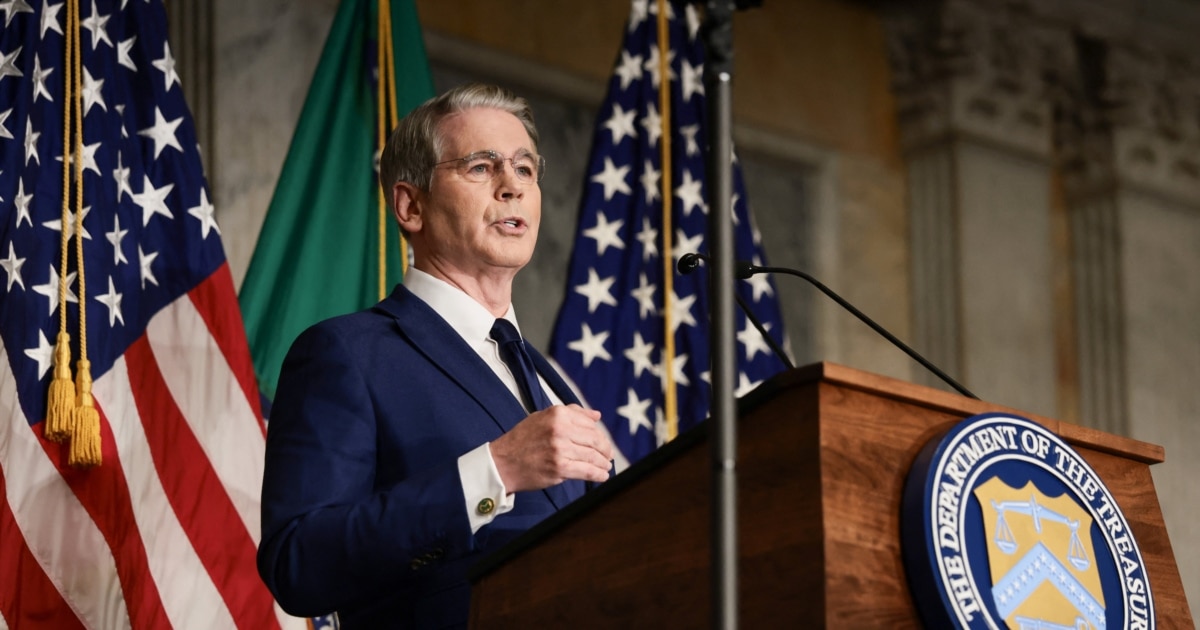
When US Treasury Secretary Scott Bessent stood at a press conference on August 24 and announced Operation Economic Outcast, he wasn’t describing yet another round of targeted sanctions. He was outlining a structural rewrite of how the global financial system polices itself.
The target is Iran. The mechanism is the dollar. The message, delivered with unusual theatricality — Bessent had called the day “economic D-Day” in a Financial Times op-ed the day before — is that Washington is no longer asking allies to cooperate on enforcement. It is telling them they have no choice.
“Nobody should think there is a place beyond the reach of US sanctions,” Bessent said. The follow-up threat was sharper: institutions that ignore US demands risk expulsion from the dollar clearing system. Not fines. Not restrictions. Exclusion from the primary settlement layer of global finance.
That distinction matters more than any individual sanction listing.
Who Is in the Blast Radius
The Treasury Department sanctioned more than 60 entities, individuals, and vessels across five sectors it identified as Iran’s economic lifelines: digital assets, technology, gold, aviation, and shipping. All five are channels through which Tehran has historically converted oil revenue into hard currency, bypassed procurement bans, and sustained its regional network.
Bessent did not name any Chinese bank. He did not name any Korean firm. That silence is deliberate.
By keeping the targeting framework broad rather than specific, Washington is signaling that the next announcement — Bessent said it would come within days against a major financial institution — could land anywhere. The ambiguity is itself a tool. Every bank and trading house with Iranian exposure is now conducting its own risk assessment under conditions of maximum uncertainty.
For Chinese state-owned and commercial banks, the calculus is blunt. China remains Iran’s largest energy buyer. Chinese financial institutions have historically facilitated a significant share of that trade through non-dollar channels, yuan swaps, and third-country intermediaries. The new policy makes clear that those arrangements are no longer invisible to the US Treasury.
For Korean companies, the exposure is different but not safer. Korean refiners and traders have long handled Iranian crude, often through Malaysian or Omani intermediaries. Korean banks maintain correspondent relationships that could be swept up if Tehran-linked transactions surface in dollar-clearing systems.
The difference is timing. Korean firms face an immediate compliance shock. Chinese firms face a longer political negotiation — one that will be measured against the broader trajectory of US-China economic relations.
Why This Isn’t Just About Iran
The most important thing about Operation Economic Outcast is not Iran. It is what it does to the architecture around it.
For decades, the US has enforced sanctions with a combination of primary measures (which apply to US persons and entities) and secondary measures (which apply to everyone else but are typically rolled out incrementally). Secondary sanctions are powerful, but they have always carried a political cost. Alienating allies, disrupting trade flows, creating compliance friction — all of that has limited how aggressively Washington could deploy them.
What Bessent is proposing is qualitatively different. Threatening to cut an institution off from dollar clearance is not a sanction in the traditional sense. It is a financial exile. No dollar-denominated transaction can touch the US clearing system. That effectively removes an institution from international finance, regardless of where it is headquartered.
The fact that Bessent acknowledged the risk of “blowing up the global financial system” and chose a phased approach rather than an immediate full cutoff confirms the magnitude of the lever he is pulling. The US knows this is consequential. It is using that consequence as leverage.
The Chinese Response
China has spent years building alternative payment systems — the Cross-Border Interbank Payment System, yuan-denominated trade settlement, bilateral currency swap lines — precisely to reduce dependence on the dollar clearing network. Beijing has also instructed Chinese banks to continue serving Iranian clients as a matter of policy sovereignty.
But policy sovereignty hits a wall when the wall is SWIFT-correspondent access. A Chinese bank can accept yuan for Iranian oil. It cannot easily settle transactions without eventually touching the dollar system, where US regulators retain jurisdictional reach over any US correspondent account involved in the chain.
This is the structural trap the new policy exploits. The alternative payment infrastructure China has built is real but narrow. It covers a fraction of global trade volume. Dollar-clearing dominance is not an ideological preference — it is the operating system of international commerce, and Washington just made clear it will enforce access as a condition of participation.
What Comes Next
Two things are likely in the near term.
First, a major financial institution — most probably Chinese, possibly Korean — will face the first wave of dollar-exclusion sanctions. Bessent said it would happen “this week.” The specifics matter less than the signal: Washington is testing whether the threat is credible by making it real.
Second, Asian financial regulators will begin internal reviews of their institutions’ Iranian exposure. The question is not whether Korean or Chinese banks have dealt with Iran. It is whether their compliance frameworks can demonstrate to US regulators that they have severred those ties fast enough to avoid designation.
The June ceasefire between the US and Iran already collapsed. Fighting resumed in early July. The military pressure on Iranian ports and oil terminals is tightening. But the financial pressure is the part that changes the equation for third countries. An oil terminal under blockade is a supply problem. A bank under financial exile is an existential one.
The dollar system is no longer just a payment network. It is a loyalty test.
The Bottom Line
Operation Economic Outcast is the most aggressive US financial coercion campaign against Iran to date. Its novelty is not the list of sanctioned entities — that will grow — but the explicit threat to the entire dollar-clearing architecture. Asian banks and trading houses are being asked to choose between Iranian revenue and global market access. The choice is no longer theoretical. It is imminent.
The firms that survive this will be the ones that acted before the threat became enforcement. The rest will learn, likely too late, what “economic D-Day” actually means.