Ebola's Hidden Escalation in Congo: A Crisis Demanding Global
Congo's Ebola outbreak has passed 11,000 cases with no vaccine available for the virus involved, yet global attention is fading. The conflict-driven spread reveals why reactive aid models are failing.
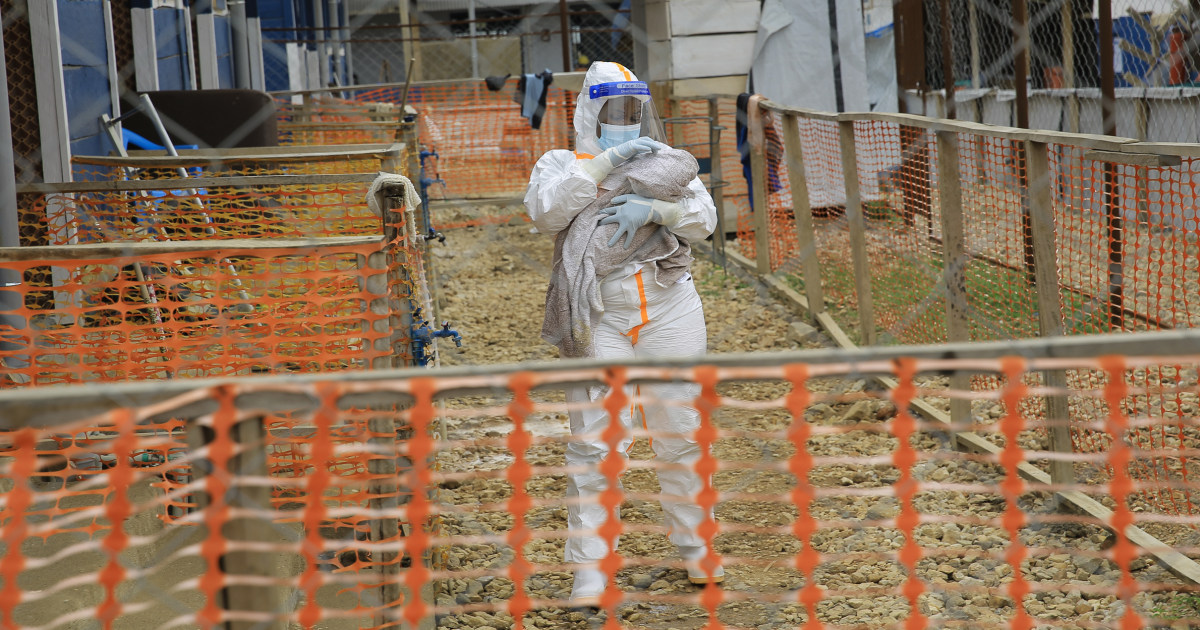
The Numbers Are Not New. The Reaction Is.
Eleven thousand and forty-two confirmed Ebola cases. Five thousand three hundred eighty-seven dead. An outbreak declared in mid-May that already ranks second only to the 2014–2016 West Africa epidemic in total caseload — reached here in roughly six months instead of two years.
What distinguishes Congo’s current outbreak from every other Ebola crisis in recent memory is not merely its scale. It is the virus itself. This is the Bundibugyo strain, for which there exists no licensed vaccine and no widely approved therapeutic. Every tool that made containment possible during the later phases of the West Africa outbreak — ring vaccination with rVSV-ZEBOV, monoclonal antibody treatments like Inmazeb and Ebanga — simply does not exist for this variant. Public health workers in Ituri and North Kivu are fighting a fire with only buckets they did not manufacture.
And the terrain makes even those buckets hard to carry.
Conflict Is the Outbreak’s Real Accelerant
Nearly seventy percent of all cases trace to Ituri province, where armed militias have intensified their operations precisely as the disease takes hold. North Kivu has emerged as the primary site of new transmission, and in both provinces, health facilities have been looted, burned, and directly targeted. Four health workers were killed in separate attacks earlier this week alone, according to WHO Director-General Tedros Adhanom Ghebreyesus, who called the violence a major setback to contact tracing efforts.
The result: more than 1,000 exposed contacts have been lost to follow-up. Three cases remain unconfirmed and unlocated. Contact tracing — the single most effective intervention for any Ebola outbreak — requires knowing where people have been, whom they have touched, and whether they develop symptoms. Violence makes that impossible.
This is not collateral damage to a health response. It is the response being dismantled deliberately.
The DRC has hosted at least twelve separate Ebola outbreaks since 1976, making it the country most familiar with the virus and arguably the best positioned to contain it. And yet each successive outbreak arrives on top of the last, compounding institutional fatigue, exhausting community trust, and eroding the very infrastructure needed for a credible reaction. The health system is described by local officials as already in crisis before the first case is even logged.
Three Times Faster Than West Africa at the Same Stage
Comparing trajectories is always reductive, but the raw speed here deserves attention. At the equivalent point in its timeline relative to declaration, the current outbreak has generated at least three times the cumulative cases and deaths of the West Africa epidemic. That pace is alarming not because it signals a mutated super-virus — the data do not support that reading — but because it reflects the conditions under which the virus is now circulating.
Poor road infrastructure means sick people cannot reach treatment centers quickly, extending the window during which they remain contagious in their communities. Mistrust drives people away from clinics and toward traditional healers, often under duress. Misinformation spreads faster than the virus itself through encrypted messaging apps, and health workers face physical attack for their trouble. The Bundibugyo strain kills roughly half of those infected, which means every missed case represents a potential cluster waiting to ignite.
The outbreak has already crossed provincial borders into eight of twenty-six. It has reached Uganda, Kenya, and Nigeria. Cross-border transmission is not unprecedented in Ebola history, but the combination of an unvaccinatable strain and porous borders in a region already strained by migration and instability raises the stakes considerably.
The Silent Retreat of International Attention
The media cycle moves on. Donor fatigue sets in. By July, this outbreak will likely occupy the same marginal position in international headlines that previous Congolese crises occupied before them — present, urgent, and gradually ignored.
That pattern is precisely what the data argue against. An outbreak of this magnitude, fueled by armed conflict, spreading along routes where border controls are nominal and healthcare access is contested, does not resolve itself through goodwill. Without sustained investment in community engagement, security guarantees for health workers, and research into Bundibugyo-specific countermeasures, the trajectory will continue upward.
Schools in Bunia, the capital of Ituri, have begun reporting teacher absences linked to infection. Two head teachers told the Associated Press they needed psychological support for traumatized staff and students. When a virus reaches into classrooms, it is no longer contained to treatment centers. It is embedded in the social fabric of affected communities.
What Happens Next Depends on What the World Chooses to Fund
The tools to slow this outbreak exist only partially. Supportive care, proper infection control, and aggressive contact tracing can reduce mortality if they reach patients early enough. But reducing mortality still does not stop transmission when the underlying conditions — conflict, mistrust, inadequate infrastructure — remain unaddressed.
The most consequential gap is not scientific. It is political. Health workers cannot trace contacts in areas controlled by armed groups without negotiated safe passage. Communities cannot accept vaccination campaigns — even experimental ones for other Ebola strains, which may offer cross-protection — if they believe the government or international actors are using outbreaks as cover for other agendas. These are trust problems, not just logistics problems.
Congo’s Ebola response has historically depended on emergency funding vehicles that surge at the onset and taper as attention drifts. The structure of global health financing rewards quick visual victories — deploying teams, setting up treatment centers, announcing case counts flatlining — rather than the slower work of rebuilding public health credibility in places where it has been eroded over decades.
Eleven thousand cases and climbing. No vaccine. Ongoing violence. A virus that does not respect borders.
The next phase of this outbreak will be written by whoever funds the response in August and September, not by anyone signing statements in June.