Why Elden Ring on Switch 2 Changes Everything for Nintendo's Strategy
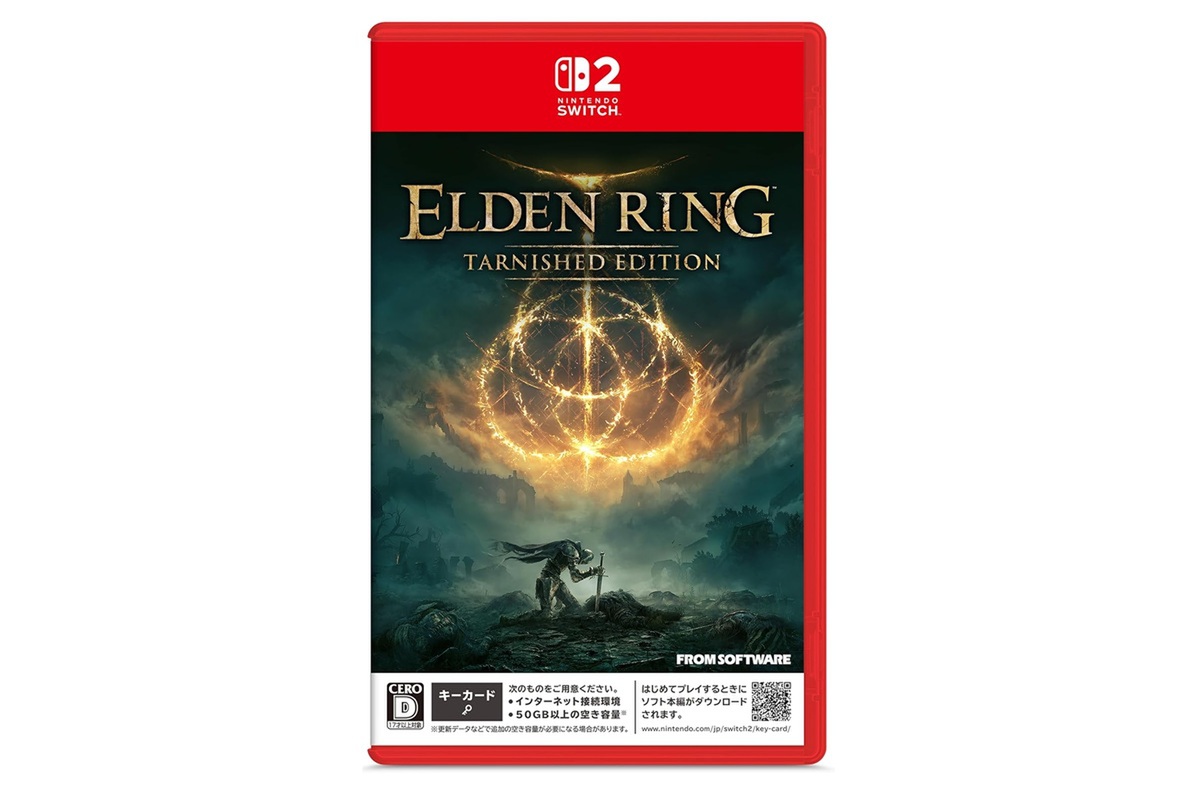
Elden Ring's Switch 2 debut isn't just a port—it's a signal of Nintendo's new strategy for capturing high-end gaming audiences. At 30fps with full DLC included, the Tarnished Edition targets millions who never played the original.
A Different Kind of Launch Window Entry
Elden Ring arriving on Switch 2 in September 2026—four years after its original release—is not the typical launch window play. It’s something more deliberate, more calculated, and potentially more impactful than anything Nintendo has attempted with the platform before.
The Tarnished Edition bundles the base game and Shadow of the Erdtree DLC into a single package, priced at 7,351 yen on Amazon Japan with a 19 percent discount as of September 1. But the number that matters isn’t the price tag. It’s the 30 million copies sold worldwide across all platforms, a figure that represents players who never touched Elden Ring on PS5 or PC. That is a massive untapped audience sitting right in Nintendo’s backyard, and the company is making its boldest move yet to reach them.
Nintendo is targeting that audience specifically. This is the first major signal of what the Switch 2’s gaming strategy looks like when it isn’t relying on exclusives alone. For years, Nintendo’s hardware has been criticized for lacking the raw power to run AAA titles at acceptable performance levels. The Switch 2 changes that equation entirely, and Elden Ring’s arrival is the opening statement.
Portability as the Differentiator
The pitch is straightforward, almost elegantly simple: you can play a AAA action RPG with a 30fps-capable stable framerate anywhere. No TV required. No 800-grip desktop setup. The open world of Lands Between becomes a commute companion, a bedtime challenge, a weekend obsession that doesn’t demand a dedicated gaming room.
This is where Nintendo’s historical advantage resurfaces with unexpected force. While Sony and Microsoft pushed toward bigger consoles and more expensive hardware, each generation raising the price barrier for entry, Nintendo has always leaned into the portable-anywhere model. The original Switch sold over 140 million units because it was easy. You picked it up, you played it, you put it down. The Switch 2 is now positioned to sell because it’s powerful enough to run games that were previously console-only, without abandoning that fundamental simplicity.
What makes this particularly clever is that Elden Ring’s design philosophy aligns perfectly with portable play. The game rewards exploration, patience, and incremental progress. Dying and retrying fits naturally into short play sessions. The difficulty curve, often cited as a barrier to entry, becomes almost a feature when players can take breaks between attempts without the guilt of abandoned save files gathering dust.
Who Wins, Who Loses
Who wins: Players who heard about Elden Ring but never bought a PS5 or gaming PC to play it. This demographic is large and often overlooked in industry analysis. They are the people who watched YouTube videos of the game, read reviews, felt FOMO, and then moved on because the hardware requirement felt prohibitive. For them, the Switch 2 version is not a compromise—it is an invitation.
Bandai Namco and FromSoftware get a second revenue stream from a title that has already paid for itself many times over. Development costs were recouped within months of the 2022 release. Every copy sold since then is pure profit. Nintendo gets credibility as a machine that can run serious games, not just family-friendly titles.
Who loses: No one directly, but the implication is clear and far-reaching. If a 2022-era AAA title can find new life on Switch 2, the assumption that portable gaming lives in indie territory starts to crumble. That changes how developers think about multi-platform releases, how publishers plan launch windows, and how hardware companies position their ecosystems.
The traditional model of exclusivity windows—where a game appears on one platform first, then migrates downward over time—is already fracturing. Games like Elden Ring now live everywhere simultaneously, and porting to Switch 2 is simply the final leg of a strategy that acknowledges players will engage with content whenever and wherever they choose.
Who gains the most: Nintendo. Securing FromSoftware’s participation—even for a port, even four years late—puts the Switch 2 on a list that serious gamers are consulting. This isn’t just another title. It’s a legitimacy play that signals Nintendo understands the changing landscape and is willing to adapt without abandoning its core identity.
The 30fps Reality Check
Let’s address what everyone will ask, and what has dogged every portable AAA port in gaming history: is 30fps acceptable for a console port of this caliber?
The source material notes stable performance and minimal graphical compromise. For a portable device, that’s reasonable. The concern isn’t whether it matches PC settings—it’s whether the core experience survives the transition intact. And in this case, it does.
Elden Ring is fundamentally a game about discovery and overcoming difficulty. Those mechanics transfer cleanly to any screen. The atmosphere of decay and wonder, the tension of every encounter, the satisfaction of vanquishing impossible odds—these are not dependent on ray-traced reflections or 4K textures. What doesn’t transfer is the visual fidelity that competitive PC players prize. But that audience already has Elden Ring. This release isn’t for them.
The 30fps target is actually a strategic decision. Maintaining a stable framerate on portable hardware requires careful optimization and often means scaling back visual effects. The result is a consistent experience that won’t frustrate players with frame drops during critical boss encounters. In a game where timing and responsiveness matter, stability trumps raw visual spectacle.
Why This Matters Beyond the Switch
The timing is notable and speaks to larger industry shifts. A major AAA title entering the portable space four years post-launch signals a shift in how companies evaluate reach versus exclusivity windows. The era of “first on PlayStation” is already fracturing under the weight of simultaneous releases, day-one DLC inclusion, and the growing recognition that exclusivity has diminishing returns in a multi-platform world.
Games like Elden Ring now live everywhere simultaneously, and porting to Switch 2 is simply the final leg of that strategy. But what’s different this time is the audience. The Switch 2’s install base will include millions of casual gamers who never engaged with the Soulsborne genre. These are people who played Animal Crossing, Mario Kart, and Zelda. They have never faced Malenia. They have never explored the Lands Between.
For FromSoftware, this is an expansion play—not just of revenue, but of cultural footprint. Elden Ring becomes more than a cult hit. It becomes a household name in portable gaming, reaching audiences that will never touch a PC or console version. The game’s influence on game design, narrative structure, and difficulty philosophy spreads further because more people experience it directly.
The Risk
The risk is that Switch 2 owners treat Elden Ring as a one-off curiosity rather than a system seller. If the hardware can’t sustain similar ports—or if the performance gap feels too wide—this becomes a proof of concept rather than a trend. Nintendo needs more titles like this to arrive on Switch 2 within the first year, not just one. A single high-profile port creates a moment. Multiple ports create a movement.
There’s also the question of whether a 19 percent discount on a four-year-old game signals strong demand or damage control. The sale could indicate healthy sales requiring a nudge to push past the final threshold. Or it could be the beginning of price compression for legacy AAA titles on portable hardware, a signal that games lose value faster on platforms that aren’t considered primary gaming destinations.
Nintendo faces the perennial challenge of balancing accessibility with depth. The Switch 2 must prove it can handle both casual experiences and serious AAA titles without alienating either audience. Elden Ring is the test case, and the results will shape strategy for years to come.
What Happens Next
Watch for similar ports. If FromSoftware and Bandai Namco commit to this strategy, other AAA franchise holders will follow. Monster Hunter, Dark Souls, Sekiro—all of these could eventually see Switch 2 versions. The question isn’t whether other studios will attempt this approach but how quickly they move and whether they can replicate the stability that the Elden Ring port achieves.
The real test comes when Nintendo announces its next exclusive. Elden Ring proves the hardware can handle third-party AAA titles. But the system’s long-term viability depends on whether first-party franchises can match that same caliber. If the answer is yes, the Switch 2 has found its niche: a console that doesn’t compete on raw power but on reach and accessibility, offering a unique value proposition that neither Sony nor Microsoft can replicate.
If not, it remains a powerful portable device with occasional PC-quality exceptions—but nothing that fundamentally changes Nintendo’s position in the console wars. The gap between “interesting port” and “must-own system” is wide, and crossing it requires more than one title.
The Elden Ring port is a statement. It says Nintendo sees the market shifting, understands where players are, and is willing to meet them there without compromising on quality. Whether it’s the start of a movement depends on what comes next. But the opening move is bold, well-executed, and strategically sound.