The Elizabeth Holmes Documentary Just Exposed Tech's Accountability
Nathan Fielder's "You Can See Everything" does more than document fraud — it reveals how Silicon Valley's god-complex culture still goes unchecked, and why one documentary might actually move regulators.
The documentary nobody saw coming
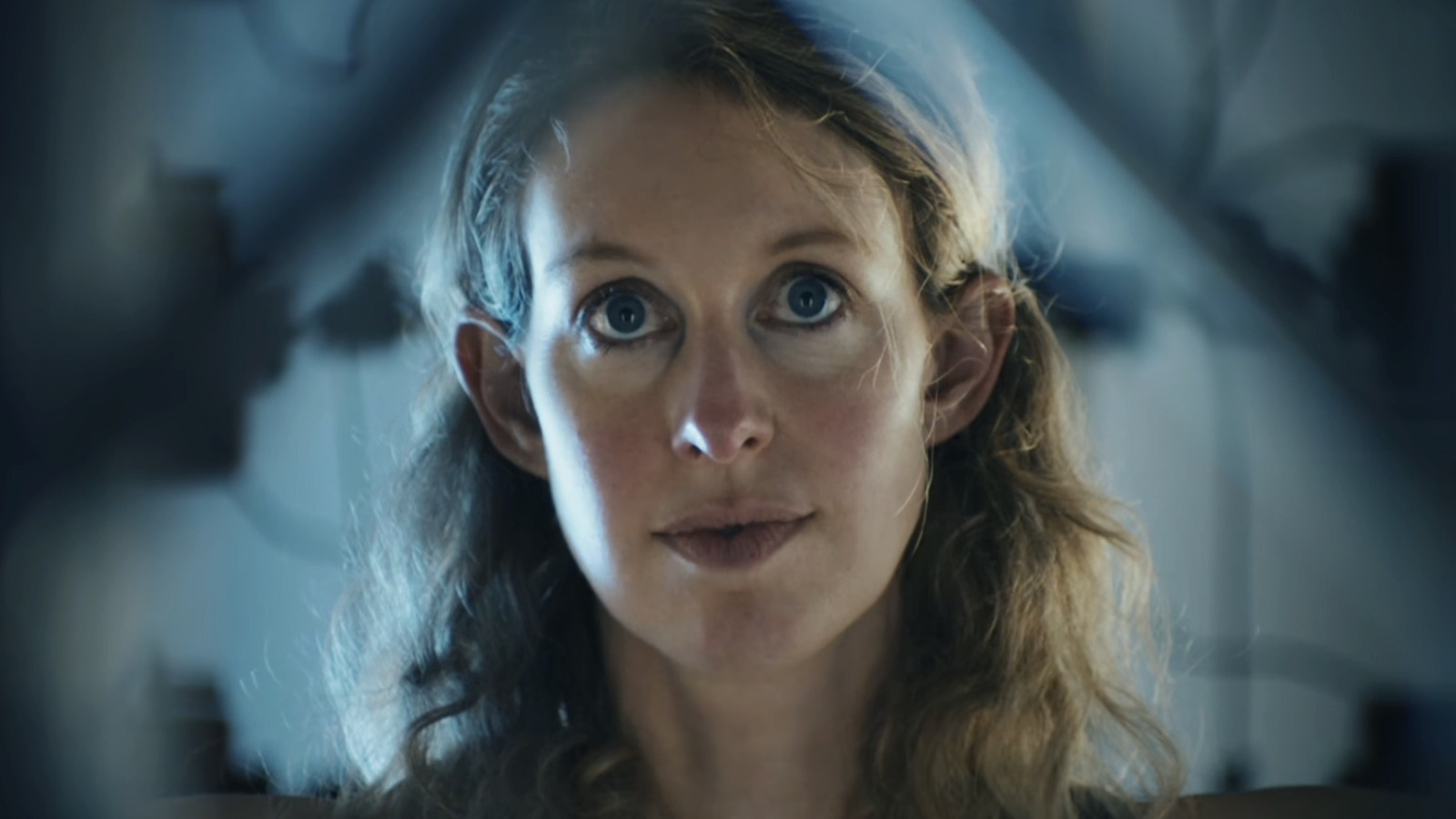
A24 has released what may be the most unsettling piece of non-fiction cinema of 2026. “You Can See Everything,” co-directed by Lance Oppenheim and Nathan Fielder, follows Elizabeth Holmes through 34 days before she begins an eleven-year federal prison sentence. The film premiered ahead of its October 16, 2026 theatrical release and has already drawn comparisons to some of the sharpest investigative work in recent documentary history — but its significance extends far beyond the true-crime audience it will naturally attract.
What makes this film operate on a different wavelength has less to do with Holmes herself and more to do with what her continued influence reveals about the architecture of modern tech fraud. The Theranos scandal was never just about one deceptive founder. It was about a system that allowed deception to flourish for years because the people around her — investors, board members, media figures — chose not to look closely enough. Fielder’s film, at 174 minutes, forces that looking. And what it finds is still alarming.
Why the semantics matter
One of the most uncomfortable sequences in the film centers on how Holmes rationalizes what she did. She and former partner Ramesh “Sunny” Balwani claimed the Edison device could run hundreds of blood tests from a few drops of blood. Investigations found it could perform only a small number and relied heavily on conventional lab machines. Holmes’s defense, as Fielder draws it out, is that she delivered on the promise — it’s the chemistry that hasn’t caught up. The device is capable, she says; the science is not yet ready.
It is a argument built entirely on semantic sleight of hand. And the film makes you sit with it. Holmes does not appear to recognize the contradiction. Fielder responds by playing the Abbott and Costello “Who’s on First?” sketch — a routine about linguistic confusion — and neither Holmes nor her boyfriend, Billy Evans, gets the joke. Evans calls this evidence that her mind works differently. Fielder does not call it evidence of anything. He simply lets the silence do the work.
That restraint is the film’s defining technique. Fielder built his career on asking questions that sound helpful until they become interrogations. His earlier shows, “Nathan for You” and “The Rehearsal,” manipulated their subjects with the patience of a spider. Here, he turns that instinct toward a woman who built an empire on manipulation. The result is a movie where you cannot tell whether Fielder is exposing Holmes or whether Holmes is using him to control the narrative. That ambiguity is not a bug. It is the point.
The villain you do not expect
If you enter this film expecting Elizabeth Holmes to be the primary antagonist, you will be correct for approximately the first hour. Then the camera turns. Billy Evans — a hotel heir, entrepreneur, and Holmes’s partner — becomes something far more difficult to parse.
The early signals are small and domestic. Holmes is whisking eggs when Evans walks over, takes the bowl and fork from her without a word, and continues the motion himself. Fielder asks him why. The exchange is brief, dry, and devastating in its implications. Evans does not argue. He simply occupies the space Holmes was using.
As the film progresses past the midpoint — and Holmes is transported to federal prison, which happens earlier than you might expect — the documentary pivots. It draws in “The Dropout,” the Hulu dramatization of the Theranos scandal, and uses it as a kind of mirror. Fielder watches the show with Holmes. She watches it for as long as she can tolerate. What follows is a turn into territory that will feel familiar to anyone who has seen “The Rehearsal”: escalating artifice, collapsing boundaries between observer and observed, and a slow reveal that the people closest to Holmes have been exploiting her for longer than the public knew.
By the final act, Evans reads as one of the most chilling figures in recent documentary history. He is not a cartoon villain. He is something worse: a quietly effective operator who understood how to position himself beside a charismatic fraudster and ride the coattails to profit. The film does not need to spell this out. It shows it.
Why this matters beyond entertainment
The Theranos case has occupied the American imagination since the beginning of the decade. Samantha Bee’s “The Dropout” turned it into pop culture shorthand for Silicon Valley hubris. Janelle Monáe’s portrayal in the Hulu series reached millions. Yet the fraud persisted in the cultural imagination precisely because the system produced it and never fully paid it back.
Holmes is serving eleven years. But the ecosystem that enabled her did not dissolve. Venture capital still rewards audacity over verification. Regulatory oversight of health-tech startups remains thin. Board members still sit in silence when red flags appear because the alternative is calling out a unicorn — and unicorns make money for everyone.
This is where “You Can See Everything” operates as something more than documentary. It is evidence. It documents, in real time, how a convicted fraudster continues to project invulnerability from behind the walls of her own life. It shows how her partner manages her public image, controls her environment, and appears to be building something that looks a lot like Theranos 2.0 from a beach house in San Diego. The film does not need to advocate for policy reform. It makes the case by simply refusing to look away.
Documentaries have shifted public opinion before. “Inside Job” changed how people talked about the 2008 financial crisis. “Winter on Fire” shaped discourse around civic resistance in Ukraine. What Fielder and Oppenheim have done here is quieter but potentially more consequential: they have made the mechanics of tech manipulation visible to an audience that would never otherwise encounter them. The film does not lecture. It lets you see the levers being pulled.
Who wins and who loses
The immediate winner is the documentary form itself. A film about a woman in prison, largely shot in a single location over five weeks, has become one of the most discussed non-fiction releases of 2026. That is a victory for patient filmmaking in an era that rewards immediacy.
For Holmes, the film is likely a net negative. Fielder’s camera does not allow the kind of myth-making that sustained Theranos. His questions expose the gaps in her reasoning rather than fill them. The final act, in particular, shifts the interpretive weight away from Holmes as mastermind and toward the people who have been operating in her shadow — and around her interests.
Evans is the obvious loser, though the film suggests he may not have noticed the trap until it was too late. And regulators, if they are paying attention, now have a cultural artifact that illustrates exactly how fraud persists even after conviction.
What happens next
The film opens in theaters on October 16, 2026. Its most important impact may not be box office. It is the question it forces viewers to carry with them: if a company like Theranos could exist for nearly a decade with so little scrutiny, what else is operating right now without anyone looking closely enough?
The answer to that question will shape health-tech regulation, venture capital oversight, and the cultural tolerance for founder worship in the years ahead. “You Can See Everything” does not provide the answer. But it makes the question impossible to ignore.