What a Morning Drama Gets Wrong About One of Japan's Most Radical
NHK's Brassaim serializes the life of writer Uno Chiyo — but in sanitizing her for a morning drama, it erases the very honesty that made her a literary force. Her early teaching years and sexual autobiography reveal a far more complicated figure than the drama allows.
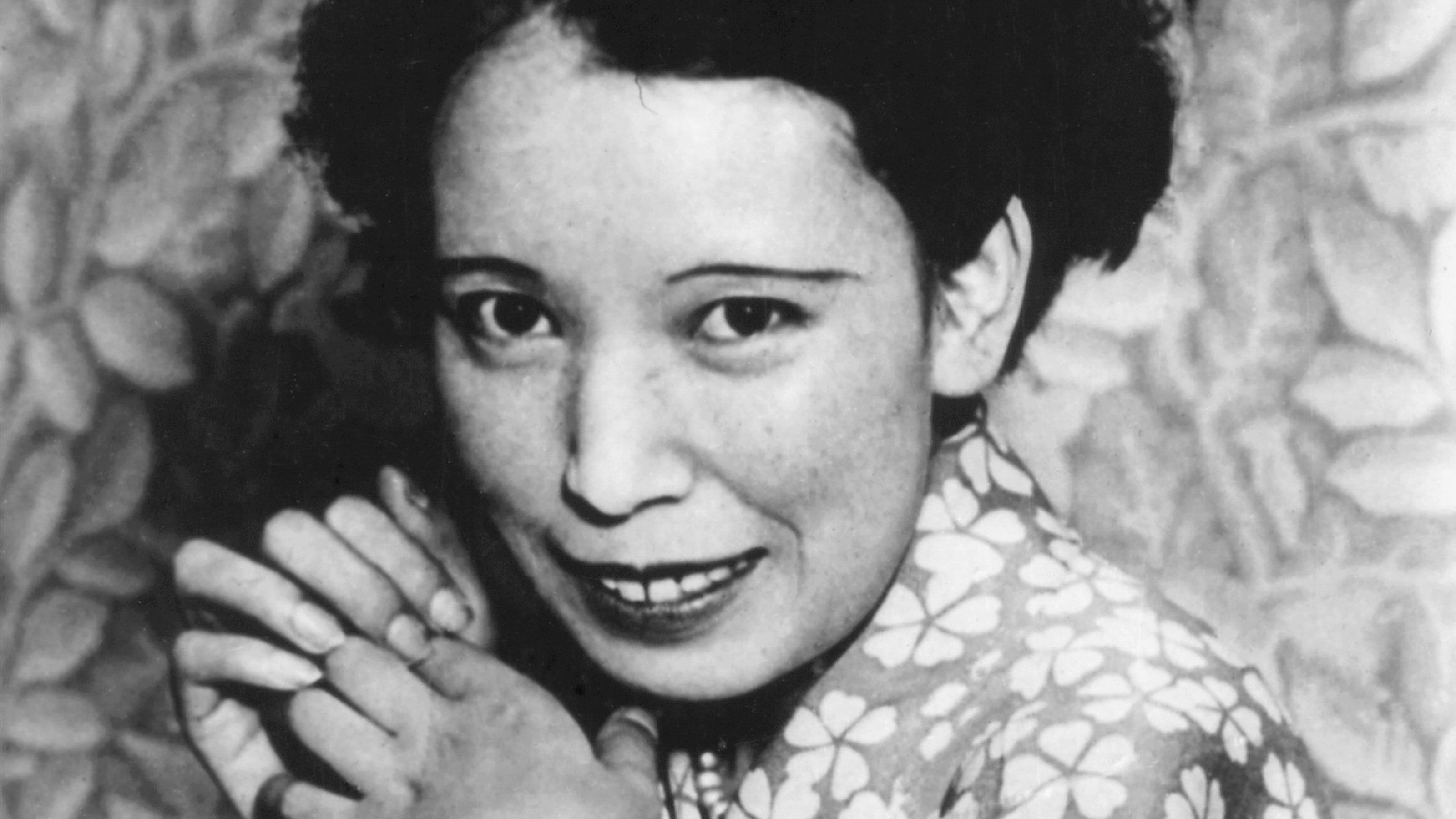
The Sanitized Rebellion
NHK’s morning drama Brassaim is currently running, dramatizing the life of Uno Chiyo (1897–1996), a writer whose career spanned nearly eight decades and whose work covered everything from feminist theory to explicit sexual autobiography. But anyone who reads Uno’s own writing alongside the drama’s version will notice something striking: the real Uno was far more dangerous than the television format allows.
The source material — a recent profile in PRESIDENT Online drawing on Uno’s memoirs — points to a young woman at 17 who wrote with clinical detachment about her first sexual experience, a scene that reads almost like a sociological study rather than a romance. She describes standing, closing a shoji screen, her body stumbling forward as a lamp nearly topples. Whether her exclamation came from the near-miss or from sensing a man approaching, she wasn’t sure. She was swept up. Pushed onto the tatami. A hand on her obi.
Plainspoken. Unflinching. The tone is not that of a girl caught in drama — it is the tone of someone already learning to observe herself the way a writer observes a subject.
A House Unraveling
That same year, 1913, her father died. She wrote that she wept “like a waterfall” — and yet also felt a strange relief, a sense that she could now do anything. Her siblings fought noisily in the yard. Traveling performers were welcomed without hesitation. Her mother, who had been financially dependent on the family’s sake brewing business, suddenly found that funding cut off and went to work in a silk-reeling factory before pivoting to renting out rooms.
The household that produced Uno Chiyo was not a stable, supportive institution. It was a place under economic strain, where traditional patriarchy collapsed overnight and women had to adapt or leave. Uno chose adaptation with a vengeance.
At women’s school, she was top of her class and served as student monitor. Privately, she devoured magazines that educators frowned upon. She found inspiration in Hiratsuka Raicho’s famous essay “The Original Woman Is the Sun” — a text that would become a cornerstone of early Japanese feminism. She began submitting stories to Joshi Buntan (Women’s Literary World) under a pen name. When teachers caught her and her classmates circulating a hand-written magazine at school, she was summoned to the principal’s office and reprimanded. She did not stop.
A photograph from this period shows her and her female classmates posing for a studio portrait. Uno wears her hair in a girlhood style with a peach-colored bow. One friend is dressed in a striped kimono and male hakama trousers, wearing a Third Higher School cap — a clear statement of defiance against gendered dress codes. These were not quiet girls. They were young women trying on new identities in front of a camera.
The Teacher Who Saw Something
After graduating from women’s school, Uno became a substitute elementary school teacher in April 1914, working at a rural school about four kilometers from her home in Kawashimo Village. She was assigned to a class of underperforming students — children with runny noses and scalp sores, kids from poor families whom the regular system had written off.
Watching them light up when they were praised changed her. Some of those students went on to match the top grades in their cohort. Uno later wrote that she found genuine purpose in this work. It was here, among the children deemed failures by the education system, that she likely first understood what it meant to see potential where others saw nothing — a theme that would recur throughout her writing career.
But her tenure as a teacher also intersected with a personal revelation that has nothing to do with pedagogy.
The Powder and the Mask
During a summer vacation, Uno borrowed the white face powder her mother used and applied it. She later described looking at her reflection and seeing “a face so beautiful it seemed otherworldly.” She had long been self-conscious about her darker skin tone. Her father had mocked her about it repeatedly, asking bitterly who would ever want to marry a woman with such coloring.
From that moment on, she never stopped using powder. But she also never stopped feeling its weight. She wrote that she lived in constant fear that the powder would crack, that the mask would fall away, and that underneath would be something the world would reject. That image — the mask, the fear of exposure — became one of the defining metaphors of her life and work.
What the Drama Leaves Out
Brassaim, like most asadora, is designed for broad appeal. It emphasizes warmth, resilience, and moral clarity. The genre has produced some of Japan’s most beloved cultural moments, but it also has a strong tendency to smooth out the rough edges of real women’s lives — especially the edges that involve sexuality, anger, or ambiguity.
Uno Chiyo’s early writings do not offer smooth edges. They offer a 17-year-old girl documenting her first sexual encounter with the cool precision of a reporter filing a story. They offer a young woman who understood that respectability was a performance — one she was willing to maintain, but also one she refused to pretend was natural.
The drama will likely tell her story in a way that makes her struggles legible and her triumphs tidy. The real Uno was messier. She was a woman who wrote explicitly about sex at a time when few Japanese women dared to do so. She was a teacher who found meaning in the classroom but also understood that the world measured women’s worth by standards she found absurd. She carried a fear of exposure that shaped both her art and her private life.
Reading her words today — over a century after she wrote them — the most striking thing is not that she survived the constraints placed on her, but that she turned those constraints into material. She observed herself the way others observed a specimen. And in doing so, she built a career that outlasted almost everyone who tried to define her.
The asadora will have its moments of emotional payoff. But the actual story — of a girl who at 17 could write about desire without flinching, who became a teacher and found children worth fighting for, who learned early that the mask was both armor and cage — is far more interesting than any drama adaptation is likely to capture.