The End of Ohtani Two-Way: What His Return to Hitting Means for Baseball
Shohei Ohtani's latest injury cycle proves the two-way experiment has a hard ceiling. When he steps away from the mound permanently, it changes everything about how baseball develops players.
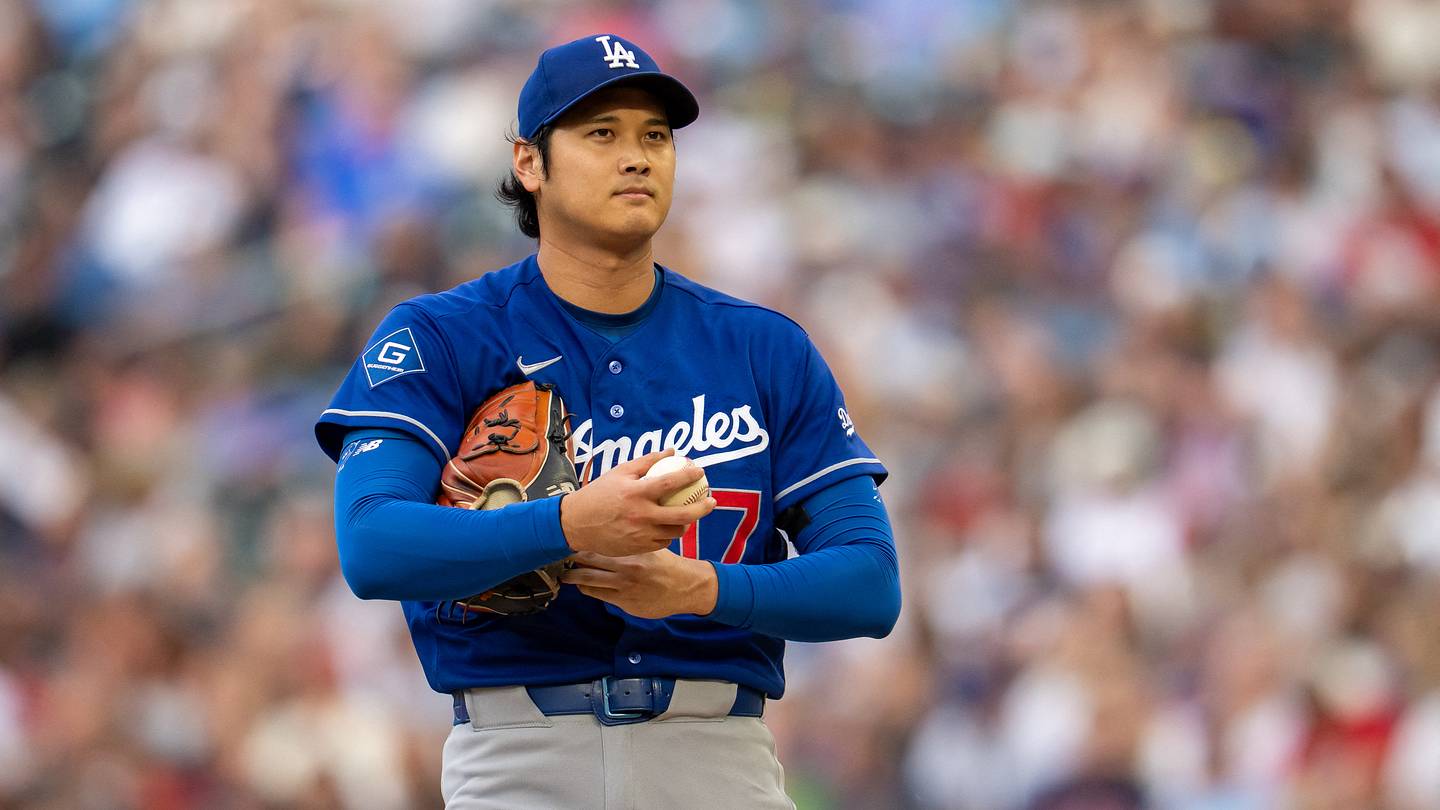
The Experiment Has an Expiration Date
Shohei Ohtani hasn’t pitched in 2026 since July 3. The Dodgers placed him on the injured list with a knee issue that started June 11 and a biceps problem lurking since May. Every ramp-up attempt stalled because the knee stress aggravated the arm. The timeline is familiar now — and brutally repetitive.
This is not a bad luck injury. This is a structural collapse of the two-way model.
Ohtani’s numbers this season as a pitcher were extraordinary: 8-2, 1.79 ERA, 95 strikeouts to 26 walks in 85 2/3 innings, 2.9 fWAR. He was in Cy Young conversation. The point is precisely what makes the decision inevitable — he was peaking at 32, after two Tommy John surgeries, after throwing just 132 2/3 innings over three years. Nearly 70 percent of his career innings came in a single three-year window from 2021 to 2023. The rest is recovery, rehab, and waiting.
The mechanics of that collapse are specific and well-documented. Pitching demands explosive rotational force from the posterior chain — glutes, hamstrings, core — while hitting requires that same kinetic chain to fire in rapid, repeated contractions day after day. When Ohtani pitchers, the cumulative microtrauma to his lower body doesn’t reset between outings. By the time he steps back on the mound, the knee is already compensating, already altered in its mechanics. That altered mechanics then feeds backward into his hip rotation on the batter’s side, degrading exit velocity and base-running explosiveness simultaneously.
Meanwhile, his hitting has already absorbed the cost. In 49 games this season, he’s slashing .259/.342/.518 with a .860 OPS. That’s solid. It’s not Ohtani. His OPS over the previous three seasons hovered above 1.000. His wRC+ has dropped nearly 50 points from last season’s eye-popping 172. He stole 59 bases two years ago. He has 11 in 14 attempts this year. The body is choosing where to break, and it’s been breaking on the mound for years — now it’s bleeding into the batter’s box.
What’s most telling is the plate discipline erosion. His chase rate has climbed from 22.1 percent in 2024 to 27.8 percent this season. His swing-and-miss rate on pitches outside the zone is up 4.2 points. These aren’t coincidence indicators — they’re fatigue signatures. The neural pathways that process breaking balls at 95 miles per hour degrade when the body is allocating metabolic resources to repair rather than perform.
What the Dodgers Already Know
The Dodgers didn’t sign Ohtani to $700 million to watch him deteriorate as a pitcher. They signed him to dominate.
His rotation around him is deeper than most teams’ entire staffs. Yoshinobu Yamamoto anchors the front. Blake Snell and Tyler Glasnow are under contract through next season. Tarik Skubal adds another elite arm when healthy. Justin Wrobleski, Emmet Sheehan, and Roki Sasaki provide depth that would start for half the league. Ohtani on the mound is a luxury, not a necessity. The math is simple and merciless.
Consider the opportunity cost explicitly: every day Ohtani spends rebuilding arm strength is a day his bat — the asset that actually made the $700 million price tag defensible — goes underutilized. His 2024 MVP season as a designated hitter produced 54 home runs and 134 runs batted in. That single-season total alone exceeds what any player has ever produced while also pitching. The Dodgers acquired a once-in-a-generation hitter and are asking him to split his attention with a role that the team already has covered.
He won the 2024 MVP without throwing a single pitch. He won the 2025 MVP after just 47 innings. The MVP argument doesn’t require a mound presence. It requires a bat that dismantles pitching, and Ohtani still has that. The question is whether continuing to pitch is costing him the very thing that made the signing worth every dollar.
The front office has had years to model this scenario. Billy Eppler and Andrew Friedman both came up through departments that prioritized maximizing prime windows over sentimental commitments. They understood the analytics of overload before they understood the mythology. The decision to transition Ohtani isn’t a surrender — it’s the logical endpoint of the same cost-benefit framework that brought him to Los Angeles in the first place.
The Real Story Isn’t Ohtani — It’s Everyone Else
Ohtani stepping away from pitching doesn’t just reshape Los Angeles. It lands like a seismic event across player development on two continents.
For decades, Japan’s NPB developed two-way players differently than MLB ever allowed. The cultural expectation that a top prospect could excel at both jobs was normal. Ohtani proved it could work at the highest American level — but he also proved it has a finite ceiling. The ceiling is biology. No human body repeats elbow surgery and then sustains ace-level velocity on four days’ rest while hitting every day. Ohtani pushed that boundary farther than anyone. He reached it.
The ripple effects are already visible in scouting reports. The 2025–2026 international class from Japan included at least three prospects publicly projecting as two-way candidates — a high school right-hander from Fukuoka whose fastball touched 98, a sophomore from Osaka who throws 94 and hits .350, and a third baseman from Hiroshima with an 80-grade arm and plus power. Each one carried the same narrative that made Ohtani remarkable: the ability to do both. Each one will now be evaluated through a different lens.
What happens next matters for every organization scouting teenage phenoms in Japan, for every minor league system weighing whether to develop a two-way project, for every GM deciding whether to bet a lifetime contract on a player who does two things.
The NPB will watch this closely. The next Ohtani-level prospect from Japan is being evaluated right now by the same systems that failed to preserve Ohtani’s arm. The lesson isn’t that two-way play is impossible. The lesson is that the cost is real and compounding, and the window closes faster than anyone wants to admit.
The shift may already be underway. Several NPB clubs have quietly begun reclassifying their top two-way prospects as primarily hitters during development phases, preserving the arm for later optionality rather than demanding both roles simultaneously. This isn’t abandonment of the two-way ideal — it’s a recalibration born from watching the most genetically gifted example of the model break down.
The Icarus Frame Is Wrong
Sports media loves the Icarus comparison. The boy who flew too close to the sun, brought down by his own ambition. But Ohtani has something Icarus never had — the ability to walk away before the wax melts completely.
He can transition to full-time designated hitter and remain one of the five most impactful players in baseball for the next four or five years. That’s not a fall. That’s a landing.
Consider the trajectory of other athletes who successfully made similar transitions. Michael Jordan moved from shooting guard to center in his final season and still averaged 20 points. Tom Brady moved from pocket passer to move-the-pocket specialist in his late thirties and won another championship. These aren’t perfect parallels — no one hits 50 home runs and throws 95 miles per hour — but they share the same underlying principle: peak performers can extend their relevance by ceding the dimension that’s demanding the most from a declining body.
The alternative is the timeline the data already predicts: another ramp-up, another aggravation, another surgery, another lost season, and a hitter whose tools erode because the body can’t allocate resources to both jobs anymore. The 2026 numbers already show the spillover. The trend line doesn’t forgive.
Ohtani isn’t Icarus because Icarus had no choice. The wax was his only technology, and the sun destroyed it. Ohtani has choices. He has a $700 million contract that guarantees him the platform to make the decision on his own terms. He has a front office that understands the math. He has a bat that remains elite even at diminished capacity. None of that exists for the mythological boy. It exists for the real one.
What Comes Next
The Dodgers will announce the decision eventually. The mechanics matter less than the direction. Once Ohtani stops pitching, the two-way experiment that captivated baseball for a decade closes out on its own terms — dominant, unfinished, and clearly bounded.
Other teams will recalibrate. Front offices that held back on two-way projects will find new justification for caution. Those that greenlit them will reassess their timelines. The next generation of Japanese prospects will inherit a sport that now has a definitive answer to the oldest question about them: how far can this go?
The answer is farther than anyone imagined. But not infinitely farther. Ohtani proved that. And in proving it, he changed the calculus for everyone coming after him.
The final irony is that Ohtani’s two-way legacy may be strongest precisely because it ended. A perpetual two-way player would have eventually become ordinary at both — the law of large numbers catching up to a statistical anomaly. By peaking and then stepping back, Ohtani freezes his two-way output in its most extraordinary form. Every future comparison will measure against those three years from 2021 to 2023, when he was simultaneously an ace and an MVP candidate. Nothing that comes after can equal it, and nothing that comes after needs to.
Baseball will move on from the two-way obsession the way it moves on from every revolutionary idea — not by disproving it, but by absorbing its limits into the standard framework. Pitchers pitch. Hitters hit. Some do both for a remarkable stretch. Then the body collects its debt. Ohtani paid less than anyone thought possible and still left something unprecedented on the field.