Manchester City appeal could reshape how football governs itself
Manchester City's appeal against Premier League financial-rule breaches is not just a club fighting for its title pedigree. The outcome could redefine how governing bodies punish financial-sports-code violations across European football.
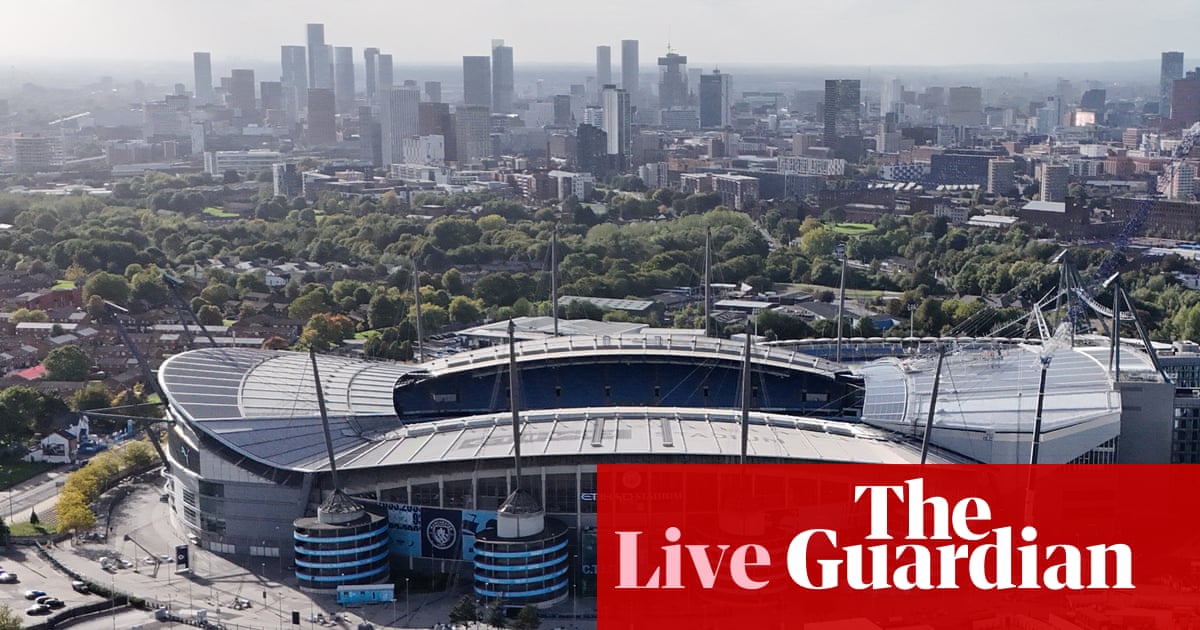
The case goes far beyond Manchester City
When Manchester City lodged its appeal against the independent commission’s finding of Premier League financial-rule breaches on October 1st 2026, the club framed it as a defense of its reputation. Its statement called the commission’s opinion “unsafe” and asserted “irrefutable evidence” of innocence. But what emerges from this case is something much larger than one club’s survival — it is a stress test for the entire architecture of football governance in England and, by extension, across Europe.
The FA has already signaled that it sees consequences here. It confirmed it holds powers to take disciplinary action against City, while simultaneously warning of “major implications for the integrity of the game.” That phrasing is not routine bureaucratic language. It is the signature of an institution aware that the precedent it sets will be watched by every other top club in the world.
What is actually at stake
City faces charges relating to the timing, value, and nature of sponsorship income — primarily the Etihad Airways deal — and whether certain payments were effectively subsidized by the Abu Dhabi state rather than flowing through commercial channels. The club’s legal team argues the commission made material errors of law, principle, and fact. If the Appeal Board agrees, the guilty findings collapse. If they do not, the sanctions could include point deductions, financial penalties, or even relegation — outcomes that would unravel fifteen years of domestic dominance.
But the more consequential question is procedural. How does a governing body prosecute alleged financial misconduct when the evidence involves corporate structures spanning multiple jurisdictions, state-owned enterprises, and commercial contracts valued in the hundreds of millions? The current Premier League framework was built for a different era — one in which clubs balanced books within their own leagues, not one in which sovereign wealth funds operate through holding companies across three continents.
The political layer nobody is ignoring
The timing of events since the verdicts leaked has added a dimension most football stories lack. Bloomberg reported that City chairman Khaldoon Al Mubarak met UK Business Secretary Jonathan Reynolds on September 14th — just days before the guilty findings were made public. Al Mubarak attended in his capacity as CEO of Mubadala Investment Company, the Abu Dhabi sovereign wealth fund, discussing UAE investment in Britain. The meeting was private.
The Liberal Democrats have responded by demanding that Culture Secretary Lisa Nandy (referred to in source as Burnham) publish all meetings with the Abu Dhabi United Group and declare any hospitality received at the Etihad Stadium. Whether or not improper influence occurred is beside the point: the perception that a club under regulatory investigation maintains high-level political access is damaging regardless of outcome.
Gary Neville did not mince words on television, stating the club’s achievements over the past decade are now “tarnished” and that the episode “undermines the English game.” His point was not about punishment but about legacy — if the titles stand, the Premier League’s commercial brand absorbs a permanent stain. If they do not, the league faces accusations of selective enforcement.
A precedent for every top European club
This is where the case transcends football. The Premier League’s financial rules, particularly Profit and Sustainability Rules (PSR), are being tested by a club whose spending model was designed to circumvent them through corporate structuring. An Appeal Board decision will establish how future cases are evaluated: whether state-linked sponsorship is treated differently from commercial sponsorship, how historical accounting practices are judged against current rules, and what burden of proof applies when evidence is distributed across multiple legal jurisdictions.
UEFA is watching closely. Its own Financial Fair Play regulations face identical questions. If the Premier League imposes severe sanctions on City, UEFA may feel pressured to align its own approach — or risk being seen as softer. If the appeal succeeds, it weakens the regulatory grip on wealthy ownership groups everywhere, from Paris Saint-Germain to Newcastle United.
The broader structural critique is already circulating among commentators. Some argue that PSR functions as an anti-competitive ceiling, protecting “legacy clubs” whose historical advantages were themselves built on owner capital injections — Manchester United in the 1970s, Liverpool in the 1980s, Chelsea in the 2000s. The argument holds that the modern rule framework criminalizes the same behavior that built the existing hierarchy, while preventing new entrants from competing.
What happens next
The Appeal Board hearing will remain private. No evidence will be published. No reasoning released until a verdict is delivered. That opacity is standard procedure but extraordinary in a case of this magnitude. The club, the league, and the FA are all operating under information blackouts by design — which means public discourse will fill the vacuum with speculation, partial truths, and political interpretation.
If City loses the appeal, the question becomes not whether sanctions apply but how severe they are. A point deduction would alter the current season’s trajectory immediately. Relegation would be catastrophic for broadcasters, sponsors, and the Premier League’s global brand. Fines alone would be insufficient to satisfy regulators or fans who see the case as a fundamental breach of trust.
If City wins, the Premier League faces a different problem: precedent. Club directors across Europe will review the Appeal Board’s reasoning and adjust their financial reporting accordingly. The regulatory framework loses authority if the highest-profile case ends in acquittal on procedural grounds.
Either outcome rewrites the rules of the game — literally.