Estonia closes Russia border after GRU sabotage
Estonia is shutting its road crossings with Russia in December, days after GRU-linked saboteurs tried to torch a drone maker. A turning point on NATO's eastern flank.
Estonia just made its Russian border disappear
Estonia is closing all three of its road border crossings with Russia starting December 1. The decision lands barely a week after eight Latvian nationals were detained attempting to blow up and set fire to Threod Systems, a Tallinn-area defense contractor that builds long-range reconnaissance and attack drones.
The Estonian Internal Security Service attributed the sabotage attempt directly to Russia’s military intelligence apparatus, the GRU. This is the second attack on an Estonian defense company since August, when Milrem Robotics — another Tallinn-based manufacturer — was targeted in a similar arson plot.
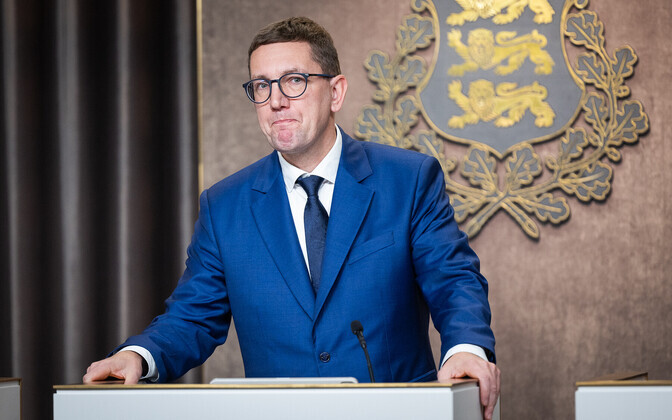
Prime Minister Kristen Michal framed the move bluntly: Russia wants to make Estonia afraid, hesitate, and weaken its support for Ukraine. Closing the border is the opposite answer.
But this is not simply a bilateral friction story. It is a stress test for NATO’s entire eastern flank, and the results so far are uncomfortable.
Why this matters beyond Narva
Narva, Estonia’s third-largest city, sits directly on the Russian border separated only by the Narva River. For years it has served as one of Europe’s few remaining land crossings with Russia, pulling commuters, shoppers, and truck drivers across a frontier that most of the continent treats as sealed after Moscow’s full-scale invasion of Ukraine in 2022.
Closing Narva, along with the Luhamaa and Koidula crossings, severs a physical link that Moscow has exploited for decades through what Tallinn calls hybrid operations — the blurring line between war and everything beneath it.
Interior Minister Igor Taro said the government will decide shortly whether the closure is temporary or indefinite. Either way, the signal is unmistakable: Estonia no longer believes open crossings serve its security interests.
This is qualitatively different from the restrictions Estonia has imposed before. Previous tightening came with warnings. This time there was no warning — only an attempted bombing of a defense factory and the arrest of foreign operatives on Estonian soil.
The defense industry angle most outsiders miss
The th hardest-nosed detail here is who was being targeted. Threod Systems does not build toys. Its drones feed Ukrainian artillery observers and frontline commanders with real-time reconnaissance and strike data. Milrem’s unmanned platforms do the same.
Russia’s hybrid campaign is not abstract. It is aimed at specific nodes of Western military supply. If you cannot bomb a drone factory from the air without triggering Article 5, you send operatives through the border instead.
That calculus assumes the border remains open. Estonia just removed that assumption.
The timing is also loaded. NATO’s 2026 Strategic Concept review cycle runs through late 2026, and member states are already arguing over burden-sharing, forward posture, and whether hybrid attacks on civilian defense infrastructure qualify as collective-defense triggers. Estonia’s move forces that debate onto the table with concrete geography.
Who wins, who loses
Estonia wins credibility. After years of surviving Russian gas blackmail, election interference, and cyberattacks, it is finally treating the border as the hostile frontier it functionally already is. The domestic political payoff is obvious, and the alliance signal is clearer too.
Latvia may follow. Eight of its citizens were arrested in Saturday’s operation, which raises uncomfortable questions inside Riga about how deeply GRU networks have penetrated Baltic societies. Finland, which shares a 1,340-kilometer border with Russia, has been watching the Baltics closely. Its own debates about frontier closure are likely to harden.
Russia loses something subtle but real: the ability to project influence through everyday mobility. Border crossings have long served as vectors for Russian citizenship programs, pension disbursements, and soft-power penetration into eastern Estonia. Closing them severs a pipeline that Tbilisi and Kyiv learned to exploit before anyone in Brussels paid attention.
European travelers lose convenience. Narva was one of the last easy land routes from the EU into western Russia. That era is now over.
The NATO question nobody wants to answer quietly
Here is what English-language coverage rarely asks: does an act of sabotage against a defense contractor on Estonian soil count as an armed attack under Article 5?
The answer matters enormously. If NATO treats targeted violence against its members’ defense industrial base as a collective-defense event, the deterrence architecture for the entire eastern flank shifts. If it does not, Russia gains permission to keep trying — sending agents through borders, planting devices, funding proxies, all below the threshold that would trigger a military response.
Estonia’s border closure is, in effect, a unilateral pre-emptive move. It suggests Tallinn does not trust the alliance to respond fast enough to stop hybrid operators from crossing back out again.
That is a sobering admission from a founding NATO member.
What happens next
The immediate consequence is logistical disruption. Truck drivers, cross-border workers, and residents who rely on Russian pensions or medical care face sudden detours. Estonia says those affected have two weeks to return home before the crossings seal permanently. The practical pain will be real, even if concentrated among a small population.
The strategic consequence is harder to predict. If Latvia closes its own crossings, if Finland revises its frontier policy, if Sweden — still fresh off NATO accession — tightens its Russian border posture, the EU-Russia land frontier begins to look less like a porous edge and more like a wall. That is either good news for deterrence or a sign that deterrence has already failed and we are moving into phase two.
Russia will almost certainly respond. Expect more sabotage plots, more arrests, more diplomatic noise. The question is whether Estonia’s calculus holds under pressure or whether the economic and political costs of a sealed frontier eventually force a reversal.
So far, Tallinn is betting that the cost of openness exceeds the cost of closure. After two defense-company bombings in four months, that is not an unreasonable bet. But bets on the eastern flank tend to get tested faster than politicians expect.