Ethiopia’s Drone Strike on Eritrea Is a Point of No Return
Ethiopia has launched drone strikes against Eritrean troops who crossed into Tigray, marking the sharpest escalation since the 2022 peace deal. The incident risks reigniting a regional war and pulling in Gulf and African Union players with stakes in Red Sea access.
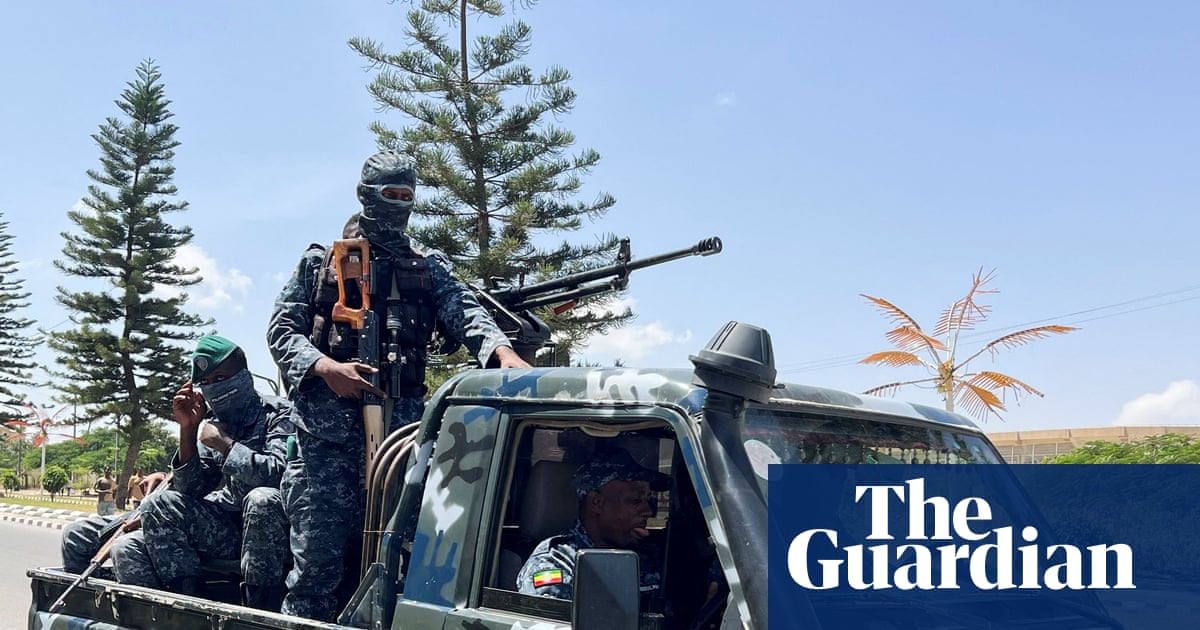
Ethiopia Just Lit a Fuse It May Not Be Able to Extinguish
Ethiopia fired drones at Eritrean troops who drove across the southern border into Tigray on Wednesday, reaching the town of Adigrat 40 kilometers inside Ethiopian territory. The strike, confirmed by the conflict monitoring group Acled, marks the first time the Ethiopian government has openly targeted Eritrean forces with aerial weaponry since the two countries signed a peace declaration in 2018. That agreement earned Prime Minister Abiy Ahmed the Nobel Peace Prize. It now looks like it may be over.
What happened next is the part that should alarm every capital with interests in the Red Sea corridor.
The Border Crossing That Changes Everything
Eritrean military vehicles crossed into Tigray on Wednesday, pushing 25 miles south to Adigrat. Witnesses, a militia commander, and Acled independently corroborated the movement. Ethiopian drones struck that evening and into Thursday morning. Eritrea’s information minister, Yemane Ghebremeskel, declined to confirm or deny the troop presence, offering only a dismissive line about “wild allegations.” Ethiopia’s foreign ministry issued a statement Monday warning it would defend its sovereignty—a phrase that in diplomatic shorthand usually means “we are preparing the ground for something.”
The timing is brutal. On October 4, just days before the drone strikes, pro-government forces and the Tigray Peace Force recaptured Mekelle, the regional capital, after the Tigray People’s Liberation Front (TPLF) withdrew. The TPLF had launched an offensive against the Ethiopian government on September 23, joined by six other armed groups across Tigray, Amhara, and Afar. The Ethiopian military pushed back. But the fighting left civilian populations raw and exposed.
“The civilians in these three regions didn’t get healed from the first round of violence,” said Jalale Getachew Birru, an Acled analyst. “They just started healing recently.”
Now they are being pulled back into it.
Why Eritrea Is Here
Eritrea’s presence in Tigray is not an accident. It is a calculated move rooted in a history of hostility that predates the current conflict by decades. The TPLF ruled Ethiopia from 1991 to 2018. Eritrea fought a bloody war against the TPLF-led government from 1998 to 2000. When Eritrea and Ethiopia signed their peace deal in 2018, Eritrean troops intervened alongside Abiy’s forces during the 2020–2022 Tigray war. Between 300,000 and 800,000 civilians died in that conflict, according to British government estimates. Both sides and their allies were accused of war crimes.
But the calculus has shifted. Eritrea’s primary concern now is not the TPLF—it is Ethiopia itself. Abiy Ahmed has publicly stated that Ethiopia needs access to the Red Sea. State media has floated historical claims to the Eritrean port of Assab. The wider geopolitical context has amplified the stakes: the US-Israeli war on Iran has led Iran to limit shipping through the Strait of Hormuz, making every harbor on the Red Sea suddenly more valuable. Djibouti, Berbera, Assab—these are no longer just ports. They are leverage.
Yemane Ghebremeskel put it plainly on X on Wednesday: Ethiopia is “incessantly beating the drums of war” and repackaging its aggression as “self-defence.”
The Dangerous Geometry of Abiy’s Options
Magnus Taylor of the Crisis Group identified the core risk in a single sentence: “The big worry is that [Abiy] might try to solve all his problems at the same time, by invading Eritrea, possibly a regime change move and also a land grab for the Red Sea port, and also solving his problem with Tigray at the same time.”
That is a lot of wars to start at once. But it is not an impossible calculation for a leader who has already survived a rebellion, reclaimed his capital by force, and inherited a country where the 2022 peace agreement held more by exhaustion than by conviction. The TPLF is still out there. Six armed groups are still active. Forces forcibly recruiting boys as young as 15 have been reported. The healing that Acled’s analyst described is fragile, thin, and easily reversible.
If Abiy decides that the moment has come to press his advantage—to secure Red Sea access while the region is distracted and his enemies are divided—he will have crossed a threshold that cannot be uncrossed. Eritrea does not have a navy in any conventional sense, but it has terrain, it has hostility, and it has allies. Saudi Arabia and the UAE have investments across the Red Sea. Turkey and Qatar have their own plays. The African Union, which brokered the 2022 peace deal, will be forced to respond or lose whatever credibility remains.
Who Wins, Who Loses, What Happens Next
There are no clean winners here. The TPLF may gain politically if it can paint Abiy as an aggressor who violated the peace agreement—but at what cost to the civilians caught between Ethiopian drones and Eritrean troops? Abiy may project strength, but he risks opening a second front against a determined adversary with deep local knowledge and a population that has spent decades preparing for exactly this kind of conflict. Eritrea wins nothing by staying silent, but wins even less if it escalates into a full invasion.
The civilians of Tigray, Amhara, and Afar lose everything again. They were told the violence was over. They are being asked to believe it is not.
What happens next depends on whether the drone strike was a warning shot or a prelude. If Addis Ababa intends to signal resolve without expanding the war, there may yet be a path back through quiet diplomacy and African Union mediation. If it intends to use the incursion as justification for a broader campaign—against Eritrea, against the TPLF, or both—then the Horn of Africa is about to enter its most dangerous phase since 2020.
The world watched Ethiopia’s peace prize crumble quietly. It should be watching now as the region’s most volatile border ignites.