Europe's First Commercial Orbital Launch Redefines Strategic Autonomy
Germany's Izar Aerospace achieved Europe's first successful commercial orbital launch with its Spektrum rocket, landing after a dramatic 30-second failure just 18 months earlier. The success forces a reckoning for NASA, ESA, and the global launch market as Europe confronts its deep reliance on foreign launch providers.
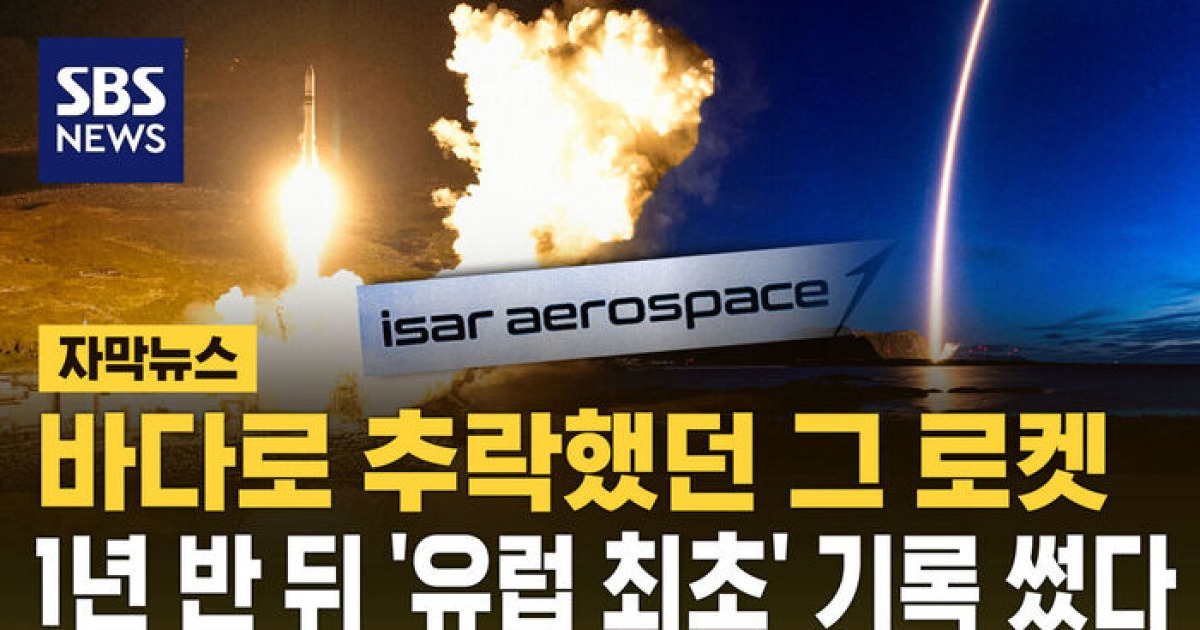
The rocket that fell into the sea now lives in orbit.
Just eighteen months ago, Germany’s Izar Aerospace watched its Spektrum two-stage rocket tilt alarmingly within thirty seconds of liftoff and ground the flight. The vehicle dropped into the ocean off Norway’s Andøya spaceport, a public failure that could have ended the startup’s ambition.
Last Tuesday night — September 5, 2026 — the same launch pad at the same Norwegian base saw Spektrum rise again. This time it did not falter. It reached orbit. It deployed five small satellites and a payload of experimental hardware. Europe’s first commercially developed orbital launch vehicle had finally proven itself, and the moment carried weight far beyond the aerospace industry.
Why this matters — and why the timing is everything
Europe has spent decades building space capability from the outside in. Its primary launch site sits in French Guiana, over 4,000 kilometers across the Atlantic. Its Ariane rockets — the pride of the European Space Agency — have become unreliable and expensive, missing launch windows and blowing budgets while competitors slashed launch costs by orders of magnitude.
The Russia-Ukraine war turned that dependency into a liability overnight. Launches that relied on Ukrainian staging infrastructure and Russian-built engines became impossible. Europe found itself squeezed between a faltering Ariane program and an American launch market increasingly dominated by one company: SpaceX.
When geopolitical tensions rise — when a European defense or communications satellite needs to reach orbit urgently — the continent has had to choose between waiting for an Ariane flight that may not come, or outsourcing to American providers whose priorities may not align with Europe’s. That is not a posture of strategic autonomy. It is a posture of dependence.
Spektrum’s success, even on its second attempt, changes the calculus. It is a German-developed rocket launching from European soil, carrying European payloads into orbit. The implications are strategic, industrial, and — perhaps most importantly — psychological.
The numbers behind the breakthrough
The Spektrum is designed as a small-to-medium launch vehicle, a segment of the market that has grown explosively. Hundreds of compact Earth-observation and communications satellites now fill commercial constellations, each needing affordable access to orbit. Traditional heavy-lift rockets are overkill and overpriced for these missions.
Izar’s two-stage design targets this gap directly. While specific pricing has not been publicly disclosed, the economics of a small commercial launcher on a second-flight success rate signal something the European space sector has lacked: a credible path toward cost-competitive orbital access.
The five payloads deployed on Tuesday’s flight represent a mixed manifest — some customer satellites, some technology demonstration hardware. That mix matters. It proves Spektrum can handle real commercial cargo, not just in-house test articles. A rocket that only carries its maker’s experiments has not truly launched a satellite. This one did.
What this means for the big players
NASA has invested billions in commercial cargo and crew programs precisely because government-only launch pipelines are slow and expensive. Spektrum’s success adds another variable to an already crowded field. For low-Earth-orbit missions that do not require the performance of Falcon 9, European operators now have a third option that is not American. That matters for export control, for supply chain resilience, and for the basic principle that no single nation should control the means of orbital access for the entire Western world.
ESA has responded by launching the European Launcher Challenge — a competitive program to nurture private European launch providers. Izar is one of several beneficiaries. Tuesday’s success validates the agency’s strategy, but it also raises uncomfortable questions about why it took so long. The Ariane 6 program has been delayed repeatedly. The Vega-C rocket failed in 2024. While ESA debated, SpaceX was landing boosters on floating barges and turning orbital launches into routine operations.
The uncomfortable truth is that Europe’s institutional launch apparatus — magnificent in design, paralyzed in execution — cannot compete with the iteration speed of a well-funded startup. Spektrum failed in thirty seconds in 2025. It flew successfully in orbit in 2026. That is the pace of modern aerospace. That is the pace that legacy programs struggle to match.
SpaceX remains the dominant force in commercial launch, but dominance is not permanence. The small-satellite market is fragmenting. New entrants from India, Japan, and now Germany are carving niches that Falcon 9 is not optimized for. SpaceX’s Merlin engines and composite tanks are marvels of engineering; they are also designed for a different class of mission. There is room for specialization, and Spektrum is claiming its.
The deeper story: strategic autonomy is not a slogan
The term “strategic autonomy” has become fashionable in Brussels policy circles, but it means little without hardware. A satellite that cannot be launched from home soil is a strategic liability. A communications satellite owned by a European company but launched on an American rocket is an American asset in orbit.
Defense applications amplify the stakes. Earth-observation constellations that track military activity, navigational augmentation satellites, secure communications relay — these are not commercial luxuries. They are national security infrastructure. And none of them are secure if you cannot guarantee access to orbit on your own terms.
Tuesday’s launch proves that guarantee is now possible, at least for a segment of the market. It does not prove it is easy. Spektrum succeeded on its second attempt. Two failures would have killed this program. The margin between strategic autonomy and strategic irrelevance is exactly the kind of narrow margin this launch occupied.
What happens next
Izar will want to fly Spektrum again — soon, repeatedly, and with increasing payloads. The economics of launch depend on cadence, not one-off successes. Each flight refines the design, reduces risk, and builds the operational data that commercial customers require before committing six-figure contracts.
The European launch ecosystem should take note. Sweden and the UK are developing their own spaceports and launch capabilities. The Andøya base in Norway — where Spektrum flew — is positioning itself as a European polar launch hub. The architecture of independent European access to orbit is taking shape, slowly, from multiple directions.
For NASA and ESA alike, the question is whether they will treat European commercial launch as competition or as complement. The answer will shape the next decade of transatlantic space cooperation — or rivalry.
The real landmark
The headline from Tuesday is that Europe achieved its first commercial orbital launch. The deeper truth is that it did so with a German startup, on a Norwegian launch pad, carrying mixed commercial and experimental payloads, eighteen months after a spectacular public failure.
That sequence — fall, rebuild, succeed — is the arc of modern aerospace. It is also the sequence that legacy programs, bound by procurement rules and institutional caution, rarely get to complete. Spektrum’s speed of recovery is the most important thing about this launch. Not the orbit it reached, but the timeline it compressed.
Europe may yet build a better rocket. It may yet refine its launch operations. But it has now proven that it can build one, fly it, fail, and succeed again — on its own terms, from its own ground, at a pace the old space order cannot dictate.
That is not a small thing. It is the foundation of everything else.