Europes Shadow War Is Real, and Its Insurers Already Know It
Russia's gray-zone sabotage campaign across Europe is escalating beyond Ukraine, yet the full second-order consequences for insurance, energy, and NATO cohesion remain dangerously underpriced.
The Incident at Leipzig Fits a Pattern Europe Ignores at Its Peril
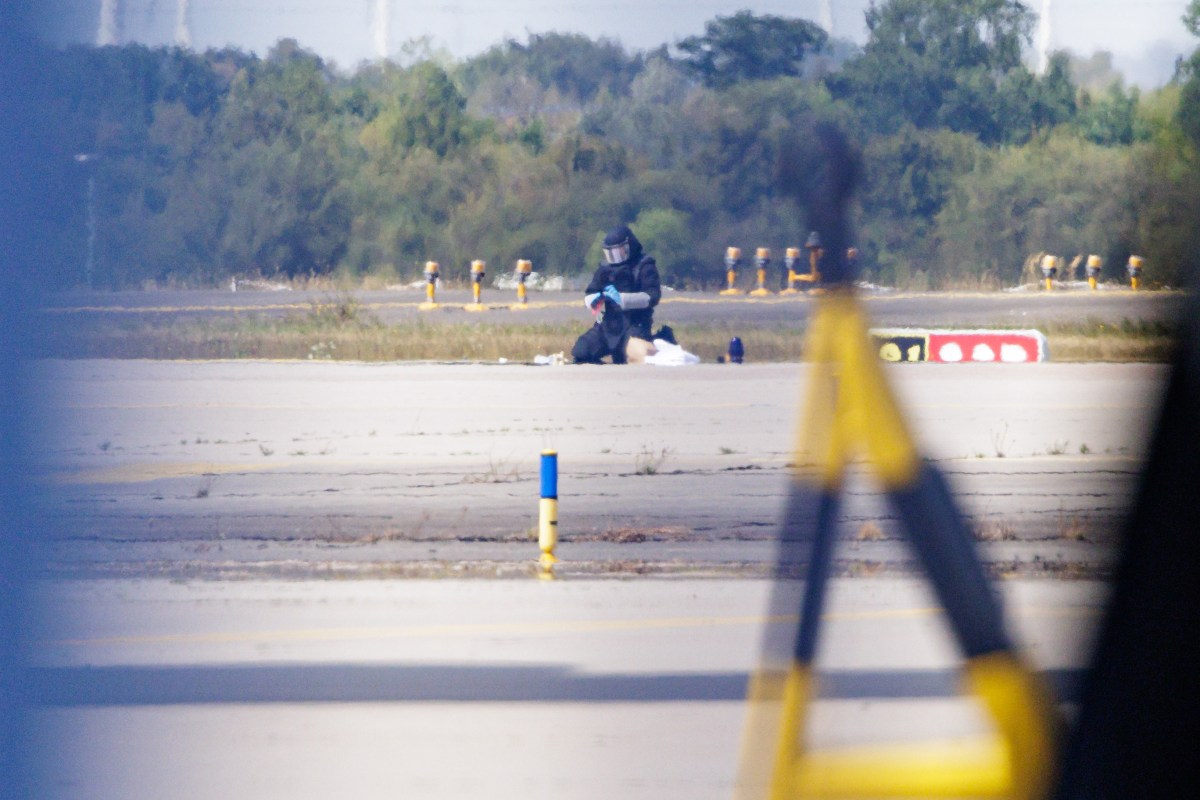
Last August, a quadcopter carrying Semtex-style plastic explosive hovered near a Ukrainian Antonov An-124 cargo plane loaded with French-supplied ammunition at Leipzig/Halle Airport. German authorities later found the unmanned aircraft. A day after that, a Boeing cargo flight reported colliding with a second unidentified object — a drone that apparently remains unrecovered.
Two incidents in four days. Two near-misses with munitions bound for a war zone. Zero fatalities. And yet no one was hurt only because the first drone failed to detonate and the second has not been found.
On Tuesday, Germany formally attributed the Leipzig incident to Russia, summoned its ambassador, terminated leases for two Russian cultural institutions, and tightened visa rules for Russian citizens. The response was measured. But measured is not the same as adequate.
What happened at Leipzig is not an anomaly. It is the latest data point in a campaign that is accelerating and largely unreported outside defense circles — a gray-zone playbook that targets the seams between war and peace, and that Europe has proved spectacularly unprepared to counter.
How the Russian Gray-Zone Playbook Actually Works
The strategy is deceptively simple: degrade allied cohesion without triggering Article 5. Sub-threshold sabotage, drone intrusions, cyberattacks, disinformation — each action stays below the threshold that would compel a collective military response. Each attribution is plausible but never proven to the standard of a courtroom. Each denial is swift, forceful, and repeated until exhaustion sets in.
Since at least September 2024, when Russian drones crossed into Polish airspace, small unmanned aircraft have appeared near airports and critical infrastructure across multiple NATO countries. The same Iran-designed Shahed suicide drone variants used in Ukraine have surfaced in European incidents. The supply chains between two wars — Ukraine and the Middle East — are becoming indistinguishable.
Franz-Stefan Gady of the Center for a New American Security put it plainly: escalation is always a political choice. Russia is making that choice deliberately, recalibrating every time it tests how divided and how slow NATO responds. The risk is not accidental war. The risk is calculated escalation meeting unprepared deterrence.
Who Wins, Who Loses, and Who Is Not Pricing In the Risk
In the short term, Russia wins by design. Every undeterred incident chips away at European unity, validates Moscow’s narrative that the West is fractured, and forces NATO allies to debate thresholds while the threats continue.
Europe loses in ways that are harder to quantify but will eventually show up on balance sheets. Germany’s response to Leipzig — diplomatically firm, militarily restrained — sets a precedent that Moscow will measure. If the next incident involves casualties instead of close calls, the cost of restraint rises sharply. If the next incident happens near a populated area instead of an airport, the political calculations shift overnight.
But the most important losers may be the sectors that are already pricing this risk quietly. Insurance markets understand concentration risk better than foreign ministries do. A single drone strike on a munitions transport at a civilian airport — or worse, on a passenger terminal — rewrites the actuarial assumptions for logistics, cargo, and war-risk coverage across Europe. Reinsurance markets in London and Zurich do not care about Article 5 thresholds. They care about exposure.
Energy infrastructure faces the same dynamic. Undersea cables, pipelines, and port facilities are all vulnerable to the kind of low-salience, high-impact sabotage that defines gray-zone operations. The costs of that vulnerability are being shifted into shipping insurance premiums, energy hedging strategies, and supply-chain contingency budgets — costs that will eventually be passed down the line.
Two Wars Collide in the Shadows
The Russia-Ukraine war and the Middle Eastern conflict are no longer parallel crises. They are converging. Iran-designed Shahed drones have become a primary tool in Russia’s arsenal. Leaked correspondence reported by the Financial Times suggests Moscow may be helping Tehran develop supersonic cruise missiles. Ukraine struck an Iranian vessel tied to Russian trade in the Caspian Sea in July — the first direct spillover between the two conflicts.
Waning U.S. munitions stockpiles, strained by demands from both theaters, are delaying arms packages to European allies who already face criticism from Washington for their own perceived lack of support against Iran and its regional proxies. The result is a double squeeze: Europe faces more Russian activity at home while receiving fewer resources to deter it.
Dmitri Trenin, the Moscow-based strategist, called what European governments are doing an illusion — the belief that Russia will not retaliate against them directly. Trenin warned that NATO’s participation in the Ukraine war has weakened nuclear deterrence and pushed Europe toward a more dangerous version of the 1962 Cuban missile crisis. He did not mince words: he cannot imagine a Russia-NATO conflict fought only with conventional weapons.
The Response Gap That Matters
Mark Galeotti of Mayak Intelligence argues that Europe does not have the means or desire to start a war with Russia, and that Moscow is not preparing a conventional attack either. The likely response to further Russian sabotage would be asymmetric — cyberattacks, seizures of Russian assets, increased aid to Ukraine — rather than kinetic retaliation on Russian territory.
That assessment may be correct. But it also means Europe has no credible deterrent against the very campaign it is struggling to name. When the only tools available are reciprocal cyberoperations and asset seizures, the escalation ladder looks very different from what NATO built over decades. And both sides seem content to keep the bout behind the scenes for as long as they can.
Neither wants direct confrontation. But that does not mean the current trajectory is safe. It means the risk is accumulating in the blind spots — in the gap between what insurance markets are already pricing and what governments are willing to acknowledge publicly.
Leipzig was not an attack. It was a probe. The question is whether Europe treats it like one.