Europe's Wildfires Are Unearthing War's Deadliest Legacy
Climate-fueled blazes across Europe are detonating buried World War-era munitions, turning disaster response into a deadly archaeology mission. The phenomenon reveals how the continent's climatic luck is finally running out.
The ground is exploding again
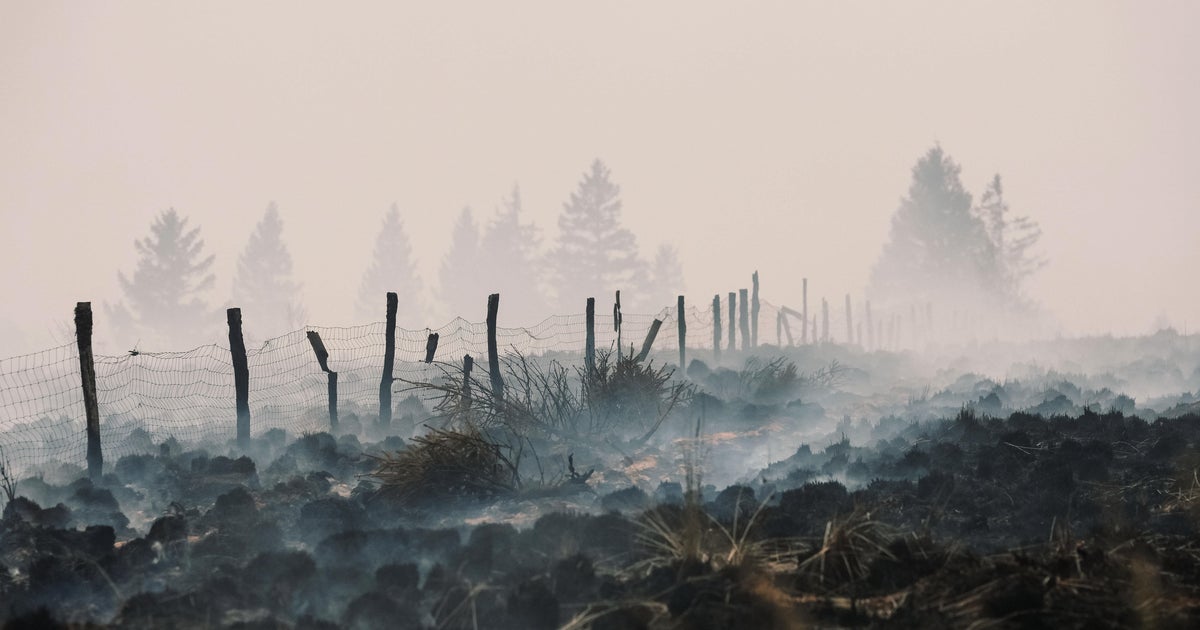
Europe’s wildfire season this summer did something the continent has not had to manage at this scale in decades: it turned disaster response into a war zone cleanup operation. Across France, Belgium, Germany and the Netherlands, fires have ignited buried munitions left over from World War I and World War II, forcing emergency crews to navigate an invisible minefield of rusted shells, mortar rounds and anti-tank weapons that crackle and detonate under extreme heat.
This is not a hypothetical risk. It is happening now. In eastern Belgium’s Liege province, officials confirmed sporadic detonations during active blazes. Firefighters have been photographed handling corroded bombs in smoldering terrain. In the village of Le Porge near Bordeaux, French authorities recovered roughly 400 WWII-era ammunition pieces — German and French mortar shells, high-explosive anti-tank rounds — after a fire exposed a previously unknown buried depot. One munition passed clean through a house. Over 180 homes were destroyed in the blaze.
The sound, according to one French mayor, was indistinguishable from active combat. “The sound of war,” Martial Zaninetti told France Info, noting that residents were returning to a landscape where the legacies of conflict are detonating without warning.
How we got here
The mechanism is straightforward and unsettling. For eighty years, steady temperatures and predictable rainfall kept Europe’s buried wartime cache dormant. The soil held the explosives in place. Rain kept the ground damp. Then climate change rewrote the script.
A study published last month by the World Weather Attribution group found that this wildfire season was supercharged by heavy January rains that triggered dense vegetation growth — which then dried into kindling when summer heat, drought, low humidity and stiff winds arrived in sequence. The result was ideal fire conditions across large swaths of western and central Europe, conditions that have become increasingly common.
When the ground dries to tinder and burns at temperatures capable of setting off cordite and Amatex charges, the old war remnants stop being historical artifacts and start acting like live ordnance. Sarah Njeri, a peace and conflict scholar at SOAS London, put it bluntly: Europe’s “climatic luck” is running out. Climate change is now doing the work of unburying and reactivating what was previously stable.
A continent built on buried explosions
The scale of the problem is hard to overstate. Belgium’s Explosive Ordnance Disposal and Destruction Service fields more than 3,000 calls annually and disposes of 200 to 250 tons of munitions from both world wars. In Ypres — ground so saturated with WWI shell fire that farmers call spring plowing “the iron harvest” — the earth routinely turns up live shells, some still containing gas agent residues.
France, Germany and the Netherlands face similar burdens. Dresden evacuated thousands in August 2025 after a WWII bomb was discovered. Paris’s Gare du Nord halted train traffic in March 2025 for the same reason. In Slovakia, receding Danube waters exposed two naval mines. In Hungary, Budapest’s Margaret Bridge was closed after a WWII bomb emerged at its foundation as the river dropped. Germany found another WWII-era device in the drying Rhine.
Every year, Europe uncovers more of its own subterranean history. The difference this time is that the uncovering is not always controlled. Demolitions are usually planned — precise, deliberate, contained. Wildfire detonations are not. They arrive when they arrive, often without warning, sometimes injuring responders or damaging property.
Who is on the front line
The people walking into these burning forests are not soldiers. They are firefighters, farmers, historians, and volunteer metal-detector operators like Bernard Collard in Belgium’s High Fens — a peat-bog forest that stretches toward the German border and was the site of fierce fighting during the Battle of the Bulge. Collard has found mortar shells, machine guns, helmets, cigarette cases and, once, a human skeleton. His father detonated a found bomb in a quarry. “You are not sure where the explosives are,” he said. “You never know what you might come across, and you shouldn’t take it lightly.”
Local governments are adapting slowly. Liege’s governor Hervé Jamar confirmed that emergency services are adjusting protocols to account for munitions in fire zones, though he insisted no firefighters were in immediate danger. The photo of a Belgian firefighter handling a rusted bomb, however, suggests the reality on the ground is less coordinated than the press releases.
Christina Greene, a researcher at the University of Arizona who co-authored the World Weather Attribution paper on this issue, described the trend as “the legacy of war keep[ing] creeping up” because of climate change. What makes this creep dangerous is its unpredictability. A munition that has sat inert since 1944 does not announce itself. A fire that starts in an unknown sector of forest does not respect exclusion zones drawn on historical maps.
Why this matters beyond Europe
The implications stretch well beyond the immediate safety of firefighters and residents. First, there is the operational cost. Bomb disposal is expensive and slow. Wildfires move fast. The mismatch between the pace of emergency response and the pace of ordnance clearance creates dangerous bottlenecks — crews held back from containment efforts, towns evacuated on two fronts (fire and explosion), resources stretched thin across overlapping crises.
Second, there is the question of compounding disasters. Europe is already managing heatwaves, droughts, agricultural losses and energy strain. Adding uncontrolled explosive detonations to that portfolio means emergency services must train for a scenario that belongs to a different century. Existing protocols assume a known threat vector. Wildfire-exposed ordnance is a hybrid threat — climate-driven, historically rooted, and tactically unpredictable.
Third, and perhaps most quietly, there is the symbolic dimension. Entire generations of Europeans have lived through a period in which the physical reminders of war were being gradually removed — repaved over, rebuilt around, memorialized in museums. The current situation reverses that trajectory. The ground itself is giving the conflict back to the present.
What happens next
The trajectory is clear. Warmer, drier summers will expose more munitions. Droughts will lower water tables and reveal ordnance in riverbeds and lake beds that have been underwater for decades. Heavy rain events — which accelerate vegetation growth that then dries into fuel — will continue to set the conditions.
Authorities in Belgium, France, Germany and the Netherlands will need to invest in predictive mapping of known and suspected ordnance zones, integrate explosive risk assessment into wildfire response protocols, and train emergency crews to recognize and initially secure suspect items before calling specialized disposal teams. The alternative is a series of recurring, uncontrolled detonations that cost lives, delay fire containment and erode public trust in institutions responsible for civilian safety.
The bombs buried in Europe’s soil were never meant to sleep forever. They were only dormant while the climate held steady. Now the climate is shifting, and the sleeping war is waking up — one wildfire at a time.