Melania Trump's Oleshky Ceasefire: Real Diplomacy or Stagecraft?
The White House says a localized ceasefire in the Ukrainian city of Oleshky was brokered through Melania Trump as exclusive intermediary. Whether this is genuine backchannel diplomacy or carefully staged humanitarian theater depends on whether Moscow and Kyiv consented—or were told afterward.
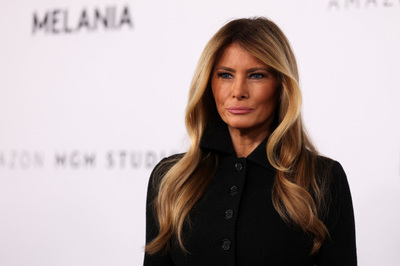
The White House announced something unusual on October 23.
Russia and Ukraine agreed to a localized ceasefire in Oleshky, a southern Ukrainian city under Russian occupation since February 2022. The truce begins October 29. Its purpose is narrow and human: allow food and medicine into a place where a starvation-level crisis has persisted for two years, and evacuate civilians through a designated safe corridor.
What makes the announcement stand out is not the ceasefire itself, which has been demanded by every government and NGO operating in the region for months, but who the White House credited with brokering it: Melania Trump, the former first lady and current president’s wife, designated in the official statement as the sole intermediary between the two warring parties.
The title the administration chose is telling. It is not “a channel.” It is “exclusive intermediary” — a role the White House said gives her authority to initiate dialogue, set terms, coordinate schedules, and harmonize technical procedures between Moscow and Kyiv. That language does not belong to informal diplomacy. It belongs to statecraft.
Why Oleshky, and why now
Oleshky is a place most English-language readers have never encountered, and that is precisely the point. The city’s population has dropped from roughly 24,000 before the war to between 1,700 and 2,000 today, according to White House figures. The remaining residents are overwhelmingly elderly, with approximately 50 children among them. The Kakhovka Dam collapse in 2023 flooded roughly 90 percent of the city, compounding a crisis that two years of occupation had already created.
This is not a strategic front-line battleground where either side holds a decisive military advantage. It is a humanitarian emergency disguised as a frozen conflict — exactly the kind of localized, deniable operation that works best as a proving ground for a new diplomatic track.
The timing deepens the theatricality. The White House said the initial breakthrough emerged from a private meeting Melania Trump hosted in New York during the UN General Assembly session last September, under the banner of her Fostering the Future Together initiative. Since then, she has been holding direct discussions with Russian and Ukrainian leadership through channels she built while facilitating the reunification of 34 children across six separate efforts last month. The documentary film about her screened at Washington’s Kennedy Center on September 29.
None of these facts are accidental. They form a narrative arc — from private meeting to public announcement, from child reunifications to citywide ceasefire, from a documentary premiere to a White House press release. The arc is carefully constructed.
Who wins, who loses, who is left out
The immediate winner is anyone in Oleshky who receives food, medicine, and the chance to leave. The city’s remaining residents deserve that outcome regardless of who delivered it. The secondary winner is the Trump administration, which can claim a concrete diplomatic achievement early in its posture toward the war.
The loser, almost certainly, is the tradition of multilateral humanitarian diplomacy that has operated through the UN, the Red Cross, and regional governments for the past two years. This administration has effectively bypassed those channels, announcing a ceasefire that should have been negotiated through established diplomatic architecture and executing it through a private intermediary with no statutory authority.
Ukraine’s government, notably, has not publicly confirmed it agreed to this arrangement. The White House statement frames the ceasefire as something agreed to by both sides, but Kyiv’s position — especially on any deal that involves civilian movement into Russian-controlled territory or evacuation routes that pass through occupied land — remains unclear. If Kyiv did not approve this in advance, the announcement creates a diplomatic problem, not a solution.
Russia’s calculus is easier to read. A localized, humanitarian-only ceasefire that does not address sovereignty, territory, or broader negotiations costs Moscow nothing and lets it maintain control of Oleshky indefinitely. The only concession is allowing aid in and civilians out — a low-cost gesture that looks generous without changing the fundamental facts on the ground.
Is this diplomacy or performance
The answer is probably both, and the danger is that the performance obscures the diplomacy.
Melania Trump’s channel with Moscow is real. The child reunifications demonstrate she has built relationships that extend beyond official government-to-government往来. That is an asset. But an asset does not become policy simply because it produces a photograph and a press release.
The structural problems are significant. A ceasefire covering one city does not stop fighting elsewhere. There is no verification mechanism mentioned in the White House statement — no monitors, no joint commission, no framework for what happens if either side violates the terms. The humanitarian corridor covers evacuation and aid delivery, but says nothing about long-term access, reconstruction, or political settlement.
There is also the question of what happens when the next crisis emerges. Will the exclusive intermediary role expand, or stay confined to Oleshky? If it expands, it creates a parallel diplomatic track that competes with — or undermines — formal negotiations. If it stays confined, the administration gets credit for a narrow achievement and the broader war continues unchanged.
What comes next
The ceasefire takes effect October 29. The first test is whether aid actually reaches Oleshky and whether civilians can safely leave. The second test is whether either side exploits the pause for military gain elsewhere. The third test — and the one that matters most — is whether this channel survives contact with the harder problems: territorial concessions, security guarantees, the status of occupied regions, and any framework for a comprehensive settlement.
If the White House treats this as a starting point rather than an endpoint, the exclusive intermediary role could become a permanent feature of American diplomacy toward the war — one that operates outside normal institutional constraints and gives the president a personal channel to both capitals. That is either a breakthrough or a circumvention, depending on where you stand.
If the White House treats it as an isolated humanitarian gesture, the ceasefire may hold for the duration of the aid operation and then dissolve, leaving Oleshky’s remaining residents exactly where they were — trapped, starving, and forgotten.
The most likely outcome sits between those extremes. The ceasefire will function as long as it is politically useful, then be quietly abandoned when it is not. The real question is whether the administration has opened a door it cannot close — or whether it has simply performed a useful gesture while avoiding the harder work that comes after.
Either way, Oleshky’s 1,700 to 2,000 remaining residents will be watching closely to see whether the announcement translates into food, medicine, and a path out — or into another headline that fades while the crisis inside the city continues unchanged.