The FAA Just Handed Air Traffic Control to an AI. Here's Why That Should Terrify You
The FAA is deploying a $875 million AI system to serve as the brain of America's air traffic control network, starting this week in Washington DC. Airline panic reveals deeper anxieties about trusting algorithmic decisions with millions of lives.
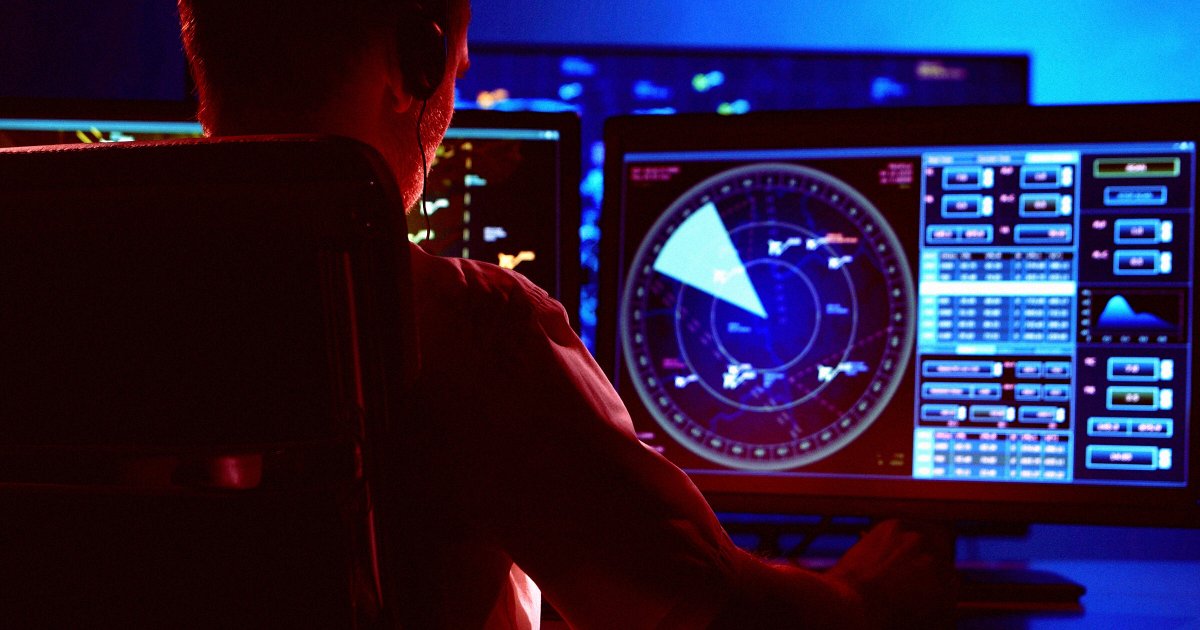
The experiment starts Monday. There is no pause button.
The Federal Aviation Administration is about to do something unprecedented: hand the strategic management of one of the nation’s most complex systems to an artificial intelligence. Starting this week, the SMART system — short for Strategic Management of Airspace, Routes and Trajectories — will begin testing in the airspace around Washington, DC, one of the busiest and most politically sensitive corridors in the country. If that sounds like a lot of pressure for software that has not yet been proven, you are not alone. The airline industry was openly panicking.
The FAA says SMART will cost $875 million over 12 years, a figure that sounds almost modest compared to the $12 billion Transportation Secretary Sean Duffy originally floated when he first teased the project in April. The discrepancy alone should raise eyebrows. Something shifted between the announcement and the final contract awarded to Air Space Intelligence, but no one has explained what, exactly, got cut.
What we do know is this: SMART is designed to analyze airline schedules, weather patterns, and airport runway capacity simultaneously, then flag potential conflicts before they materialize. In the FAA’s vision, the system eventually acts as something akin to the brain of the nation’s air traffic control network — processing information faster and more comprehensively than any human controller could. The pitch is that controllers could plan flights weeks in advance, staggering departures by five or ten minutes to dissolve bottlenecks before they form. Duffy told CBS News the software would simply say, “Let’s move some of those flights a little bit later, or five, seven, ten minutes earlier, and we can resolve the issue.”
The problem is that no one in the industry actually knows how the system works. Three airline officials told Politico they were baffled by SMART’s mechanics. Some feared the AI would recommend mass cancellations or rescheduling just to avoid perceived conflicts, creating chaos rather than preventing it. The anxiety was not abstract. It was the kind of panic you feel when you realize a system you depend on every day is being run by something you cannot interrogate, cannot explain, and cannot easily shut off.
Airlines forced the FAA to blink.
The airline industry did not quietly accept the rollout. According to Politico, one anonymous airline official said carriers had been pleading with the FAA to “narrow the scope of this. Start, crawl, walk, run.” The agency apparently listened. In what looks like a retreat — or at minimum a concession — the FAA has now assured the industry that SMART will not be directly woven into day-to-day air traffic management. Instead, it will generate alternative routing options only when traffic is already backed up. Controllers will remain in the loop. The AI is advisory, not authoritative.
That distinction matters, even if it feels like damage control. The FAA held a series of meetings with industry representatives to defuse the panic, and the scaled-back approach appears to have worked. Airlines for America, the trade group representing major carriers, called the initiative “one of the most exciting and bold initiatives taken on by the FAA in decades.” Translation: they prefer excitement to terror.
But the fact that the industry had to be bullied into calm reveals something uncomfortable about the state of American infrastructure. We are deploying experimental AI into safety-critical systems not because we have solved the underlying problems, but because we have run out of time to solve them any other way. The chronic shortage of trained air traffic controllers — a crisis that predates the current administration — has created a vacuum that technology vendors are eager to fill. The Trump administration’s push for AI integration is less a stroke of vision than a recognition that there are simply not enough humans to do the job.
The Washington DC test site is not a coincidence.
Why start in the nation’s capital? Washington DC airspace is among the most congested and heavily regulated in the United States. It is also the most visible. A failure here would not be a quiet incident buried in a regional news cycle. It would be global news within hours. The FAA is effectively choosing the hardest possible sandbox for its first live trial, which suggests either extraordinary confidence in the system or extraordinary desperation.
There is also a political dimension. The FAA’s air traffic control overhaul is part of a broader Trump administration effort to revamp infrastructure, and it comes amid intense scrutiny after a series of high-profile aviation incidents early in the president’s term. Deploying AI in DC airspace is a statement: this administration is willing to bet big on technological solutions, even when the alternatives are uncertain. The 90-day testing period before any expansion is supposed to provide a safety valve, but testing under controlled conditions is not the same as operating in the chaotic reality of daily air traffic.
What happens when the algorithm is wrong.
The deeper anxiety surrounding SMART is not about its current capabilities. It is about what happens when the system encounters a scenario it was not trained to handle. AI models are exceptionally good at recognizing patterns in data they have seen before. They are notoriously unreliable when faced with edge cases, novel situations, or conflicting information. Air traffic control is full of edge cases. A storm system moves differently than forecast. A runway closes unexpectedly. Two flights converge at an altitude that was not in the original plan.
If SMART recommends a routing change that turns out to be dangerous, who is responsible? The controller who follows the AI’s suggestion? The FAA administrator who approved the rollout? The contractor that built the system? These are not rhetorical questions. They are the kind of questions that multiply quickly after an accident investigation begins. The aviation industry has spent decades building a culture of accountability around human decision-making. An AI that makes mistakes distributes blame in ways that legal and regulatory systems are not designed to handle.
The real test is not technical. It is institutional.
The FAA insists that controllers will remain in charge. SMART will suggest, not command. But suggestion is influence, and influence is power. Once controllers begin relying on an AI to surface conflicts and propose solutions, the line between assistance and automation blurs. Operators tend to defer to systems that appear more knowledgeable, even when they understand the limitations. This is not speculation. It is a documented pattern in aviation psychology, visible in every cockpit automation disaster from the 1990s to the present.
The industry’s panic was not irrational. It was a correct reading of the situation: an unproven system is being rushed into a high-stakes environment, and the people who will actually use it have not been consulted. The FAA’s concession to narrow SMART’s scope is a step backward, but it is also an admission that the original plan was too aggressive. The question now is whether the system will stay limited, or whether the 90-day test will be interpreted as a success and the AI’s role expanded anyway.
Monday is not a finish line. It is the first step into uncharted territory. The FAA is asking the public to trust that an AI system can help manage the skies safely, and the airline industry is asking for time to prepare. Both sides may be right. But in infrastructure this critical, being right is not enough. You have to be certain. And certainty is something no algorithm can guarantee.