What the Foldable iPhone's Name Actually Signals About Apple's Strategy
Apple's upcoming foldable won't just compete on specs — its name reveals how the company plans to neutralize Samsung's head start. The ecosystem does the heavy lifting.
The Real Story Isn’t the Name — It’s the Math
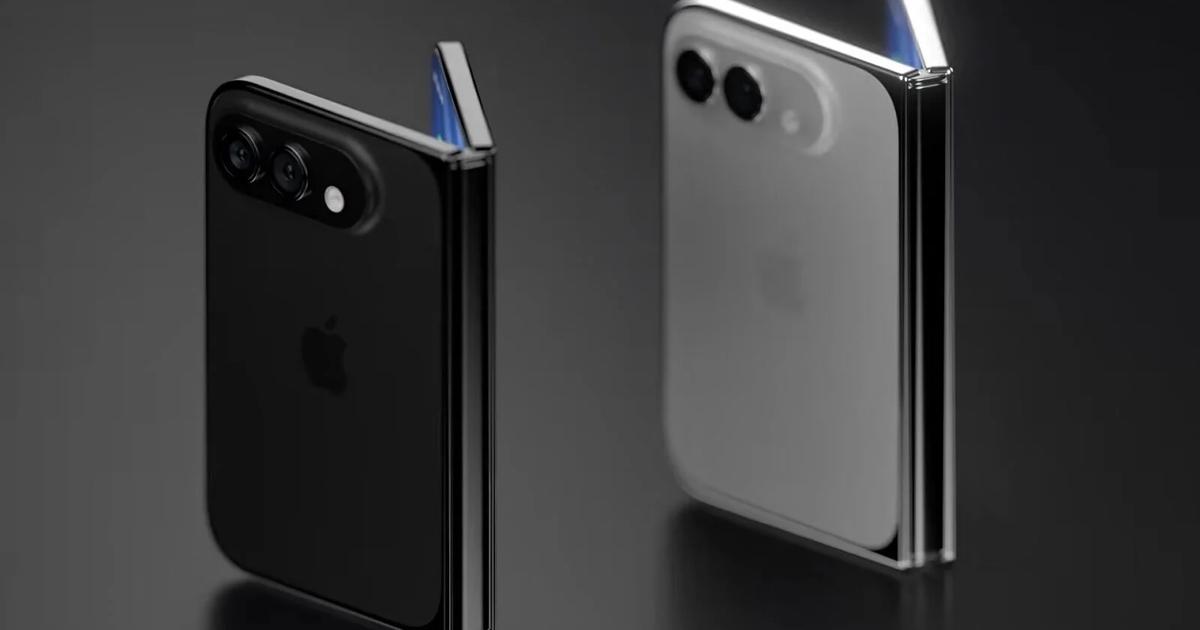
The name will break tonight. Bloomberg’s Mark Gurman says iPhone Ultra. Case manufacturers have leaked iPhone Duo. Other rumors throw around iBook, iPhone Fold, iPhold — and yes, someone actually floated iPhone Max. Whatever label lands, the naming debate distracts from what actually matters.
Apple isn’t entering the foldable market to win on hardware specs. It’s entering to close a category that already generates meaningful revenue for Samsung, and the company’s playbook for doing so has nothing to do with telephoto lenses or Action Buttons.
The Spec Sheet Is Honest
According to reports cited in the Gizmodo Japan piece, the first foldable iPhone will lack a telephoto camera, may carry a smaller battery than the iPhone 18 Pro series, and reportedly won’t include Face ID or the Action Button. Creative Strategies analyst Mac Weinbach called this out directly: a device that’s spec-cheaper than a Pro model cannot credibly carry the Ultra badge.
That’s a fair observation — and it’s also exactly why the Ultra name would be a mistake. Not because Apple can’t marketing its way out of it, but because the foldable iPhone’s actual competitive advantage doesn’t live in the spec sheet.
Where Samsung Stands Today
Samsung has been shipping foldables since 2019. The Galaxy Z Fold series is now in its eighth generation. The crease is thinner. The hinge is more refined. The pricing is established at roughly $1,800–$2,000 depending on region and configuration. Samsung has spent seven years accumulating repair data, refining hinge mechanisms, and building consumer familiarity with a form factor that still occupies roughly 5% of the global smartphone market.
If Apple entered this space in 2023, Samsung’s lead would be nearly insurmountable. Seven years of iteration is hard to close through raw engineering speed alone.
But Apple didn’t enter in 2023. It entered in 2026, when the equation has shifted.
The Ecosystem Trap Is the Weapon
The critical variable that English-language analysis of this launch consistently underweights is not Apple’s hardware timeline — it’s the installed base of iOS devices that haven’t yet converted to foldables.
Estimates place active iPhone users at roughly 1.4 billion worldwide. Even if only 3% of that base represents consumers who would consider a foldable purchase within the first year of availability, that’s 42 million units before Samsung moves a single additional Z Fold through its existing funnel. Apple doesn’t need to out-innovate Samsung on hinge engineering in year one. It needs to out-migrate them.
This is the structural advantage that no spec comparison can capture. Samsung’s foldable customers are mostly already Samsung customers. Apple’s foldable customers will largely come from a competitor that currently has no foldable option at all — because they’re sitting on iPhones today.
Why the Plus or Max Name Actually Makes Sense
The argument for iPhone Plus or iPhone Max over iPhone Ultra rests on something Gurman and Weinbach both overlook: Apple has a naming precedent for exactly this situation.
The iPhone Plus and Max lines have always signaled screen size, not raw spec superiority. The iPhone 14 Plus and iPhone 16 Plus offer the same core processor and camera system as their Pro counterparts, but with larger displays and longer battery life — at a lower price point. The Max tier simply denotes a physical dimension, not a feature ceiling.
A foldable iPhone is, fundamentally, a large-screen iPhone. The hinge enables the size. The name would signal the form factor, not a repositioning above Pro. Calling it iPhone Plus or iPhone Max fits Apple’s existing taxonomy without overpromising on features the device may deliberately skip to hit a price target.
Weinbach’s critique — that a device without Face ID or a telephoto lens can’t be Ultra — is technically correct. But it assumes the device is meant to sit above Pro. It may not be. It may be meant to sit beside it, at a different price and a different size.
Who Wins, Who Loses
Apple wins if the foldable iPhone lands at or below $1,300 — a price point that makes the switch from an aging standard iPhone psychologically simple and financially rational. At that price, the ecosystem lock-in does most of the work. iMessage, iCloud, App Store purchases, Apple Watch pairing, AirPods synchronization — none of these require a spec comparison. They require a device that works like every other Apple product a customer already owns.
Samsung loses share, at least initially, because its foldable customers were never truly loyal to the form factor. They’re loyal to the screen size, the multitasking capability, the novelty of having two display surfaces in one pocketable device. Apple offers all of that with fewer friction points during migration.
The mid-tier iPhone market — currently served by the Plus line — faces the most direct disruption. If Apple replaces the Plus with a foldable variant at a similar price, the traditional slab phone becomes the budget option rather than the mainstream one. That’s a category redefinition, not just a product update.
What Happens Next
Regardless of whether the official name is Ultra, Duo, Plus, or Max, the announcement tonight marks the beginning of a new competitive phase in smartphones. Samsung’s first-mover advantage was always finite. It expired not when Apple started development — it expired when the foldable market crossed the threshold where average consumers stopped seeing it as a niche experiment and started seeing it as a legitimate form factor.
That threshold was crossed in 2024 and 2025. Samsung’s foldable shipments grew steadily, repair networks expanded, and third-party accessory ecosystems matured. By the time Apple ships this device, the market won’t be asking whether foldables work. It will be asking which one works better with your existing technology.
And in that question, Apple has an advantage that no hinge engineer can replicate overnight.
The Bottom Line
The name matters less than the ecosystem. The specs matter less than the installed base. Samsung spent seven years building a foldable that outperforms in measurements. Apple is building a foldable that outperforms in convenience — and convenience, in this market, is the stronger currency.
Tonight’s announcement will tell us what Apple calls the device. But the real story is already written in the 1.4 billion iPhones sitting in pockets around the world, waiting for a reason to open again.