G7 Oil Release Is About Diesel, Not Just Prices
The G7's plan to release 100 million barrels of reserves is a carefully timed move centered on diesel, not crude. For Seoul's refineries and East Asia's energy-dependent economies, the implications run deeper than a short-term price dip.
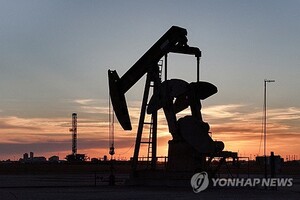
The G7 Isn’t Just Flooding the Market — It’s Targeting One Product
The headline number is big: 100 million barrels of strategic reserves released under G7 coordination over four months. But the real story sits in the fine print. The first 20 days will see an accelerated push of diesel — not crude — onto the market.
That distinction matters enormously for East Asia. South Korea, Japan, and Taiwan import far more refined products than raw crude. Their refineries are configured for middle-distillate yield, and their economies run on diesel and jet fuel, not gasoline. A diesel-first release is a direct intervention in the product crack spreads that determine whether Seoul’s largest refiner, S-Oil, stays profitable or bleeds.
French President Emmanuel Macron made the intent clear: “We want to drive down fuel prices.” But driving down diesel prices specifically isn’t just about consumer relief. It’s about reducing the incentive for refined-product hoarding and smuggling that has kept Asian diesel prices stubbornly elevated even as crude softened.
The Market Was Already Falling. Then the Middle East Reminded Everyone It Exists.
On November 2, WTI crude dropped 1.90% to $91.11 a barrel, and Brent fell a marginal 0.06% to $102.25. Intraday, WTI had sold off as much as 5.01%, reflecting the full force of the G7 announcement. By close, it had clawed back more than half its losses.
The reversal had nothing to do with reserves and everything to do with war.
Reports emerged that Saudi Arabia is preparing strikes against Yemen’s Iran-aligned Houthi rebels, with reports of over 100,000 Yemeni government troops being mobilized and U.S. military advisors providing intelligence support. The threat to the Strait of Hormuz and the Bab el-Mandeb shipping corridor — through which roughly 20% of global oil passes — instantly recaptured market attention.
Meanwhile, Saudi Aramco has restored over 80% of capacity on its east-west pipeline, now moving roughly 6 million barrels per day toward the Red Sea coast, according to Bloomberg. That’s up from the 7 million barrel daily capacity ceiling and well above the disruption levels after last month’s attacks. The physical supply is returning. The risk premium hasn’t left the market.
Capital Economics climate and commodities economist Hamad Hussain noted that if Middle Eastern supply growth holds, the reserve releases could push the market into modest surplus. But that assessment assumes no major supply disruption — a bet that gets riskier by the hour in the Red Sea.
What This Means for Korean Refiners
South Korea is the world’s third-largest refinery complex, with over 5 million barrels per day of capacity across Hanwha O&K, GS Caltex, S-Oil, and SK Innovation. The country imports nearly all its crude and exports a significant share of its refined products, particularly diesel, to India and Southeast Asia.
A coordinated diesel release from the G7 directly targets the product segment where Korean refiners earn their highest margins. Diesel crack spreads in East Asia have traded at historically wide premiums over WTI, partly because regional demand remains robust and partly because supply disruptions in the Middle East have made product shipments unpredictable. If the G7 floods the market with diesel in the first 20 days, those spreads compress — fast.
The upside for Korea is simpler: cheaper imported diesel lowers costs for shipping, agriculture, and logistics, all critical sectors that felt the bite of energy inflation through 2024 and early 2025. The downside is margin erosion for refiners who already operate on thin margins in a globally competitive market.
Why the Timing Is Anything But Random
The G7’s announcement came at a moment of unusual market fragility. Oil was already softening on expectations of stronger-than-anticipated OPEC+ compliance and rising U.S. shale output from the Permian Basin. The reserve release amplifies that pressure. But the simultaneous escalation of Houthi-Saudi tensions introduces a counterweight that makes this intervention less about supply management and more about political signaling.
The move ahead of winter is deliberate. Europe’s gas storage is well-stocked, but diesel heats homes, powers generators, and fuels transport. Asia faces a different calendar — industrial demand peaks in Q1, not Q4. Releasing diesel now means Asian buyers see the benefit before the Chinese New Year shutdown disrupts shipping lanes for weeks.
China, which has been tightening export controls on critical minerals including gallium and germanium, watches this closely. Beijing has repeatedly criticized Western reserve releases as hypocritical while maintaining its own strategic stockpiles. The economic leverage China gains from mineral export restrictions could be partially offset by the G7’s ability to keep energy prices below the inflation threshold that would otherwise fuel domestic unrest.
Who Wins, Who Loses
Winners: consumers in Europe and Asia who see lower fuel bills; shipping companies that burn diesel and can renegotiate freight contracts; countries with large strategic reserves that can now replenish at favorable prices. Losers: refiners in South Korea, India, and Singapore whose product margins narrow; OPEC+ members who wanted to keep prices above $95 without further supply disruption; insurers and shippers facing renewed risk premiums in the Red Sea.
The next four months will test whether coordinated reserve releases can override geopolitical risk. So far, the answer is mixed. WTI gave back nearly all its G7-driven losses when the Middle East threatened again. The market respects barrels in the ground more than barrels in a tank.
What’s clear is that the G7 chose a surgical approach — diesel first, crude later — designed to hit the products that matter most to its own voters and to its Asian partners. Whether that strategy holds against the next shock in the Red Sea is the question neither $91 nor $102 per barrel can fully answer.