Trump Uses Alaska LNG as Tariff Leverage Against Korea
Trump tied a $50 billion Alaska LNG investment to tariff threats against South Korea, exposing a new weapon in US trade policy. Seoul says the deal is still under review, setting up a high-stakes negotiation before November's midterms.
The Deal Trump Pretended Already Existed
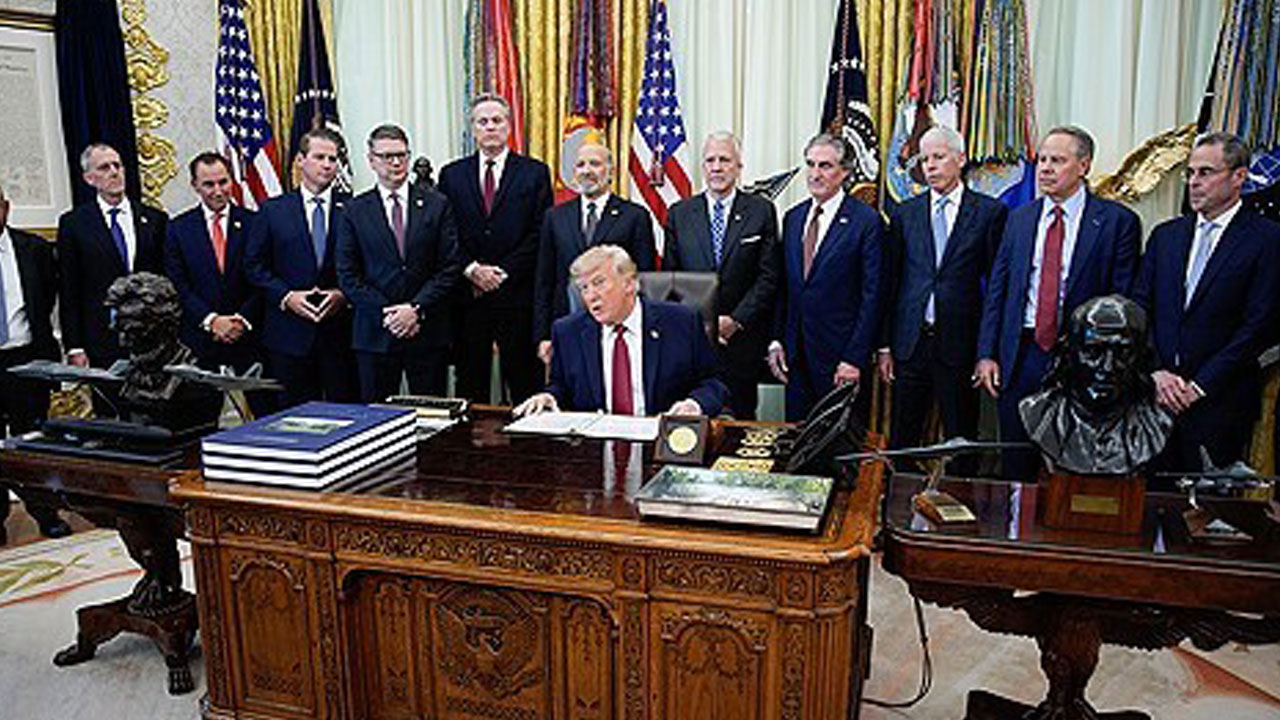
Donald Trump told reporters at the White House on October 2 that if South Korea refuses to invest in an Alaska liquefied natural gas project, the United States will simply charge them more. When pressed on whether Seoul had actually committed, he turned the question back: “They haven’t made an agreement?” Then added, plainly: “Tell them if they don’t agree quickly, I will double the charge.”
The threat landed in a country that has, by its own account, never signed such an agreement.
Earlier this year, Trump’s administration unilaterally announced that South Korea would invest $50 billion in an Alaska LNG development. Seoul moved quickly to clarify: the project is under review. No commitment has been made. No money has changed hands. The distinction matters because it reveals what is happening here—a deal being declared into existence by executive fiat, then enforced through the tariff lever.
What the Korean Press Is Tracking
Western outlets have largely treated this as a routine Trump provocation. Korean media are reading it differently. The comments section on the original report, scrubbed by automated censors for strong language, still reveals the emotional texture: frustration that the US is treating a treaty ally like a negotiation target, anger at the sheer audacity of announcing a multibillion-dollar investment that never happened, and a growing sense that the alliance is being hollowed out from within.
One commenter noted something worth tracking: the timing. With the US midterm elections approaching in November, Trump’s posture reads like desperation dressed as leverage. Another suggested South Korea should simply accept the tariffs rather than fold—calculating that paying the tariff may cost less than locking in a bad deal. That is a dangerous calculus, but it is not irrational.
The Real Clash: Energy Policy vs. Alliance Politics
The Alaska LNG project sits at the intersection of two competing American agendas. On one side, the Department of Energy and its allies want to see US liquefied natural gas exported to key partners in Asia, locking in long-term demand and building domestic capacity. Alaska, with its vast untapped reserves and proximity to Asian markets, is the logical site.
On the other side, the Office of Trade and Negotiating Affairs treats alliances as balance sheets. South Korea is the United States’ seventh-largest trading partner and a critical military ally in the Indo-Pacific. Pressuring it on energy investment is fine in theory—it diversifies supply chains, reduces reliance on Middle Eastern gas, and creates political goodwill in energy-producing states. It becomes something else when the pressure comes wrapped in tariff threats issued without warning.
This is the hidden dimension Korean observers are flagging: the US is no longer negotiating with Seoul as a partner. It is negotiating as a creditor.
Who Wins, Who Loses
Trump wins if Seoul panics and signs. A $50 billion announcement generates headlines, satisfies domestic energy constituencies, and gives him a bargaining chip heading into the midterms. He has already shown willingness to treat tariff exposure as a negotiating tool rather than an economic policy—double the charge is not a calculation, it is a bluff dressed as doctrine.
South Korea loses either way, but it loses more if it caves. Signing under duress sets a precedent that every alliance partner is now subject to unilateral deal-making. It also exposes Hyundai, Samsung, and the major Korean constructors to projects that may not be commercially viable on their own merits—Alaska LNG has faced delays, environmental reviews, and cost overruns for years.
The US Asian allies lose if this model spreads. Japan, the Philippines, Taiwan—all are watching to see whether energy investment becomes a mandatory tribute to Washington rather than a commercial decision.
What Happens Next
The immediate question is whether Trump follows through. His remarks were made casually, in the course of a press briefing, but the signal is unambiguous. If Seoul does not produce a concrete investment announcement soon, the tariff threat could materialize in the next trade review cycle.
Korean officials are unlikely to respond publicly with the heat the online comments show. They will negotiate quietly, buy time, and look for loopholes. The government’s stance—that the project is under review—gives them room to neither confirm nor deny participation while they assess whether $50 billion is a price worth paying to avoid a broader trade war.
The midterms complicate everything. If Trump’s party gains seats, his leverage increases. If they lose, he may double down on showmanship to compensate. Either outcome favors ambiguity over clarity, which is exactly where Seoul wants to be right now.
The Bigger Picture
n
What makes this story significant beyond the immediate Korea-US friction is what it reveals about the architecture of American trade policy. Energy deals are no longer just about geology and markets. They are about loyalty. Investment in US projects is becoming a test of alliance commitment, and failure to pass that test carries a price written in tariffs.
Korean media are ahead of Western coverage on this point. The comments, the framing, the urgency—all suggest Seoul understands that this is not about LNG. It is about whether the alliance relationship can survive being treated as a transaction.
The answer to that question will determine not just the terms of any Alaska deal, but the shape of American alliance policy for the rest of the decade.