Ganymede’s Hidden Ocean Might Never Have Let a Single Drop Escape
Ganymede holds more liquid water than all of Earth's oceans combined, but scientists cannot prove any of it has ever reached the surface. The difference between Ganymede and Enceladus may define how hard astrobiology has it finding extraterrestrial life.
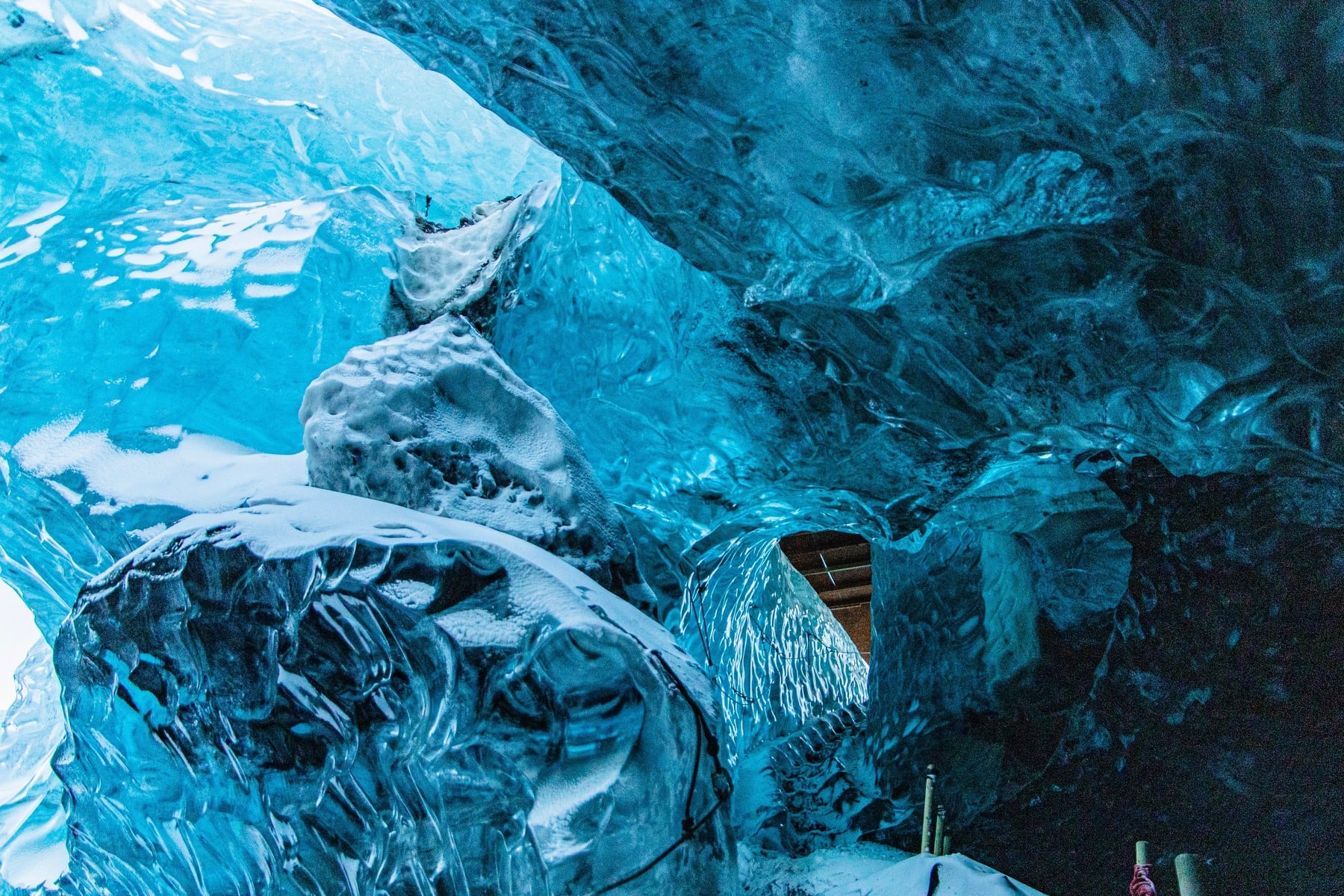
The biggest secret ocean in the Solar System
Ganymede holds more liquid water than every ocean on Earth put together. That claim is not speculation — it is what NASA itself states based on Hubble aurora measurements, Galileo magnetometer data, and interior models refined over two decades. The moon is wider than Mercury. Beneath roughly 150 kilometres of ice, an ocean possibly 100 kilometres deep wraps the rocky mantle in a global sea.
Yet no spacecraft has ever seen it. No plume has sprayed its water into space. No sample from Ganymede’s ocean has drifted past a probe like Cassini’s flights through Enceladus’ geysers. The reservoir is real. The connection to the surface is not.
That gap matters more than the volume does.
Why Ganymede’s ocean is invisible
A buried ocean cannot reflect light. But salt water conducts electricity, and that property lets scientists detect it indirectly. When Jupiter’s magnetic field shifts around Ganymede, currents should develop in any conducting layer below the surface. Those currents generate a secondary magnetic field, a signal Galileo’s magnetometer picked up during close encounters in the late 1990s.
Hubble strengthened the case in 2015. Ganymede has faint auroral ovals near its poles. If no subsurface ocean existed, those ovals should rock back and forth by about six degrees as Jupiter’s field varies. Hubble measured only about two degrees of motion. A salty ocean dampens the response. The induced field opposes part of Jupiter’s changing influence, and the math works.
But none of this is a photograph. It is a chain of inferences — conductive layer, plausible salinity, reasonable temperature profile — that together point toward liquid water at depth. The conclusion is strong. The evidence remains circumstantial.
The 150-kilometre wall
The widely cited 150-kilometre ice shell is not a measured thickness. It is an upper bound from Juno’s microwave radiometer during a June 2021 flyby. The instrument sampled thermal radiation emerging from different depths beneath Ganymede’s surface, and a 2023 analysis of those measurements constrained the conducting portion of the shell to roughly 80–150 kilometres in the observed region.
That is valuable data. It does not amount to a radar track reaching a sharp boundary between ice and water. Microwave brightness depends on temperature, density, porosity, purity, and liquid content — and Ganymede’s ice is unlikely to be simple H₂O throughout. At the pressures inside a large icy moon, water freezes into dense crystalline forms unlike anything found on Earth’s surface. Some models place liquid between ordinary ice above and high-pressure ice below. Others permit multiple layered regimes — what researchers sometimes call the “club sandwich” structure.
If high-pressure ice separates the deepest liquid from the rocky mantle, Ganymede loses one of the most useful ingredients for life as we know it. On Earth, seafloor hydrothermal vents supply minerals and chemical gradients that sustain ecosystems independent of sunlight. If Ganymede’s ocean cannot readily touch silicate rock, the nutrient budget becomes far less clear.
Water vapour is not a plume
In 2021, Hubble detected water vapour above Ganymede — the first firm evidence of a tenuous atmosphere on the moon. The discovery attracted attention because Enceladus’ plumes also contain water vapour, and Cassini’s chemical analyses of those plumes found salts, organics, molecular hydrogen and phosphorus, all consistent with an ocean interacting with rock.
Ganymede’s vapour is not the same thing. NASA’s analysis attributed the signal to surface frost sublimating near local noon, where temperatures climb just enough for exposed ice to turn directly into gas. The geography matches a surface source, not an ocean-driven plume. Water molecules leave Ganymede. They do not arrive there from below.
The salts that do not prove access
Surface salts are Ganymede’s strongest clue that subsurface material has reached the exterior. Juno’s infrared spectrometer mapped the Jupiter-facing hemisphere at better than one kilometre per pixel during the 2021 flyby. Researchers reported hydrated sodium chloride, ammonium chloride, carbonates and possible organic compounds.
A 2023 study in Nature Astronomy found these materials concentrated in regions partially shielded from Jupiter’s most destructive charged particles by Ganymede’s own magnetic field. The authors interpreted the composition and distribution as evidence that subsurface brines erupted to the surface, carrying chemical signatures of water-rock interaction.
That interpretation is reasonable. But “subsurface” covers an enormous vertical range. A brine could have occupied shallow pockets created by local melting. It could have migrated upward in stages. It could preserve the chemistry of an ancient episode when the ice shell was thinner and warmer. Surface salts do not carry a depth stamp.
This is why two statements that sound contradictory can both be responsible. Scientists can say the salts suggest remnants of deep brine reached the surface, while planetary-protection officials say there are no demonstrated indications that Ganymede’s present deep ocean contacts the exterior. One describes indirect chemical evidence. The other describes what has been proven well enough to govern contamination rules.
Exchange is possible, just unproven
A thick shell does not make water transport physically impossible. It changes the mechanisms and timescales. Large impacts can excavate material from depth, though piercing a 100-kilometre barrier requires very different conditions than opening a shallow crack. Warm ice can rise slowly, carrying chemical traces from the ocean interface toward shallower layers without transporting liquid all the way. Tectonic extension can thin and fracture the shell. Thermal plumes can create pockets of melt.
Ganymede’s past was likely more dynamic than its present. A more eccentric orbit in earlier epochs would have driven stronger tidal heating, potentially making the ice shell thinner and exchange more effective. A 2025 review of material transport across the Jovian moons concluded that Ganymede may have experienced indirect and impact-driven exchange more than a billion years ago, while emphasising the limits of current evidence. The likely age of the relevant terrain makes an ancient connection easier to defend than an active one.
JUICE and the problem of confirmation
ESA launched JUICE in April 2023. It reaches Jupiter in July 2031, tours the system, and enters orbit around Ganymede in late 2034 — the first spacecraft to orbit a moon beyond Earth. No mission will drill 150 kilometres of ice. The value comes from combining measurements that respond to different parts of the same hidden structure.
The magnetometer will track Ganymede’s intrinsic and induced fields across many geometries. Radio science will map gravity and tidal variation. Laser altimetry will measure surface flexure. Ice-penetrating radar will search the upper crust for layering and pockets of liquid; only if the shell proves unexpectedly favourable could it approach the ocean interface. Surface composition and geology will be mapped at far higher coverage than today’s scattered flybys allow.
The critical question is whether surface materials record tectonics, cryovolcanism, radiation processing or transport from deeper layers. JUICE will narrow the gap between what we infer and what we can demonstrate. It may show that ocean material rises only indirectly, over geological timescales, or that the modern reservoir is chemically isolated beneath multiple ice regimes. Either result changes how scientists evaluate Ganymede as a possible habitat.
What this means for astrobiology beyond Jupiter
Ganymede’s situation is not a curiosity limited to the Jovian system. It is a prototype for how ocean worlds may hide across the Galaxy. Confirmation bias has favoured Enceladus and Europa — moons where surface expressions are dramatic and accessible. But the largest ocean reservoir in the Solar System may also be one of the best sealed, and that pattern could be common.
Exoplanet surveys are already identifying candidates with subsurface oceans. The habitability calculations that follow depend on assumptions about ocean-surface exchange, water-rock contact, and energy sources. If Ganymede is typical rather than exceptional — a vast ocean largely cut off from the exterior — then the search for life may need to lower its expectations about detectability and raise them about patience.
The ocean is real. The water is vast. The proof that any of it ever saw sunlight remains absent. JUICE and future missions will either close that gap or sharpen it. Either outcome is scientifically productive. The mismatch between Ganymede’s interior abundance and its exterior silence is itself a finding — one that forces a more honest conversation about what it takes for life to emerge, persist and reveal itself.