German Espionage Scandal Tests NATO Trust After Intel Chief Arrest
The arrest of former BND chief August Hanning on espionage charges has exposed a covert operation spanning over a decade — and raises urgent questions about trust inside NATO's intelligence apparatus.
The Quiet Betrayal at Europe’s Most Powerful Spy Agency
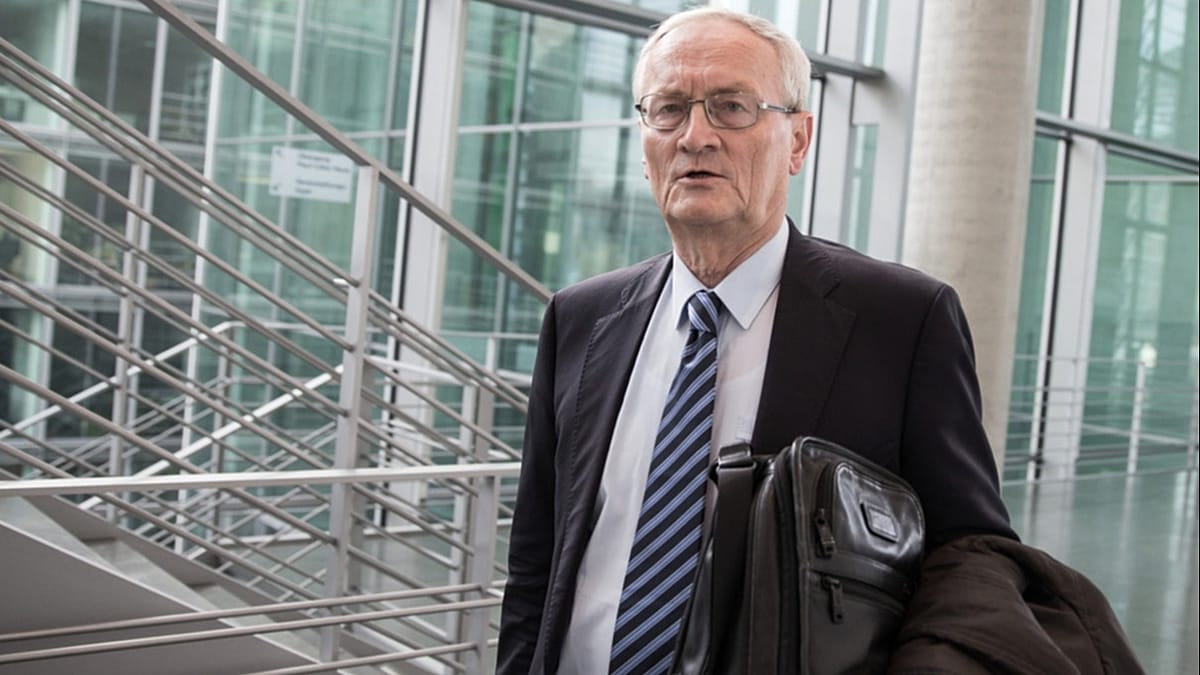
August Hanning spent seven years running Germany’s foreign intelligence service. Now, at 80, he faces charges of treasonous espionage — accused of receiving up to 2,000 classified documents from a former aide and sharing them with a foreign intelligence service over more than a decade.
The arrest, confirmed Tuesday by the federal prosecutor’s office, has sent shockwaves through Berlin and beyond. But the deeper damage may not be to one man’s reputation. It is to the trust architecture that underpins Western intelligence-sharing.
Hanning, who led the Bundesnachrichtendienst (BND) from 1998 to 2005, was arrested at his home in Norwalde near Münster in northwestern Germany. His former chief of staff, identified only as Manfred D. to comply with German privacy rules, was taken into custody in Bad Tölz in southern Bavaria. Both men have been remanded in custody following court hearings on Tuesday and Wednesday.
What the Allegations Actually Say
The federal prosecutor’s statement painted a picture of a long-running conspiracy with a simple structure: Manfred D. fed classified BND material to Hanning, who then used it for private consulting work — and in at least one instance, passed it directly to an employee of a foreign intelligence service.
The arrangement began around 2010. It continued, in sporadic but systematic fashion, until June 2022. Manfred D., who served as chief of staff to Hanning and later to several subsequent BND presidents, had routine access to confidential material. Over twelve years, he allegedly delivered approximately 2,000 documents — many marked for internal executive briefings only.
The foreign intelligence service involved has not been named. German authorities have declined to specify whether it is a hostile actor or a traditional partner running an unacknowledged operation.
Ines Peterson, the federal prosecutor’s spokesperson, confirmed to German media that one instance involved Hanning using classified information to prepare an analysis for a foreign intelligence employee. A second instance involved an extensive exchange of information with another service representative. Neither the identity of the service nor the full scope of the breach has been disclosed.
How the Case Uncovered Itself
The espionage probe emerged almost by accident. Hanning was already under scrutiny in a separate investigation involving the 2024 abduction of two children from a prominent Hamburg family. The Blocks own the Block House steakhouse chain and the custody battle attracted heavy tabloid coverage.
Investigators allege Hanning and a retired Hamburg police official accepted a contract in 2022 to abduct Christina Block’s children while serving as executives of a security firm. Evidence found during a search of Hanning’s residence in connection with that case led directly to the espionage charges. It is an odd path to a major national security investigation — and one that underscores how fragmented German intelligence oversight remains.
Why This Matters for NATO
The BND is not a regional agency. It is a central node in Western intelligence architecture, sharing collections with the CIA, MI6, DGSE, and others under formal and informal agreements. When a former head of that organization is accused of trading access, the fallout is structural.
Allies will now ask uncomfortable questions. What did Hanning know during the Ukraine crisis? What Russian, Iranian, or Chinese operational intelligence passed through his consultancies between 2010 and 2022? Did Manfred D.’s access extend beyond what he funneled to his former boss?
The timeline is especially consequential. Hanning’s alleged breach spanned the height of the Ukraine war, multiple NATO summits, and several critical moments in European security decision-making. Any material shared with a foreign service during that period could compromise ongoing operations, source protection, and allied confidence.
If the receiving service is adversarial — as many analysts suspect — the damage is immediate and severe. If it is a non-NATO partner running an unacknowledged collection effort, the injury is more about institutional credibility than operational disruption. Either way, the BND’s reputation suffers, and with it, the broader European project of building independent intelligence capability.
The Political Aftermath
Opposition lawmakers are already pushing for reform. Konstantin von Notz, a Green party member of the parliamentary intelligence oversight committee, called the allegations “a hard-hitting and deeply troubling story” and demanded swift investigation. He also called for a ban on former senior intelligence executives engaging in private consultancy work after leaving office — a measure he classified as a national security imperative.
The current legal framework allows former spymasters to monetize their clearance and contacts. This case suggests the system failed to anticipate exactly this kind of betrayal.
Chancellor Friedrich Merz’s office offered measured support, stating the federal government is “providing full support to the investigating authorities.” The language was diplomatic. The political headache is real. Merz’s coalition will face intense scrutiny over whether Germany’s intelligence oversight apparatus is robust enough to prevent recurrence.
What Comes Next
The case is in its earliest stages. Both suspects remain in custody. Premises have been searched. The full scope of what was shared — and with whom — awaits further investigation.
What is clear is that the arrest has already shifted something fundamental in how Europe’s largest economy projects power through intelligence. The assumption that former spymasters are trustworthy conduits for classified material has been broken. Whether Germany rebuilds that trust — and whether NATO allies restore theirs — will determine whether this scandal remains an outlier or becomes a warning sign.