Houthi-Saudi Escalation Threatens Red Sea Shipping and Oil Markets
Houthi strikes on Saudi airports and Aramco infrastructure mark the most serious escalation since 2022. Saudi Arabia is mobilizing 100 fighter jets and regional allies — with US intelligence support — raising stakes for global shipping and energy markets.
A 2022 Precedent, Broken
On June 7, two ballistic missiles and multiple suicide drones struck Aden International Airport in Yemen. A flight from Cairo was diverted to Jeddah. No casualties were reported — passengers had evacuated the terminal beforehand.
Two days earlier, Houthi spokesmen confirmed strikes on Abha International Airport and the Aldaghari military base in southwestern Saudi Arabia. On June 5, the group targeted seven facilities across Saudi territory, including King Khaled International Airport in Riyadh, King Khaled Air Base in Khames Mushait, and the Aramco refinery complex at Rabigh on the Red Sea coast. Three people were injured at Rabigh when fire broke out.
Saudi Arabia responded by mobilizing 100 fighter jets for round-the-clock strikes against Houthi positions. This is the first time since 2022 that Riyadh has publicly confirmed sustained air operations against the group — a threshold breach that reframes the conflict from proxy skirmish to open regional confrontation.
Who Just Got Dangerous
The Houthi arsenal has evolved significantly since the 2015–2022 period when Saudi Arabia conducted its own massive aerial campaign against Yemen. Today the group can strike targets deep inside Saudi territory — Riyadh is roughly 600 kilometers from the Yemeni border — with precision-guided ballistic missiles and swarm drone tactics.
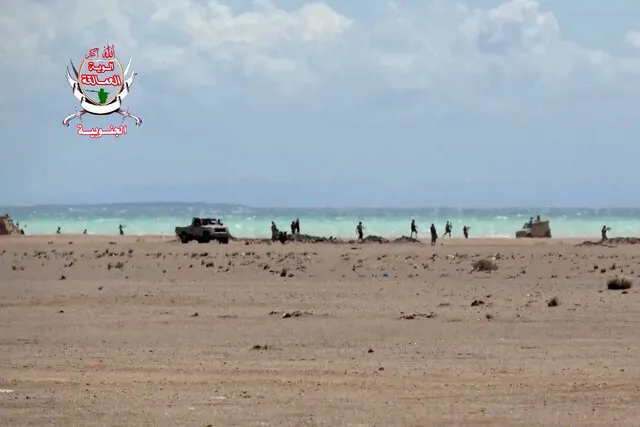
The timing is not accidental. Pro-government forces, backed by the United Arab Emirates and operating under Saudi direction, had just captured the port town of Zubaab on the Bab el-Mandeb strait coast. The Houthis appear to be using missile strikes as leverage to compensate for territorial losses on the ground, forcing Saudi Arabia to divide its attention between air campaigns and homeland defense.
But the ground war itself is stalling. The Institute for the Study of War reported on June 6 that government forces seized Zubaab but failed to advance north toward Mokha, a critical Red Sea port 54 kilometers away. Houthi fighters withdrew from exposed coastal plains and repositioned into fortified high-ground positions near Mokha, deploying reinforcements and snipers to repel further advances.
Fighting also continues around Taiz, one of the few major cities still under government control. Both sides are battling for elevated terrain overlooking the southern approach to the city.
The Alliance Machine Is Turning On
Saudi Arabia is no longer operating alone. Turkish and Pakistani foreign and defense ministers met in Riyadh on June 5 and committed to deploying troops. The three Sunni-majority nations signed a collective defense agreement in Mecca last August — an arrangement widely viewed at the time as largely symbolic. That assessment now looks naive.
Pakistan’s Defense Minister Kawaj Azhar told Geo News that Pakistani forces were already involved in reconnaissance and other operational roles. Turkish outlets report Ankara plans to deploy troops and air-defense systems within weeks.
The United States is providing intelligence support for the Saudi campaign. Al Jazeera cited US officials saying 200 American military advisors are stationed in Saudi Arabia to assist with the operation. Washington has walked a tightrope since the Gaza war began — supplying weapons to Riyadh while publicly calling for restraint. The deployment of advisors signals that the US sees a direct interest in preventing Houthi success from spilling into wider regional conflict.
Shipping Gets Scary Again
The Red Sea has been a nightmare for commercial shipping since late 2023, when the Houthis began attacking vessels they linked to Israel’s war in Gaza. Major carriers rerouted around Africa, adding weeks and thousands of dollars to freight costs. Insurance premiums surged. The UN estimated the disruptions cost the global economy tens of billions.
Now the Houthis are demonstrating they can hit Saudi infrastructure at will — including energy facilities. The Aramco refinery at Rabigh was struck and set ablaze. While Saudi Arabia has vast redundant capacity, the message is clear: the group can disrupt Gulf energy exports without blockading the strait.
Oil futures reacted immediately. Brent crude spiked on the news, and analysts at multiple firms flagged the possibility of a supply shock if the Rabigh facility suffers prolonged damage. The Strait of Hormuz, through which roughly 20 percent of global oil passes, remains the more strategic chokepoint — but the Red Sea now carries comparable risk profile for refined products and liquefied natural gas shipments from the Gulf.
The Diplomatic Calculus
For Saudi Crown Prince Mohammed bin Salman, the escalation presents a political puzzle. Riyadh has spent years trying to exit the Yemen war through negotiated settlements and limited military pressure. The 2022 ceasefire — brokered with tacit US and UN backing — gave the kingdom breathing room to pivot toward Vision 2030 economic reforms and relationships with China and Russia.
That strategy is now under strain. The Houthis, backed by Iran, refused to honor the ceasefire spirit and have since consolidated power in much of western Yemen. The recent government offensive, backed by UAE special forces and Saudi airpower, was an attempt to change facts on the ground before the conflict faded from global attention.
The Houthi response — missiles into Saudi cities and energy infrastructure — forces Riyadh back into a war posture it was trying to leave behind. Every fighter jet in the air is a resource not spent on Neom or the Red Sea Project. Every missile intercepted is a deduction from the Vision 2030 balance sheet.
For Iran, the calculus is different. Tehran funds and arms the Houthis as part of its “axis of resistance” strategy, but it has shown reluctance to escalate directly. The strikes demonstrate the group’s independent killing range without requiring Iranian intervention — a low-cost, high-leverage play that keeps Saudi Arabia and the US perpetually distracted.
What Happens Next
Several scenarios are plausible in the coming weeks:
A limited exchange: Saudi Arabia conducts sustained air raids while the Houthis maintain periodic missile strikes. The status quo of intermittent violence continues, with shipping risks persisting at current elevated levels.
De-escalation through negotiation: Regional mediators — likely Oman, Qatar, and potentially China — pressure both sides toward a renewed ceasefire framework. This is possible but unlikely given the current momentum of military operations and the Houthis’ demonstrated willingness to escalate.
Wider regional war: Iranian direct involvement, an attack on Israeli territory using Saudi or Jordanian space, or a US-Iran confrontation could drag the conflict into a multi-front war. This remains the tail-risk scenario but its probability has risen sharply.
The immediate market implication is straightforward: any perception that Aramco’s refineries or export terminals are under sustained threat will push oil prices higher and keep Red Sea insurance rates at crisis levels. The political implication is equally clear — the 2022 ceasefire is dead, and the Yemen war has entered a new, more dangerous phase with consequences that extend far beyond the Arabian Peninsula.
The Houthis proved on June 5 and June 7 that they can strike at will. Saudi Arabia proved it can respond with overwhelming force. The question now is whether either side can stop before the conflict consumes everyone around it.